
Do these 3 things before closing this tab:
1Clear out junk files and repair common Windows errors2Fix the driver behind crashes, sound loss and screen glitches3Repair Windows errors before they cause bigger problemsiTechGuides is reader-supported. When you buy through links on our site, we may earn an affiliate commission. As an Amazon Associate I earn from qualifying purchases. Learn more
Hedging foreign currency can reduce exchange-rate swings in an international portfolio, but it does not guarantee better returns. A useful starting point is to consider bonds and equities separately: Vanguard Research’s July 2026 rule of thumb is to hedge bond exposure while leaving most foreign equities unhedged. That is a framework, not a universal prescription; the right choice depends on your home currency, portfolio purpose, future spending, risk tolerance, time horizon, and implementation costs.
How currency changes your investment return
If you own an asset priced in another currency, your home-currency return reflects both the asset’s local-market performance and the exchange-rate movement. Foreign-currency appreciation can add to your return; depreciation can reduce it. The relationship runs both ways, so currency exposure can help or hurt.


A fund’s trading or share-class currency alone does not establish that it hedges the currencies of its underlying holdings. Check the fund’s stated hedge policy and benchmark rather than inferring the exposure from its name or the currency in which you buy it.
Should you hedge foreign currency in your international portfolio?
Start with the job each investment is meant to do, not a prediction about which currency will rise. Vanguard Australia Personal Investor puts the uncertainty plainly: “Currency’s movements (and how they move with equities) are incredibly difficult to predict, so investors should treat currency hedging as a way to manage risk, not to add return.”
#1 Best Overall

- Exquisite Coin Collection Book: Premium vintage PU leather cover with embossed compass pattern, decorated with anchor & ship wheel metal pendants, retro nautical style makes this coin album a unique collectible display piece and personal treasure journal, and the perfect gift choice
- The size of coin collection album: 9.8'' x 11.8'' x 1.2'', which includes 15 sheets coin collection pages and 5 sheets currency collection pages, holding 460 coins and 30 currencies. The coin pockets come in three sizes(Each pocket style has 5 sheets): 1.7'' x 1.8'' (20 pockets each page), 1.4'' x 1.5'' (30 pockets each page), and 1.1'' x 1.2'' (42 pockets each page), accommodating coins of 17/20/23/25/27/30/38/40mm. The currency pocket measures 7.36'' x 3.74'' (6 pockets each page: 3 pockets on each side) and is suitable for collecting bills, coupons, cards, banknotes, and currencies
- Anti-slip and waterproof design: Each coin pocket has a flap on the back, prevent coin from falling out and sliding around. The collection pages has good water resistance to protects your coins and currencies
- High Transparency Design: The inner pages feature a high-transparency design on both sides, allowing you to easily display your coins and currencies without removing them, while also effectively protecting your collection from dust, scratches, and oxidation
- Wide use: This multi-functional coin album features 4 different sized pages, allowing you to easily categorize and store various coins and banknotes to suit your needs. It provides long-term secure storage and clear display of your coins, banknotes , medals, badges, stamps, and SD cards
- Home currency and future spending: A hedge normally targets a specified currency. Consider the currency in which you expect to spend or meet future liabilities.
- Asset class and portfolio role: If foreign bonds are intended to add stability or diversification, exchange-rate swings may work against that role. Foreign equities may have a different purpose, such as long-term growth and diversification.
- Risk tolerance and time horizon: Consider how much currency-driven volatility you can accept and whether the investment has a defined stability or volatility objective.
- Implementation and cost: Compare the fund’s hedge policy, benchmark, expenses, and how the hedge is maintained. Forward pricing and execution affect results.
- Residual risk: Hedging targets currency exposure; it does not guarantee the fund’s value or eliminate risks from the underlying securities.
Should you hedge international bonds but leave international stocks unhedged?
That is a reasonable starting framework, not a rule for every investor. Vanguard Research’s July 7, 2026 multi-asset summary says to “hedge bond exposures, while leaving most foreign equities unhedged.” The distinction reflects the different roles bonds and equities may play in a portfolio: currency fluctuations can add variability to bonds held for stability, while leaving some equity currency exposure can preserve diversification. Your liabilities, home currency, risk appetite, and investment horizon may lead to a different choice. Read Vanguard Research’s multi-asset research.
How does a currency-hedged ETF work?
A pooled fund can use foreign-exchange forward contracts to sell foreign currency and buy the fund’s base currency at a future date. As holdings and currency weights change, the manager may adjust or roll those contracts. This is intended to reduce the targeted exchange-rate exposure, not to remove market, credit, liquidity, or tracking risks.
Rank #2
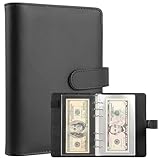
- 【PRODUCT SIZE】- 17.3 x 10.4 cm /6.8 x 4.1 inch loose-leaf inner pages/pockets, 18.5 x 13.0 cm /7.3 x 5.1 inche cover. Easily holds your entire currency collection in one organized spot.
- 【LARGE CAPACITY】- 100 ultrahigh-transparency pockets can accommodate paper currency, bills, tickets, documents, invoices, etc. less than 17.0 x 9.4 cm /6.7 x 3.7 inches.
- 【6-RING BINDER】- Metal 6-ring binder similar to a Filofax Personal, with 4 holes of 0.75 inches apart and a hole of 2.0 inches apart, suitable for corresponding hole-spacing binders.
- 【MULTI-PROTECTION】- Quality OPP inner pages and artificial leather cover effectively provide double protection. Keep banknotes free of dust, moisture and scratches.
- 【BONUS DESIGN】- This currency album features versatile interior pockets that are perfectly sized for organizing cards and receipts. The artificial leather buckle keeps the cover securely closed for safe transport.
A hedged share class packages this approach for investors, targeting lower currency exposure relative to its specified base or share-class currency. It will not necessarily perform identically to an unhedged share class: currency movements, hedge timing, imperfect matching, and costs can change the difference in returns. Review the current prospectus and fund documents for the particular product’s target and policy. Vanguard’s prospectus notes that spot foreign-exchange trades typically settle around two business days after the trade date; that convention is not the maturity or roll schedule of a fund’s forward contracts. See Vanguard fund documents.
What does currency hedging cost?
There is no stable universal cost. Forward prices reflect interest-rate differentials between the currencies, which can create a carry cost or benefit that varies over time and by currency pair. Fund expenses, execution and transaction costs, and how closely the hedge matches the holdings also affect the result.
A hedge can help when the foreign currency weakens against your home currency, but it can limit gains when that currency strengthens. Historical examples do not establish today’s cost or a universally optimal hedge ratio. Compare the relevant hedged and unhedged funds’ documents and expenses, and avoid assuming that hedging always costs a fixed amount or always reduces returns. MSCI discusses historical hedge costs and outcomes.
Does hedging foreign currency improve returns?
Not reliably. Hedging changes the portfolio’s exposure to exchange-rate movements; it is a risk-management choice rather than a dependable way to add return. Whether it helps or detracts depends in part on how currencies move, along with hedge pricing, execution, and the portfolio’s underlying investments. Choose a hedge to align exposure with your liabilities and the investment’s purpose—not because you expect to forecast currencies consistently.
Independent reader supportYour contribution helps us test, update, and keep practical guides available for everyone.A practical checklist before choosing a hedged fund
- Identify the exposure: Determine which underlying currencies matter and what currency the fund or share class targets.
- Set the portfolio purpose: Decide whether you are addressing volatility in bonds, currency exposure in equities, or another specific risk.
- Read the hedge policy: Check the fund’s benchmark, hedge approach, and how it adjusts or maintains positions.
- Compare costs and risks: Review expenses and available information about execution and hedge implementation; remember that a hedge does not eliminate securities or tracking risk.
- Check current documents and local availability: Fund share classes and derivative economics vary by geography and change over time. Verify the latest prospectus and product details before investing.
This is general education, not an individualized allocation recommendation. No single hedge percentage is established as optimal for every investor.
Quick Recap
Best Value

- Used Book in Good Condition
Product prices and availability are accurate as of the date/time indicated and are subject to change. Any price and availability information displayed on Amazon at the time of purchase will apply.

