
Free tools Windows power users keep installed
One-click scans. No signup required.
iTechGuides is reader-supported. When you buy through links on our site, we may earn an affiliate commission. As an Amazon Associate I earn from qualifying purchases. Learn more
Give an AI agent a spell checker by connecting it to an MCP server that exposes a narrowly scoped tool such as check_spelling. The server accepts text and a language, sends the request to a checker such as LanguageTool, then returns structured findings—such as offsets, messages, and replacement suggestions—for the agent to present. This is an integration pattern based on MCP’s tool interface and LanguageTool’s documented HTTP API; the sources do not establish a particular tested MCP spell-check server.
How the MCP spell-check integration works
The integration has three parts: an MCP client attached to the agent, a small MCP server that advertises the spell-check tool, and a checking backend. MCP lets servers expose tools that language models can invoke. The client discovers the available tools, and the model can choose to call one when spelling or proofreading help is relevant. The protocol describes tool calls; it does not prescribe a particular approval interface or require a specific spell-check implementation. MCP specification: Tools
| # | Preview | Product | Price | |
|---|---|---|---|---|
| 1 |
|
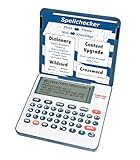
Franklin MDE-1200 Electronic Dictionary and Thesaurus – English Dictionary, Synonyms, Spell... | $59.95 | Buy on Amazon |
- MCP client: Connects the agent to the MCP server and makes the server’s advertised tools available.
- MCP server: Declares a tool name, description, and input schema, validates the request, calls the checker, and returns a compact result.
- Checker backend: Receives the text and language settings and returns detected issues and possible replacements.
A useful tool interface is check_spelling, with required text and language inputs. Keep the schema limited to parameters the agent needs instead of exposing every backend option. The server can translate the tool input into the checker’s request format and map its response into predictable fields.
Choose the language and preserve the text correctly
Language selection affects which spellings are treated as correct. LanguageTool’s API guidance says variant languages need a regional code: for example, use en-US or de-DE rather than generic en or de for spelling checks. If the tool supports automatic language detection, let the caller provide a preferred variant when the distinction matters; detecting English alone does not establish whether American or British spelling is intended. LanguageTool HTTP API reference
#1 Best Overall
- English Dictionary and Thesaurus in One Device: Features a robust English dictionary with 80,000 headwords and 250,000 definitions, plus 15,000 synonyms and 12,000 antonyms to build vocabulary and fluency.
- Built-In English Grammar and Test Tools: Includes English lessons like irregular verbs, verb conjugation, noun/adjective inflection, confusables, and vocabulary banks for TOEFL, GRE, SAT, GMAT, and TOEIC prep.
- Word Solvers for Learning and Fun: Unlock your word skills with Crossword Solver, Anagram Solver, and Word Builder tools that help you solve puzzles, find anagrams, and build new words from scrambled letters.
- Interactive Word Games Included: Features classic educational games like Hangman, Conjumania, Flashcards, Spelling Bee, Word Train, Synonym Game, and more to make language learning fun and engaging.
- Portable Digital Device with LCD Screen: Lightweight and battery-powered, this device includes a zoomable 3-inch screen, adjustable contrast, keyboard sound control, and spell correction tools for everyday use.
When checking text that contains markup, do not assume offsets map cleanly to the original document if the backend checked a transformed version. LanguageTool supports structured text data that separates text from markup. Use that where appropriate, and preserve the relationship between the submitted text and the returned offsets so the agent can identify the right passage.
Return findings as suggestions, not silent edits
LanguageTool’s response can include issue offsets and lengths, messages, and replacement candidates. Return those findings in a compact structured result rather than replacing the submitted text invisibly. The agent can then show the likely error, explain an uncertain suggestion, and offer a replacement for the user to accept or reject.
- Treat tool results and server-provided annotations as untrusted unless the server is trusted.
- Do not automatically apply a replacement just because the checker suggested it.
- For edits with meaningful consequences, ask the user before changing the document. MCP does not itself mandate a particular confirmation workflow.
Choose a hosted or self-hosted LanguageTool backend
LanguageTool documents a public HTTP proofreading endpoint at https://api.languagetool.org/v2/check and specifies POST requests. Its documentation explicitly says not to send automated requests to that public endpoint; for automated use, it recommends setting up a LanguageTool instance or obtaining an Enterprise account. Check the terms and limits of the specific service or plan before connecting an agent. LanguageTool Public HTTP Proofreading API
LanguageTool also documents an embedded HTTP server for local use. Its setup documentation says the basic self-hosted server does not include the AI-based rules available in the cloud. The choice is therefore not simply “cloud versus private”: it also affects supported rules, operations, and applicable service limits. LanguageTool Embedded HTTP Server
| Decision factor | Hosted service | Self-hosted server |
|---|---|---|
| Automated requests | The public endpoint is not intended for automated requests; LanguageTool recommends an instance or Enterprise account instead. Confirm the selected service or plan allows the intended use. LanguageTool API guidance | LanguageTool documents an embedded HTTP server for local use. Confirm that the chosen deployment meets your operational and usage needs. LanguageTool server setup |
| Text handling | Text is sent to the hosted service. LanguageTool says users are responsible for informing their own users about text handling; do not assume retention or privacy practices without checking the applicable policy and deployment. LanguageTool API guidance | A local deployment can keep the request path within your environment, depending on how it is configured. The cited setup documentation does not establish every deployment’s data handling; verify your own configuration. LanguageTool server setup |
| Rules and language variants | Available behavior depends on the service; use the API’s language settings and appropriate regional variants. LanguageTool API reference | The basic self-hosted server does not include the cloud’s AI-based rules. LanguageTool server setup |
| Operations | The service provider operates the hosted endpoint, subject to its limits and availability. The public API has no availability guarantee. LanguageTool API guidance | You operate and update the server and need to account for its availability and maintenance. LanguageTool server setup |
Public endpoint limits and availability
LanguageTool’s public API documentation, accessed in 2026, lists these limits for the public service. They may change, and the service provides no availability guarantees; they are not service-level commitments for an automated integration.
- 20 requests per IP per minute.
- 75 KB of text per IP per minute.
- 20 KB per request.
- Suggestions for up to 30 misspelled words.
These figures concern the public service only. They do not establish limits for a separately operated instance or a paid plan. LanguageTool Public HTTP Proofreading API
Quick Recap
Implementation checklist
- Configure the MCP client to connect to your MCP server using the client’s supported setup.
- Advertise a tool such as
check_spellingwith a clear description and a narrow schema for text and language, with optional preferred variants if needed. - Have the server submit a POST request to the selected LanguageTool API or instance using the documented request parameters. Do not use the public endpoint for automated requests.
- Map backend results into structured findings with the relevant text offset, length, message, and replacement candidates.
- Preserve markup and offsets when the checked content is not plain text, and ensure the agent can map findings back to the original document.
- Present suggestions to the user and obtain confirmation before consequential edits.
- Check service authorization, limits, availability, language behavior, and text-handling practices for the chosen deployment.
Product prices and availability are accurate as of the date/time indicated and are subject to change. Any price and availability information displayed on Amazon at the time of purchase will apply.

