
Free tools Windows power users keep installed
One-click scans. No signup required.
iTechGuides is reader-supported. When you buy through links on our site, we may earn an affiliate commission. As an Amazon Associate I earn from qualifying purchases. Learn more
No setting makes every video doorbell work with every app. Whether your doorbell connects to a different app depends on three things: the exact model, the app you want to use, and the function you need. Live view, doorbell-press alerts, motion events, two-way talk, and recorded clips are separate capabilities, and a connection that supports one may not support the others. Many third-party integrations also keep the doorbell tied to its original manufacturer app and cloud account, so the new app is usually an added connection rather than a replacement.
Start with the model, the target app, and the feature
Before changing any settings, write down three things: the make and exact model (including the generation, such as “2nd Generation” or “Wired” versus “Wire-Free”), the app you want to use, and the one or two functions you need from it. A brand-level claim such as “works with Home Assistant” is not enough, because compatibility is set model by model. Vendors publish these lists, and they change over time, so the check should be made against the manufacturer’s current documentation on the day you set up.
Check compatibility in this order
- Find the exact model. Look in the doorbell’s app under device settings, on the label on the device, or on the original purchase documentation. Record the model name and any generation or wiring designation.
- Name the outcome you want. Write down whether you need live viewing, press alerts, motion events, speaking through the doorbell, or access to recordings. Do not assume that support for one of these means support for the rest.
- Check the manufacturer’s compatibility page for that model. Look for an explicit statement that the platform is supported, or an explicit “not supported” statement. Silence on a page is not confirmation.
- Check the target app’s official integration guide. Note whether it requires the original vendor app and account, cloud access, an API project with a fee, a hub, or a local camera stream.
- Follow the documented setup steps. Use the pairing or integration instructions as written. The integration guides reviewed for this article describe adding a supported connection to an existing device. None of them describes a factory reset as a first step, and resetting a doorbell to move it to a new app is not a documented requirement for these integrations.
- If the app or feature is unsupported, choose a fallback. You can keep using the original app, accept a partial integration that covers only the functions the guide lists, or compare a replacement doorbell whose documentation names your platform. Do not buy a bridge, adapter, or accessory unless the vendor or the app’s documentation confirms it works with your exact doorbell model.
What a third-party connection can and cannot do
A third-party connection usually covers a subset of what the original app does. The points below apply to the examples in this article and should be checked against the guide for your own model.
What’s actually slowing this PC down?
Pick the symptom - the matching free tool is one click away.
- Device still tied to the original account. Ring’s Home Assistant integration requires the doorbell to be set up first in the Ring app with a Ring account, and then Home Assistant connects to the Ring cloud. [1]
- Live view is not the same as recordings. The Ring integration distinguishes live view from the last recording. Downloading and playing the last-recording video requires a Ring Protect plan, according to the same documentation. [1]
- Alerts and entities are not the same as audio. The Ring integration provides camera, event, and sensor entities. The documentation does not describe two-way audio through Home Assistant, so do not assume it is available.
- Protocol support only helps if the doorbell offers it. ONVIF and RTSP are device capabilities. They cannot add features to a doorbell that does not provide those streams.
Worked examples from the official documentation
Ring doorbells with Home Assistant
Home Assistant’s Ring integration lists numerous supported doorbells. To set it up, provision a new doorbell with the Ring app and your Ring account first. Then add Ring in Home Assistant and sign in with the Ring account, including the verification code method configured on that account. The integration communicates with the Ring cloud. Home Assistant can then act as another interface and automation layer for the functions it supports, but it does not remove the Ring account requirement and does not guarantee that every Ring feature appears in Home Assistant. [1]
#1 Best Overall

- AI-Powered Smart Detection: Advanced AI technology accurately identifies people while filtering out vehicles and animals, so you only get the alerts that matter most
- Secure Cloud Storage: Protect your recordings with AES-128 encrypted cloud storage
- Pre-Capture Recording: Cloud subscribers benefit from pre-capture functionality, ensuring the camera starts recording right at the moment motion begins - never miss a thing
- Reliable 2.4GHz Wi-Fi Connection: Optimized for 2.4GHz networks to deliver stable, uninterrupted performance. (Not compatible with 5GHz Wi-Fi.)
- Exceptional Night Vision: Equipped with four powerful infrared LEDs and an advanced image sensor, providing sharp, detailed footage even in total darkness
Nest doorbells with Home Assistant
Home Assistant’s Google Nest integration uses Google’s Smart Device Management API. According to Home Assistant’s guide, using this API carries a US$5 fee, and the guide asks users to check device support before purchasing. Capabilities vary by camera and doorbell model. The guide also states account restrictions, including that consumer Google accounts are supported rather than Google Workspace accounts. [2]
The same guide warns about a change that affects existing setups. In its words: “Migrating your cameras to the Google Home App converts cameras from RTSP to WebRTC, which results in the loss of snapshot functionality.” [2] This is a documented effect in Home Assistant’s integration guide. It is not a general statement about every Nest device or every migration, so check the guide before moving a camera to the Google Home app.
Rank #2
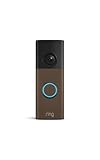
- Capture it all with Retinal 2K video — From wide views to tighter focus, it’s easy to see your home or business in crisp clarity with Retinal 2K.
- Zoom in up to 6x — Catch details at a distance, inspect faces, and more with up to 6x Enhanced Zoom.
- Connect to who’s there — See, hear, and speak in real time with Live View and Two-Way Talk.
- Get real-time alerts — Receive real-time notifications on your phone when motion is detected.
- Easily recharge — Simply insert the included removal tool to detach your doorbell from the wall, then recharge the built-in battery via USB-C. (Cable not included.)
eufy doorbells
eufy’s support pages show that compatibility differs even within one brand. For the eufy 2K Wired Doorbell, the official FAQ lists Alexa and Google Assistant as supported. It lists HomeKit, Home Assistant, SmartThings, SmartLife, Wink, Nest, Blue Iris, IP Cam Viewer, and IFTTT as unsupported. The FAQ also states: “Sorry that eufy doorbell doesn’t support ONVIF or RTSP.” [4]
Outdated Drivers Are Slowing You Down
One free scan finds every outdated or missing driver and matches the right update for your exact hardware.Free scan · exact hardware matchPC Slower Than It Used to Be?
A free scan shows the junk files, broken settings and background clutter dragging Windows down - then fixes them in one click.Free scan · Windows 10 & 11For the eufy Video Doorbell 2E (Battery-Powered), eufy lists Alexa and Google Assistant as supported, and HomeKit and Home Assistant as not supported. [5] Do not assume that a result for one eufy doorbell applies to another. Check the FAQ for your exact model.
Rank #3
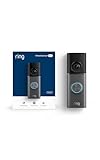
- Capture it all with Retinal 4K video — See your home or business in the ultimate clarity with Retinal 4K.
- Zoom in up to 10x — Catch details at a distance with up to 10x Enhanced Zoom.
- See, hear and speak to visitors on camera — With Live View & Two-Way Talk with Audio+, you’ll be able to interact with who’s there in real time, right from your phone.
- Tailored detection for more exact alerts — 3D Motion Detection pinpoints motion on your property so you’ll receive more precise alerts and fewer interruptions.
- True color, even in low light — With Low-Light Sight, just a little ambient light gives you true color video. In total darkness, your camera switches to crisp black-and-white to keep details sharp.
ONVIF cameras and video codecs
Home Assistant’s ONVIF integration works with compatible ONVIF devices. Its guidance says the integration looks for H.264 video profiles. If a device presents only H.265, it may not be discovered until you configure a secondary H.264 stream. [3] This is a check you can make before you spend time on setup: if the doorbell does not expose an ONVIF or RTSP stream at all, the integration has nothing to connect to.
When the app you want is not supported
If the manufacturer says a platform or protocol is unsupported for your model, the choice is between staying with the original app, accepting a partial integration, or replacing the doorbell. The table compares the paths covered by the sources above.
Rank #4

- Capture it all with Retinal 2K video — From wide views to tighter focus, it’s easy to see your home or business in crisp clarity with Retinal 2K.
- Zoom in up to 6x — Catch details at a distance, inspect faces, and more with up to 6x Enhanced Zoom.
- Connect to who’s there — See, hear, and speak in real time with Live View and Two-Way Talk.
- Get real-time alerts — Receive real-time notifications on your phone when motion is detected.
- Easily recharge — Simply insert the included removal tool to detach your doorbell from the wall, then recharge the built-in battery via USB-C. (Cable not included.)
| Path | What it gives you | What it requires | Limits stated in the source |
|---|---|---|---|
| Original manufacturer app | Full feature set for that model, as the manufacturer provides it | Account and app from the manufacturer | Not applicable; the source does not compare features against third-party apps |
| Ring in Home Assistant | Camera, event, and sensor entities for supported Ring doorbells [1] | Ring app and Ring account for setup; Ring cloud connection | Ring Protect plan needed to download or play the last recording [1] |
| Nest in Home Assistant | Integration through Google’s Smart Device Management API [2] | Fee of US$5 for the API, per Home Assistant’s guide; consumer Google account [2] | Capabilities vary by model; migrating to the Google Home app causes loss of snapshot functionality [2] |
| ONVIF or RTSP through Home Assistant | Discovery and streams for compatible devices [3] | An H.264 stream, or a configured secondary H.264 stream if only H.265 is offered [3] | Not available on doorbells whose vendor says ONVIF or RTSP is unsupported [4] |
| Replacement doorbell with documented support | Support for the platforms named in the manufacturer’s list [6] | Purchase; model and region must match the list | Lists vary by platform, and the manufacturer’s list does not establish that every feature works on every platform [6] |
Replacement example: Arlo
Arlo’s support page, last updated 13 January 2026, lists the Arlo Video Doorbell (2nd Generation), Essential Video Doorbell Wire-Free, and Essential Video Doorbell Wired among products that work with third-party platforms. The platforms named are Amazon Alexa, Apple Home, Google Home, IFTTT, and Samsung SmartThings. The page notes that compatibility lists vary by platform. [6] This is one example of documented support, not a recommendation. Confirm that the model is sold in your region and that it provides the specific function you need before you buy.
Troubleshooting when a connection fails
- The doorbell does not appear in the new app. Confirm the model and generation against the manufacturer’s list. Confirm that the device was first set up in its original app and that the account used for that setup is the one you are signing in with.
- Sign-in asks for a verification code. Use the verification method configured on the original account. Ring’s integration documentation describes this requirement. [1]
- The camera appears but no video is shown. If the integration uses an ONVIF stream, check the video codec. A device that offers only H.265 may need a secondary H.264 stream. [3]
- A feature you expected is missing. Compare it with the integration’s listed entities and functions. Recorded-clip playback on Ring requires a Ring Protect plan. [1]
- Snapshots stopped working after a Nest migration. Home Assistant’s guide documents this as a result of converting cameras from RTSP to WebRTC when moving them to the Google Home app. [2]
Keep the original app while you test
Integration support can change. Vendors update compatibility lists, and the Home Assistant guides are updated with the integrations themselves. Before relying on a third-party connection, re-check the manufacturer’s page for your exact model and the target app’s current guide, and confirm the firmware or app version the guide expects. Keep the original app installed and signed in until you know which functions you need from the new connection.
Sources for this article: Home Assistant Ring integration documentation [1], Home Assistant Google Nest integration documentation [2], Home Assistant ONVIF integration documentation [3], eufy 2K Wired Doorbell FAQ [4], eufy support article on the Video Doorbell 2E (Battery-Powered) [5], and Arlo’s compatibility support page [6]. The Home Assistant pages were checked on 7 October 2026. The Arlo page was last updated on 13 January 2026.
Quick Recap
Links:
- [1] https://www.home-assistant.io/integrations/ring/
- [2] https://www.home-assistant.io/integrations/nest/
- [3] https://www.home-assistant.io/integrations/onvif/
- [4] https://service.eufy.com/article-description/2K-Wired-Doorbell-FAQ
- [5] https://service.eufy.com/article-description/Does-the-Video-Doorbell-2E-Battery-Powered-work-with-3rd-party-smart-platforms
- [6] https://www.arlo.com/en_gb/support/faq/connectivity-and-integrations/what-smart-home-and-voice-assistant-systems-can-i-use-with-my-arlo-devices
The Bottom Line
“”
Product prices and availability are accurate as of the date/time indicated and are subject to change. Any price and availability information displayed on Amazon at the time of purchase will apply.

