
Free tools Windows power users keep installed
One-click scans. No signup required.
iTechGuides is reader-supported. When you buy through links on our site, we may earn an affiliate commission. As an Amazon Associate I earn from qualifying purchases. Learn more
The best way to improve at word puzzles is to match your approach to the puzzle type. In a standard crossword, use easy answers and crossing letters to test harder ones; in a cryptic, separate the definition from the wordplay; in a rebus or word-relationship puzzle, look beyond literal meanings. Then review unfamiliar answers and build accuracy before speed.
Start by identifying the puzzle type
A tactic that helps in one word puzzle may not help in another. GCHQ advises recognizing the puzzle type before choosing a solving method. Consider what the puzzle asks you to do: interpret a clue, fit letters into a grid, rearrange a set of letters, or notice a visual or verbal relationship.


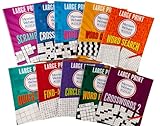

- Standard crosswords: Use clue wording, answer length, and crossing letters as constraints.
- Cryptic crosswords: Look for a definition and a separate wordplay mechanism.
- Anagrams and letter puzzles: Rearrange the available letters, then check candidates against the clue and any other constraints.
- Rebuses and relationship puzzles: Test alternate meanings, phrase connections, and the placement or grouping of words and images.
GCHQ’s hints and tips for solving brainteasers include examples of cryptics, rebuses, and word relationships.
How to solve standard crossword clues
Make an easy first pass
Answer the clues you can solve quickly: familiar expressions, fill-in-the-blanks, straightforward definitions, and common abbreviations. This gives you letters to work with elsewhere in the grid. Do not linger on a difficult clue while easier entries remain open.
Use crossings to test a candidate
When an Across answer is uncertain, solve the intersecting Down clues and return to it with more letters. Treat a guess as provisional: if several crossings conflict, revisit the least-certain fill before deciding that the rest of the grid is wrong.
Check more than the meaning
A plausible synonym is not necessarily the answer. Compare each candidate with the grid length and the clue’s grammar, tense, number, and wording. A mismatch is evidence to reconsider it, not a reason to force the entry.
Wait for evidence before naming a theme
If a puzzle has a theme, longer or unusual answers may share a relationship. Look for that pattern after you have enough entries to support it; forcing a theme too early can steer otherwise sound guesses off course.
Do these 3 things before closing this tab:
1Clear out junk files and repair common Windows errors2Scan for outdated or missing drivers - takes under a minute3Repair Windows errors before they cause bigger problemsRank #2
Arkadium’s crossword tips and support guidance also covers practical solving approaches. Its advice may vary as its game interface changes.
How to approach cryptic crosswords
Read a cryptic clue as having two jobs: one part defines the answer, while another describes how to build or alter it. The definition can appear at either end, and the clue’s natural-sounding surface can distract from the mechanics. Try to identify both parts and make sure they point to the same answer.
- Anagram: An indicator suggests rearranging letters.
- Charade: Smaller components are joined to form the answer.
- Container: One sequence of letters goes inside another.
- Reversal: Letters are read backward.
These are common devices, not an exhaustive list. The National Puzzlers’ League explains the definition-and-wordplay structure in its guide to solving cryptic crosswords. GCHQ also recommends looking for anagram indicators and hidden codes in cryptic clues.
How to solve rebuses and word-relationship puzzles
When a puzzle seems resistant to literal reading, test what words can mean in another context and how they connect to familiar phrases. Ask whether words have opposites, commonly precede or follow another word, or share a property. In a rebus, the position, repetition, or grouping of text and images can be part of the answer.
Recommended Free Tools
For example, GCHQ shows the word “SECRET” repeated with the upper instance highlighted; the placement points to “TOP SECRET.” Its word-grouping example pairs ALLEY, BOB, POLE, and THUNDER with CAT, and BULL, HANG, HOT, and WATCH with DOG. The shared links are phrases such as “alley cat” and “bull dog.” These examples illustrate why arrangement and associations can matter as much as the individual words.
How to work through anagrams and letter-manipulation puzzles
Start with the letters provided, then use the clue and constraints to narrow the possibilities. If the puzzle gives a required length, known crossing letters, or a particular meaning, use each to reject candidates that do not fit. Generate possibilities methodically rather than settling on the first familiar word that uses some of the letters.
Research on word-puzzle solving points to several relevant skills rather than one magic trick. A 1994 paper by Underwood, Deihim, and Batt describes five laboratory experiments and reports that measures including generating words from letters, solving anagrams, sensitivity to suffixes, and vocabulary predicted crossword ability in the study sample. Its accessible abstract does not establish that a particular daily routine causes improvement, nor does it report a general improvement rate.
Independent reader supportYour contribution helps us test, update, and keep practical guides available for everyone.Turn practice into learning
Choose a level you can work through
Practice is more useful when you can make progress and learn from the parts that challenge you. University of Michigan DyslexiaHelp describes crosswords and word searches as possible additional practice for spelling patterns and vocabulary, and recommends choosing an achievable level and using support where helpful. They are optional activities, not a substitute for instruction or a fit for every learner.
The Tool Desk
Outbyte PC Repair FREEClear out junk files and repair common Windows errorsFree Scan →Outbyte Driver Updater FREEFix the driver behind crashes, sound loss and screen glitchesFind Drivers →Review what you did not know
After finishing, check unfamiliar answers and notice recurring crossword vocabulary or conventions. Arkadium recommends practicing with archived puzzles and building accuracy before speed. A crossword puzzle book can provide repeatable printed practice, but buying one is not a requirement for improving.
Add time pressure only when it helps
First make your solving reliable: check clue grammar, use crossings, and recognize the devices your puzzle type uses. Once accuracy is comfortable, you can choose to track time. Speed is a separate goal, not a substitute for understanding why an answer fits.
What word puzzles can—and cannot—do for your brain
Puzzles can be an enjoyable hobby and a way to practice word skills, but the evidence cited here does not show that they prevent cognitive decline. In an October 11, 2022 article, Houston Methodist quotes neurologist Dr. Tanu Garg saying there is “no conclusive evidence” that word games and puzzles benefit the brain over time; the article also says studies have not shown that puzzles prevent memory loss or reduce dementia risk. Treat puzzle-solving as recreation or practice, not a proven form of brain protection.
Quick Recap
Product prices and availability are accurate as of the date/time indicated and are subject to change. Any price and availability information displayed on Amazon at the time of purchase will apply.
Quick wins for a faster PC:
Scan for outdated or missing drivers - takes under a minuteDriver Scan →Clear out junk files and repair common Windows errorsFree Scan →
