
iTechGuides is reader-supported. When you buy through links on our site, we may earn an affiliate commission. As an Amazon Associate I earn from qualifying purchases. Learn more
Google Translate voice input fails in three distinct ways: the microphone button is unavailable, Translate or the browser refuses microphone access, or the button activates but your words are not recognized. Identify which symptom you have first. A disabled button usually points to the selected language or feature support; a permission message requires an app, browser, or operating-system setting; poor recognition calls for an audio and input check.
Choose the spoken and translation languages explicitly, allow microphone access, and test again in a quiet environment. On a computer, use Google Chrome for full microphone-translation support, select the correct system input, and raise its input level if necessary. The procedure below separates Android, iPhone/iPad, and desktop fixes so you do not try hardware remedies for a language or permission problem.
Identify the failure before changing settings
Tap or click the microphone control once and note exactly what happens. The first visible symptom determines the most useful check.
| What you see | Most likely area to check | First action |
|---|---|---|
| The Speak or Dictation button is greyed out or missing | Source-language selection or support for that language and feature | Choose both languages manually and check whether the spoken language can be translated. |
| Translate, the browser, or the operating system asks for microphone access | App, browser, or system privacy permission | Allow access in the relevant settings, then reload or reopen Translate. |
| The control starts listening, but no words appear or the result is wrong | Microphone selection, input level, background noise, or an interfering audio device | Test in a quiet room, confirm the input device and level, and try an external microphone on a computer. |
| A desktop page says voice input is unsupported | Browser compatibility | Switch to Google Chrome, which Google identifies as the fully supported desktop browser. |
These categories can overlap. For example, a permission denial can prevent the microphone from starting, while an unsupported language can leave the control disabled even when the microphone works in another application.
#1 Best Overall

- 360 Degree Position Adjustable Gooseneck Design --Plug and play USB microphone Pick up the sound from 360-degree with high sensitivity, in the best possible location for sound to your PC gaming, dragon voice dictation, and talk to Cortana
- Mute Button & LED Indicator --One-click to mute/unmute your microphone for pc, Build-in LED indicator tells you the working status at any time
- Intelligent Noise-Canceling Tech --Premium omnidirectional condenser microphone with noise-canceling technology can pick up your clear voice and reduce background noise and echo
- USB Plug&Play(1.8/6ft USB Cable) -- No driver required. Just need to plug & play for the microphone to start recording, well compatible with Windows(7, 8, 10 and 11) and macOS. (NOT compatible with Xbox/Raspberry Pi/Android)
- Solid Construction--Adopting premium metal pipe and heavy-duty ABS stand to make sure that you will be satisfied with our computer mic quality
When the voice button is disabled
A disabled voice-input control does not by itself indicate a broken microphone. Google’s Android and iPhone/iPad instructions state that the Speak or Dictation button is disabled when the selected spoken language cannot be translated by that feature. Change the language pair before troubleshooting hardware.
Android
Open Google Translate and select the language you will speak in the left-hand language selector. Select the language you want to read in on the right. If the Speak button remains unavailable, try another supported spoken language rather than repeatedly tapping the control. Feature support can vary by language and platform, so a language available for text translation is not automatically available for speech input.
iPhone and iPad
Choose the speaker’s language and the translation language before tapping Dictation. If Dictation is unavailable, the selected spoken language is not supported for that voice feature. Selecting a different supported source language is the relevant test; changing microphone hardware will not make an unsupported language available.
Free tools Windows power users keep installed
One-click scans. No signup required.
Desktop browser
Desktop microphone translation does not automatically detect the spoken language. Select the input language yourself, then select the target language. If you leave the source language on an automatic-detection option, the microphone feature may not be available even though typed translation works. Google documents desktop speech setup in its Translate by speech help for computers.
When Translate asks for microphone permission
Voice input needs permission at every layer that can block a microphone: the Translate app or browser, the operating system, and sometimes a device-level hardware switch. Granting permission in one place does not override a denial in another.
Rank #2
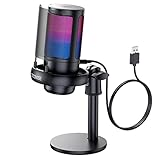
- Gradient RGB Symphony Lights: Cyclic and gradient RGB lights, in line with your live broadcast aesthetics. Bring you an immersive gaming experience and awaken all your senses. There's also a palpable sense of security, and when the COCONISE microphone is muted, the RGB lights go off to let you know you're working. Prevent accidents when you forget to mute your PC microphone for gaming.
- Practical and convenient function: It is equipped with a one-button mute touch sensor. When you want to close the microphone, you only need to touch it lightly to mute the sound, and the RGB light will go out to inform you that the microphone has been successfully closed. Equipped with a rotary control volume button at the bottom. There is a 3.5MM headphone jack in the middle, you can plug in the headphones to monitor your own voice in real-time and make adjustments in time when recording.
- Cardioid Polar Pattern: This microphone features a cardioid polar pattern that captures crisp, smooth, and clear sound in front of the microphone, reducing side pickup so it can focus on your voice. At the same time, it is equipped with a 25mm ultra-large capacitor diaphragm capsule, which can capture a wider range of audio with a sampling rate of up to 192kHz, and the pickup is delicate and noise-free.
- SOLID FIT: With a weighted carbon steel base, your big movements won't knock the mic down, even during intense gaming sessions. The detachable metal anti-splash screen is adopted. Compared with the sponge, the metal anti-splash screen can filter the plosive sound more effectively. And the rubber elastic band is firmly clamped on the shock mount, which can reduce the vibration noise caused by violent keyboard tapping and mouse clicking.
- Plug and Play:PC gaming microphone for streaming, compatible with PS4/PS4pro/PS5 desktop and laptop. You can quickly enter the game chat. The 180CM long detachable USB data cable can be extended from the back of the computer host to the main body of your gaming USB microphone without limitation.
Android app permission
- Open the device’s current Settings app and go to the app-permission or privacy area.
- Open Google Translate’s permissions and allow Microphone access while using the app, or the equivalent option shown by your Android version.
- Return to Translate, close any permission warning, and test the microphone again.
Android menu names and locations differ between manufacturers and Android releases. Use the current app-information or privacy screens on your phone instead of following a click path intended for another model.
iPhone or iPad app permission
Open the device’s Settings, find the privacy controls for Microphone, and enable access for Google Translate. Google’s iPhone/iPad transcription instructions specifically require microphone permission in device settings. After changing the switch, reopen Translate and try Dictation again. If the app does not appear in the microphone list, launch its Dictation or Transcribe feature once so iOS can present the permission request, then check the list again.
Desktop browser and computer permission
- When the browser prompt appears, choose Allow for the Translate page rather than Block.
- If you previously blocked it, open the browser’s site-permission controls for the Translate page and change Microphone to Allow.
- Check the computer’s privacy settings and make sure desktop applications or the browser are allowed to use the microphone.
- Reload the Translate tab after changing a permission. A tab that was loaded while access was denied may not request the device again until it is refreshed.
The exact labels differ among Windows, macOS, and ChromeOS versions, so look for the current Microphone, Privacy, or Site settings in your system and browser. If another application is also denied access, fix the system-level setting first; if other applications record normally, focus on the browser’s site permission.
When desktop voice input is unsupported
Google says microphone translation works fully in Chrome and has limited support in Safari and Edge. If the page reports that voice input is unsupported, open the same Translate page in the current desktop version of Google Chrome and grant its microphone permission. This is a compatibility change, not a microphone repair.
Once Chrome is open, verify that the source language is selected manually, because desktop speech input does not automatically identify the language you speak. Then check the selected input device in the computer’s sound settings. A webcam microphone, laptop microphone, headset, and USB microphone can appear as separate choices; select the one you are actually speaking into.
Rank #3

- 【Crystal Clear Audio Quality】Our Omnidirectional pattern condenser microphone accurately captures your voice, making it perfect for dictation, online classrooms, and more.
- 【Active Noise-Cancelling】Come in CMTECK CCS2.0 SMART CHIP with Omnidirectional Polar Pattern, which can effectively block the background noise. The pop filter prevents plosives from overloading the microphone, ensuring only your voice is heard.7
- 【Convenient Mute Button with LED Indicator】You can quickly mute/un-mute the microphone with the Mute Button and the built-in LED light lets you know the working status(Greenlight: Connected; Red light: Mute mode).
- 【Easy to use】 No drivers needed, just plug and record without external power supply, directly connect the microphone to a USB compatible device, well compatible with Windows(7, 8 and 10), Mac OS and PS4 (NOT compatible with Raspberry Pi/Linux/Android)
- 【Mini size with Adjustable Gooseneck】Adopted flexible and adjustable gooseneck metal pipe, easily adjust position 360 degrees to suit user comfort. The compact and stable base maximizes your desktop space.
If Translate displays the exact message “We’re having trouble hearing you,” Google recommends three targeted changes: move to a quiet room, try an external microphone, or turn up the microphone’s input volume. Make one change at a time so you can identify whether the cause is noise, the selected device, or an input level that is too low.
What’s actually slowing this PC down?
Pick the symptom - the matching free tool is one click away.
When the microphone activates but speech is not recognized
An active listening indicator proves only that Translate started the input feature. It does not prove that the intended microphone is receiving a strong, intelligible signal. Work through the following checks in order.
1. Reduce competing sound
Move away from fans, traffic, music, television, and conversations. Speak in a quiet room after activating the control. Keep your mouth a consistent distance from the microphone and avoid covering a phone’s microphone openings with a case or your hand. Short, clear phrases are easier to test than a long sentence because you can see whether any part of the signal is being recognized.
2. Confirm the input device
On a computer, open the operating system’s sound-input settings and identify which device is selected. If a monitor, dock, webcam, Bluetooth headset, and built-in microphone are connected, the system may have switched to a different input. Select the device nearest your mouth and watch its input meter while speaking. If the meter does not move, Translate cannot receive a usable signal from that device.
3. Raise the input level
Increase the selected microphone’s input or recording volume in the computer’s sound settings, then retry. Do not confuse input volume with speaker volume: raising the speakers makes Translate louder but does not make your voice stronger in the recording path. Excessive gain can add distortion, so raise the level until normal speech produces a clear meter response rather than pushing it to maximum automatically.
Quick wins for a faster PC:
Repair Windows errors before they cause bigger problemsFix Now →Scan for outdated or missing drivers - takes under a minuteDriver Scan →Clear out junk files and repair common Windows errorsFree Scan →Rank #4

- HIGH SENSITIVITY for CLEAR CALL - This portable USB microphone adpots a 6*10mm high sensitivity condensor microphone to capture clear voice, the audio signal processed by multi levels of audio gain amplifier and advanced ADC module, it provides crystal clear voice, reliable compatibility and noise cancelling. It's able to capture voice in 10ft distance clearly -it's very small, but powerful. Plug it into the computer, you'll experience better con-call immediately.
- PLUG-and-PLAY - The USB 2.0 interface is widely compatible with the most computer devices (Windows, Mac, Raspberry Pi, Linux, Chromebook & etc ) and softwares (Google Meetings, Zoom, Team, Skype & etc). Just plug it into the USB port and done. No extra driver or settings are required.
- COMPACT & PORTABLE - Like a flash disk, you can put it in the pocket with ease. Carry it with your laptop, and plug it in when you need it. No more tangled cords or bulky bases hogging your desk space, This mic is on a mission to keep your workspace sleek and organized.
- IDEAL REPLACEMENT - If you are looking for a quality microphone for work at home, online conferencing, online class, live streaming and webinar, this is a great choice. It's not a recording studio grade microphone, but the sound quality is better than most of laptop built-in microphones, and it's completely enough to meet your general demand.
- WHAT YOU GET - Packed in a metal carrying box, and comes with 12 months waranty. For any concern, you can send us messages and we will respond in 24 hours.
4. Try an external microphone when appropriate
For desktop users who have already confirmed the source language, permissions, selected input, and input level, Google suggests trying an external microphone. A USB microphone or a headset can bypass a faulty built-in microphone or a poorly positioned laptop pickup. This is a category-level option, not a guaranteed solution: an external microphone cannot correct a denied permission, an unsupported language, or an incompatible browser.
5. Check headphones and screen-reader audio
Google’s speech-input guidance notes that headphones may help when an audible screen reader is interfering with transcribed speech. Use headphones to keep spoken feedback from entering the microphone, and pause other audio while testing. This addresses acoustic feedback; it does not replace selecting the correct source language or granting access.
Follow the correct interaction on each platform
Using the control in the expected sequence prevents a timing mistake from looking like a recognition failure.
Android phone or tablet
- Open the Google Translate app.
- Choose the language you will speak and the language you want translated.
- Tap Speak.
- Wait for the app to show or announce “Speak now.”
- Speak clearly, then pause so the app can process the utterance.
If Speak is disabled, return to the language selectors and choose a spoken language supported by the feature. If Android asks for microphone access, allow it in the prompt and, if necessary, in the app’s device settings. Google’s Android speech-translation instructions describe this interaction and the disabled-button behavior.
The Tool Desk
Outbyte PC Repair FREEClear out junk files and repair common Windows errorsFree Scan →Outbyte Driver Updater FREEFix the driver behind crashes, sound loss and screen glitchesFind Drivers →iPhone or iPad voice input
- Open Google Translate.
- Select the spoken language and the target language.
- Tap Dictation.
- Wait for the tone or listening indication.
- Speak at a steady pace and stop briefly when the sentence is complete.
Enable Google Translate under the device’s Microphone privacy setting if iOS requests access or Dictation does not start. The iPhone and iPad speech-translation help covers the language and speech controls.
Best Value

- Studio-Quality Sound for Clear Podcast Recording – The K66 USB podcast microphone delivers studio-quality, broadcast-level audio using a high-performance condenser capsule and cardioid pickup pattern that focuses on your voice while reducing unwanted background noise. Designed as a reliable microphone for PC, it features a wide 40Hz–18kHz frequency response and a 46kHz sampling rate to reproduce rich lows, smooth mids, and clear highs for natural, detailed vocals. With –45dB ±3dB sensitivity, it captures balanced sound without distortion during expressive speaking. Ideal for podcasting, voice-over, online classes, meetings, and professional content creation.
- Intelligent Noise Reduction Mode for Cleaner Podcast Audio – This podcast microphone features an advanced Noise Reduction Mode designed for clearer, more focused voice recording in real-world environments. Press and hold the mute button to enable noise reduction (blue indicator). In this mode, the microphone helps reduce keyboard clicks, PC fan noise, air conditioner hum, and background chatter. Default Mode maintains a warm, natural vocal tone for quiet spaces. Designed as a reliable microphone for PC, it allows creators to identify the active mode instantly and adapt as needed, ensuring clear audio for podcasting, gaming, streaming, online classes, meetings, and recording.
- True Plug-and-Play USB Microphone with Wide Device Compatibility – Engineered for effortless plug-and-play use, the K66 USB microphone requires no drivers, apps, or software installation. Simply connect and start recording on Windows PC, Mac, laptops, PS4, PS5, and tablets. Included USB-C and Lightning adapters ensure seamless compatibility with iPhone, iPad, and modern USB-C phones and devices, making it easy to switch between desktop and mobile recording. Ideal for creators working across multiple platforms, this microphone delivers consistent, high-quality audio for YouTube, TikTok, Twitch, Zoom, Discord, OBS Studio, Streamlabs, podcasting, livestreaming, and professional voice recording.
- Real-Time Zero-Latency Monitoring with Adjustable Volume Control – This podcast microphone features real-time, zero-latency monitoring through a built-in 3.5mm headphone jack, allowing you to hear exactly what’s being recorded without delay. Designed as a reliable microphone for PC, it includes a dedicated monitoring volume control that lets you adjust headphone listening levels independently for accurate and comfortable audio monitoring. Real-time feedback helps identify distortion, background noise, or uneven volume before it affects your final recording, making this podcast microphone ideal for podcasting, streaming, online teaching, voice-over work, and professional content creation.
- Precision Audio Adjustment Knobs for Full Sound Control – This podcast microphone gives creators hands-on control with dedicated knobs for microphone volume, monitoring volume, and echo adjustment. Fine-tune mic gain to maintain clear, balanced vocal output, adjust headphone monitoring levels independently for comfortable listening, and add or reduce echo to enhance depth and presence. Designed as a reliable PC microphone, these intuitive physical controls allow fast, on-the-fly adjustments without software, helping identify distortion, background noise, or level inconsistencies instantly. Ideal for podcasting, streaming, ASMR, voice-overs, singing, and professional multi-platform recording.
iPhone or iPad transcription
Transcribe is a different workflow from a short Dictation request. Tap Dictation and Transcribe, grant microphone permission when prompted, and choose both the speaker’s language and the translation language. If either language is wrong, the app can produce an apparently nonsensical transcription even when the microphone is working. Follow Google’s Transcribe in Google Translate instructions for the current control names.
Desktop computer
- Open Google Translate in Google Chrome.
- Choose the language you will speak in the source-language selector.
- Choose the translation language.
- Click the microphone control and allow Chrome to use the microphone.
- Speak after listening begins; if the page reports hearing trouble, check the selected input and its level before trying again.
Unlike some typed-translation workflows, desktop microphone input does not automatically detect the spoken language. Safari and Edge may offer limited support, but Chrome is Google’s fully supported option. The computer speech-translation help page lists the browser and microphone remedies.
Independent reader supportYour contribution helps us test, update, and keep practical guides available for everyone.Do not confuse online speech support with offline language downloads
On Android, the Translate app labels a language that cannot be downloaded for offline use as “Not available offline.” That label describes the download option, not necessarily online speech input. A language may require an internet connection for offline translation while still being usable online, or it may have different support for text, speech, and transcription. Check the language controls for the specific feature you are using instead of treating the offline label as proof that the microphone feature is unavailable. Google explains the distinction in its Android download and use help.
Recommended Free Tools
A complete troubleshooting sequence
Use this sequence when you are unsure which branch applies. Stop as soon as the microphone works; later steps are not necessary if an earlier language or permission fix resolves the problem.
- Classify the symptom. Decide whether the control is disabled, access is denied, the browser is unsupported, or listening starts without recognition.
- Set the language pair. Select the language you will speak and the target language on the same screen. On desktop, do not rely on automatic source-language detection.
- Check feature support. If the mobile control is disabled, try a spoken language supported by that feature. Do not infer speech support from text translation or offline-download availability.
- Grant access. Allow microphone permission for Translate on mobile, for the Translate site in the browser, and for the browser at the operating-system level where applicable.
- Use the supported desktop browser. Move to Chrome if Safari or Edge reports unsupported voice input.
- Verify the hardware path. Select the microphone you are speaking into and watch its input meter respond.
- Improve the signal. Move to a quiet room, pause competing audio, speak after the listening prompt, and raise input level only as much as needed.
- Change hardware only when the evidence points there. Try an external microphone or headphones on a computer after language, permission, browser, and input checks are complete.
This order prevents two common wasted efforts: buying or swapping microphones when the source language is unsupported, and repeatedly changing languages when the browser has no microphone permission.
What each result tells you
- The button becomes available after changing languages: the original language-feature combination was the blocker.
- The browser prompt appears after resetting site permission: the earlier denial was preventing capture; allow it and reload the page if needed.
- The input meter moves but Translate produces no text: the computer is receiving sound, so investigate language selection, speech timing, background noise, and browser support rather than assuming the microphone is disconnected.
- An external microphone works while the built-in one does not: the original input device or its placement was the likely problem. Keep the working device selected in system settings.
- Nothing records in any application: the issue is at the device, operating-system, connection, mute switch, or hardware level and is outside Translate’s language controls.
Google’s official guidance does not establish a universal recognition rate, a particular microphone brand as best, or a guaranteed fix for every failure. The documented remedies are diagnostic steps: they isolate language support, permissions, browser compatibility, and sound capture without promising that one change will solve every case.
Quick Recap
Product prices and availability are accurate as of the date/time indicated and are subject to change. Any price and availability information displayed on Amazon at the time of purchase will apply.

