
Crashes, No Sound, or Screen Glitches?
Random freezes, missing sound and display glitches usually trace back to one bad driver. Find and replace yours safely.Free scan · under a minuteWindows Errors? Fix Them Before They Spread
Repair common Windows errors and clear accumulated junk for a smoother, more stable PC - no reinstall needed.Free scan · no reinstallFine-tune NVIDIA Nemotron 3.5 ASR only when a measured baseline shows errors in your target language, dialect, vocabulary, or acoustic conditions, and lighter adaptation does not fix them. Fine-tuning changes model weights, so it is the heaviest option and should follow a measurement, not replace one.
NVIDIA’s published worked examples report large word error rate (WER) reductions on the languages and dialect they tested. Those results show the method can work on that data. They are not a forecast for your audio, which is why the steps below start with your own baseline.
Decide whether fine-tuning is the right fix
Check your baseline against the four error patterns below. Fine-tuning is the candidate when the errors are systematic across the audio you serve, not when they cluster around a short list of terms.
- Language or dialect errors across the board. The model handles your locale or dialect poorly. This is the situation NVIDIA’s examples address: Greek, Bulgarian, and Saudi Arabic dialects (Najdi and Hijazi).
- Acoustic errors. Accuracy drops on your channel, such as telephone audio or a particular microphone, or in your typical noise conditions.
- Domain vocabulary errors. Names, product terms, or jargon are misrecognized. Test vocabulary boosting or language-model adaptation first where your serving stack supports them, since they are lighter than training.
- Formatting errors only. Most differences are punctuation, casing, or number formatting. Fix the reference transcripts and scoring normalization first; training cannot correct a mismatch in conventions.
If lighter fixes do not reduce the dominant error type on your held-out set, move on to the workflow below.
Do these 3 things before closing this tab:
1Clear out junk files and repair common Windows errors2Fix the driver behind crashes, sound loss and screen glitches3Repair Windows errors before they cause bigger problems#1 Best Overall

- [Natural Audio Clarity] Operated with frequency response of 50Hz-16KHz, the podcasting XLR mic delivers balanced audio range, likely to resonate with your audience. Directional cardioid dynamic microphone corded will not exaggerate your voice, while rejects unwanted off-axis noise for vocal originality and intelligibility during your PS5 gaming streaming video recording. (Tips: Keep the top of end-addressing XLR dynamic microphone AM8 facing audio source, and suggested recording range is 2 to 6 in.)
- [XLR Connection Upgrade-Ability] To use XLR connection, connect the podcast microphone to an audio interface (or mixer) using a separate XLR cable (NOT Included) . Well-connected and smooth operation improves audio flexibility to make you explore various types of music recording singing. The streaming mic isolates the pristine and accurate sound from ambient noise with greater no interference and fidelity. (RGB and function key on mic are INACTIVE when using XLR connection.)
- [USB Connection with Handy Mute] Skip the hassle of setting something up and plug the cable to play the dynamic USB microphone directly, which suits for beginner creators or daily podcast. You can quickly control the gamer mic with tap-to-mute that is independent of computer/Macbook programs to keep privacy when live streaming. LED mute reminder helps you get rid of forgetting to cancel the mute. (RGB and function key are only available for USB connection, but NOT for XLR connection)
- [Soothing Controllable RGB] RGB ring on the desktop gaming microphone for PC, with 3 modes and more than 10 light colors collection, matches your PC gears accessories for gaming synergy even in dim room. You can control the RGB key button of the dynamic microphone USB directly for game color scheme gaming or live streaming. Configured memory function, the streaming microphone RGB no need to repeated selections after turnning off and brings itself alive when power on. (Only available for USB connection)
- [More Function Keys] Computer microphone with headphones jack upgrades your rhythm game experience and gets feedback whether the real-time voice your audience hear as expected. Get the desired level via monitoring volume control when gaming recording. Smooth mic gain knob on the PC microphone gaming has some resistance to the point, easily for audio attenuation or boost presence to less post-production audio. (Only available for USB connection)
What Nemotron 3.5 ASR is and which sources apply
NVIDIA describes Nemotron 3.5 ASR as a 600-million-parameter multilingual streaming speech recognition model covering 40 language-locales. It uses a Cache-Aware FastConformer encoder, an RNNT decoder, and prompt-based language-ID conditioning. Its attention context setting exposes a latency/accuracy choice at inference; the examples given range from 80 ms to 1.12 seconds of context. The NIM model card lists a multilingual NIM profile and a type=multi deployment selector. Figures and listings here reflect the cited pages as of October 2026.
Do not confuse this model with the English-only Nemotron 3 ASR profile. Exact supported locales, runtime compatibility, deployment terms, and license belong to the current model card and checkpoint documentation, which you should read before planning a deployment.
Which source covers which step
Several sources discuss fine-tuning, and they differ in scope. The table shows what each one is good for.
| Source | Use it for | Caveat |
|---|---|---|
| NVIDIA’s Hugging Face walkthrough (June 4, 2026) | The Nemotron-specific recipe: corpus format, target_lang tags, and the Greek and Bulgarian experiments |
NVIDIA’s own experiments on two languages |
| NVIDIA Technical Blog: Saudi Arabic dialects | The Nemotron Saudi dialect experiment, replay mixing, partial encoder unfreezing, and a non-target English check | One dialect experiment; its hardware is that experiment’s setup |
| NeMo fine-tuning documentation | General checkpoint initialization, dataset configuration, and tokenizer-change behavior | Its sample invocation names a Parakeet checkpoint, which is not Nemotron |
| NVIDIA Speech NIM customization guide | General guidance on data sufficiency and overfitting risk | Broad guidance, not a Nemotron-specific guarantee |
| NIM model card for nemotron-asr-streaming | The multilingual NIM profile, the type=multi selector, and deployment terms |
Check the live card; it changes over time |
How to fine-tune: the six-step workflow
The steps follow NVIDIA’s examples. Each one produces a result you should write down before moving to the next.
Rank #2

- [Convenient Setup] Plug and play recording USB microphone for PC, with 5.9-Foot USB cable included for computer PC laptop, is connected directly to USB-A port for recording music, computer singing or podcast. The office condenser microphone for computer is easy to use and install. (NOT compatible with Xbox and Phones)
- [Durable Metal Design] Solid sturdy metal construction design, the computer microphone for Zoom meetings with stable tripod stand is convenient when you are doing voice overs or livestreams on YouTube. Durable material extends the service life of the voice-over microphone.
- [Mic Volume Knob] Gaming condenser USB mic compatible for PS4 with additional volume knob itself has a louder or quieter adjustment and is more sensitive. Your voice would be heard well enough through the zoom microphone USB when gaming, skyping or voice recording. Also, you can adjust your volume to zero and protect your privacy.
- [Widely Use] USB-powered design, the condenser microphone for recording no need the 48v Phantom power supply, works well with Cortana, Discord, voice chat and voice recognition. The podcast microphone for Mac, with USB-B to USB-A/C cable, is compatible with desktop, laptop or PS4/PS5, which meets most of your daily recording needs.
- [Clear Output Voice] Cardioid condenser microphone for PC captures your voice properly, producing clear smooth and crisp sound. Great computer recording mic for gamers/streamers/youtubers focus on the main source and reduces background noise. The streaming microphone does the job well for broadcast ,OBS and teamspeak.
1. Measure the baseline and sort the errors
Collect audio that matches production: the speakers, microphones, rooms, and phrasing you will serve, paired with reference transcripts. Run the unmodified model under the decoding and streaming settings you plan to ship, and compute WER. Add character error rate (CER) where word boundaries make WER unstable.
Then sort the errors. Listen to a sample of misrecognitions and tag each as vocabulary, language or dialect, accent, channel, or noise. The error type that dominates tells you which fix to try. Also measure the baseline on non-target material you serve, such as English or another locale, so you can detect regressions after training.
2. Build a clean, representative corpus
The Hugging Face walkthrough trains from tarred NeMo/Lhotse data and requires a correct target_lang tag on every clip. Its transcripts follow the model’s output style: punctuated and properly cased. Verify these before training:
- Every clip carries a
target_langvalue the model recognizes. - Transcripts match the model’s punctuated, cased output style. Mixed conventions in the references make the scores measure formatting rather than recognition.
- Inference audio is mono WAV, as in the walkthrough’s inference example.
- Manifests are JSON lines, with an audio path, duration, and transcript for each entry.
- The held-out test set is set aside before training and split by speaker and recording condition, so no test speaker or condition appears in training.
3. Start from the Nemotron checkpoint and keep language conditioning
Initialize from the Nemotron 3.5 ASR NeMo checkpoint, following the Nemotron-specific example in the Hugging Face walkthrough. Do not start from a generic example checkpoint.
The Tool Desk
Outbyte Driver Updater FREEFix the driver behind crashes, sound loss and screen glitchesFind Drivers →Outbyte PC Repair FREEClear out junk files and repair common Windows errorsFree Scan →Rank #3

- Custom three-capsule array: This professional USB mic produces clear, powerful, broadcast-quality sound for YouTube videos, Twitch game streaming, podcasting, Zoom meetings, music recording and more
- Blue VO!CE software: Elevate your streamings and recordings with clear broadcast vocal sound and entertain your audience with enhanced effects, advanced modulation and HD audio samples
- Four pickup patterns: Flexible cardioid, omni, bidirectional, and stereo pickup patterns allow you to record in ways that would normally require multiple mics, for vocals, instruments and podcasts
- Onboard audio controls: Headphone volume, pattern selection, instant mute, and mic gain put you in charge of every level of the audio recording and streaming process
- Positionable design: Pivot the mic in relation to the sound source to optimize your sound quality thanks to the adjustable desktop stand and track your voice in real time with no-latency monitoring
The general NeMo fine-tuning guide explains initializing from a pretrained or local checkpoint, configuring datasets, and how tokenizer changes behave. Its sample invocation, however, loads a Parakeet checkpoint. Treat that line as a template for command structure only. Substitute the Nemotron checkpoint after you have checked the rest of the configuration against the Nemotron recipe. A run built this way is a Nemotron run only if the checkpoint and configuration match that recipe. If you plan to change the tokenizer, read the tokenizer-change behavior in the NeMo guide first.
Keep the language label set identical between training and serving. The model conditions on the language prompt, so a locale labeled one way in training and sent another way at serving undermines the adaptation.
4. Train conservatively and guard against forgetting
Adapting to a narrow slice can erode behavior outside it. NVIDIA’s Speech NIM customization guide warns that small adaptation sets can overfit and degrade general-domain performance, and it recommends replay or mixing with larger data as a precaution. The Saudi dialect walkthrough uses replay mixing. Two options from that work are worth testing rather than adopting by default:
- Replay mixing. Add general or non-target audio alongside target data so the update does not optimize only for the new slice.
- Partial encoder unfreezing. Training only part of the encoder reduces compute. The Saudi walkthrough reports that it costs some accuracy.
Run short experiments and compare each checkpoint with the baseline on the same held-out sets. The Saudi experiment’s baseline ran for 12,000 steps; treat that as a scale reference, not a target.
Rank #4
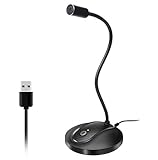
- 360 Degree Position Adjustable Gooseneck Design --Plug and play USB microphone Pick up the sound from 360-degree with high sensitivity, in the best possible location for sound to your PC gaming, dragon voice dictation, and talk to Cortana
- Mute Button & LED Indicator --One-click to mute/unmute your microphone for pc, Build-in LED indicator tells you the working status at any time
- Intelligent Noise-Canceling Tech --Premium omnidirectional condenser microphone with noise-canceling technology can pick up your clear voice and reduce background noise and echo
- USB Plug&Play(1.8/6ft USB Cable) -- No driver required. Just need to plug & play for the microphone to start recording, well compatible with Windows(7, 8, 10 and 11) and macOS. (NOT compatible with Xbox/Raspberry Pi/Android)
- Solid Construction--Adopting premium metal pipe and heavy-duty ABS stand to make sure that you will be satisfied with our computer mic quality
5. Evaluate on unseen audio at the shipping settings
Score the base and adapted models on the same held-out audio that never touched training, using the decoding and streaming settings from step 1. A training-set score or an offline number does not show how the model will behave on live streams.
Report two groups of numbers. The first is target WER, the metric you set out to improve. The second is WER on the non-target languages or dialects you serve, which exposes forgetting. The Saudi walkthrough reports English alongside the target dialect. The Greek and Bulgarian examples evaluate held-out FLEURS at 80 ms chunk latency, the lowest-latency streaming setting they describe; the table below lists those results.
6. Export and deploy after checks
NVIDIA’s Hugging Face walkthrough says the adapted model keeps the same architecture and can use the same serving path. Latency and accuracy are then set through the attention context, so re-run the step 5 evaluation at the setting you choose, not only at the one you trained with.
Before production, confirm the following on the NIM model card:
Quick wins for a faster PC:
Clear out junk files and repair common Windows errorsFree Scan →Fix the driver behind crashes, sound loss and screen glitchesFind Drivers →Repair Windows errors before they cause bigger problemsFix Now →Best Value
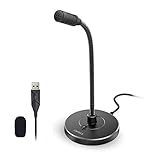
- 【Crystal Clear Audio Quality】Our Omnidirectional pattern condenser microphone accurately captures your voice, making it perfect for dictation, online classrooms, and more.
- 【Active Noise-Cancelling】Come in CMTECK CCS2.0 SMART CHIP with Omnidirectional Polar Pattern, which can effectively block the background noise. The pop filter prevents plosives from overloading the microphone, ensuring only your voice is heard.7
- 【Convenient Mute Button with LED Indicator】You can quickly mute/un-mute the microphone with the Mute Button and the built-in LED light lets you know the working status(Greenlight: Connected; Red light: Mute mode).
- 【Easy to use】 No drivers needed, just plug and record without external power supply, directly connect the microphone to a USB compatible device, well compatible with Windows(7, 8 and 10), Mac OS and PS4 (NOT compatible with Raspberry Pi/Linux/Android)
- 【Mini size with Adjustable Gooseneck】Adopted flexible and adjustable gooseneck metal pipe, easily adjust position 360 degrees to suit user comfort. The compact and stable base maximizes your desktop space.
- The multilingual NIM profile and the
type=multiselector are available for your deployment target. - Your checkpoint and runtime are supported. The sources cited here do not establish whether an adapted checkpoint carries the same support or license terms as the base model, so confirm that with NVIDIA’s current documentation.
- The model, the container, and any trial service have distinct terms. Read each one.
How much labeled audio you need
There is no universal threshold. The published experiments differ in language, corpus, task, and evaluation, so their data sizes are reference points, not rules. The figures are:
- The Greek and Bulgarian walkthrough describes a balanced mix of about 2,000 hours.
- The same walkthrough also describes a training pool that grew from roughly 290 hours to about 2,300 hours after about 2,000 hours of parliamentary speech were added. This is a separate pool description, not a second measurement of the balanced mix, so do not add the figures together or treat either one as a total for a single experiment.
- The Saudi experiment used 133.7 hours of Najdi and Hijazi speech.
The practical test is whether held-out target WER keeps improving as you add data while non-target WER holds. If target WER plateaus while you add more audio of the same kind, the gap is usually in recording conditions or transcription style rather than volume.
What the published experiments show
| Experiment (source) | Target | Base WER | Fine-tuned WER | Evaluation as reported | Relative change as reported |
|---|---|---|---|---|---|
| Greek (Hugging Face walkthrough) | Greek | 35% | 24% | Held-out FLEURS, 80 ms chunk latency | 32% |
| Bulgarian (Hugging Face walkthrough) | Bulgarian | 22% | 15% | Held-out FLEURS, 80 ms chunk latency | 31% |
| Saudi dialects (NVIDIA Technical Blog) | Najdi and Hijazi Arabic | 55.05% | 29.96% | Target test split | Not stated by the source; about 25 points lower, calculated from the reported values |
| Saudi experiment, non-target check (NVIDIA Technical Blog) | English | 11.04% | 10.42% | Non-target English WER | Not stated by the source |
Two qualifications apply. First, the reported relative changes for Greek and Bulgarian do not match their rounded WER values: those values give about 31% for Greek and about 32% for Bulgarian. The reported figures were probably computed from unrounded numbers, so quote them with their source or use the absolute drops of 11 and 7 points. Second, the English check moved only slightly, from 11.04% to 10.42%. That is one check on one non-target language, not evidence that other languages hold.
When results disappoint
- Target WER barely moves. Check the
target_langvalues first, then compare the transcript style in training with the held-out references. A tag mismatch or a punctuation and casing mismatch will hide gains. - Target WER improves while non-target WER drops. You are seeing forgetting. Add replay data, reduce target-only training, or test partial encoder unfreezing, accepting the accuracy trade-off the Saudi walkthrough reports for it.
- Offline or training-set scores look good, but live streams do not. The gain was measured at a different setting. Re-run the held-out evaluation at the attention context and chunking you ship.
- Held-out scores look too good. Check for speaker or recording-condition overlap between training and test audio. The split rules in step 2 apply.
Frequently Asked Questions
Which hardware did the reported Saudi dialect experiment use?
NVIDIA’s Technical Blog reports two NVIDIA RTX PRO 6000 Blackwell Workstation Edition GPUs for the Saudi dialect experiment. That is the documented setup of that one experiment, not a minimum requirement, and the sources cited here do not establish a hardware minimum for fine-tuning Nemotron 3.5 ASR.
Can I fine-tune for a locale that is not on the model’s list?
The published worked examples cover Greek, Bulgarian, and Saudi Arabic dialects (Najdi and Hijazi). The Saudi walkthrough’s title points to a path to other languages, but the cited sources do not show a locale outside the model’s list being added. Confirm the supported locale list on the model card and checkpoint documentation before you plan data collection.
Quick Recap
Product prices and availability are accurate as of the date/time indicated and are subject to change. Any price and availability information displayed on Amazon at the time of purchase will apply.

