
Do these 3 things before closing this tab:
1Repair Windows errors before they cause bigger problems2Fix the driver behind crashes, sound loss and screen glitches3Clear out junk files and repair common Windows errorsA cheap Ethernet cable or power problem can make a healthy homelab server look dead—but “$5 failure” is a hook, not a verified incident or documented repair price. Before replacing a server or switch, isolate the fault: check power and connections, substitute one known-good cable or port at a time, then test whether the problem is local, upstream, or configuration-related.
What the “$5 failure” means—and what it doesn’t
There is no documented homelab outage or confirmed $5 repair behind this phrase. It is a reminder to investigate inexpensive, reversible causes before buying major hardware. Vendor guidance identifies power supplies, cables, software versions, and configuration as possible sources of apparent hardware faults; MikroTik’s RouterOS “Try Before RMA” guide says many apparent hardware issues can be resolved without returning the device.
A device can be powered on while its network path is broken. Even a link light is not proof that an Ethernet cable is fully functional: Cisco’s LAN switching troubleshooting documentation warns that a marginal cable can still show link and accumulate packet errors.
1. Record the symptom before changing anything
Write down what is unreachable, whether the outage affects one server or the whole home network, whether it is constant or intermittent, and what the router, switch, and affected device LEDs show. Save relevant logs or screenshots. Changing several things at once makes it harder to identify which change mattered.
#1 Best Overall

- 8 GIGABIT PORTS: Features 8 RJ45 ports supporting 10/100/1000 Mbps speeds, providing high-speed wired network connectivity for computers, printers, gaming consoles, and other Ethernet-enabled devices
- PLUG AND PLAY SETUP: No configuration required; simply connect the switch to your network devices and it is ready to use immediately, making network expansion quick and hassle-free
- FANLESS QUIET DESIGN: The fanless design ensures silent operation, making this switch suitable for noise-sensitive environments such as home offices, bedrooms, or conference rooms
- STURDY METAL CONSTRUCTION: Built with a durable metal housing and shielded ports that provide reliable performance, better heat dissipation, and protection against electromagnetic interference
- TRAFFIC OPTIMIZATION: Supports IEEE 802.3x flow control and advanced traffic optimization technology to reduce data bottlenecks and ensure smooth, efficient data transfer across your network
- One host affected: Start with that host’s power, cable, port, and network settings.
- Several devices affected: Check shared components such as the switch, router, upstream connection, or power source.
- Intermittent symptoms: Note when they occur and whether link indicators change; a marginal connection may not fail continuously.
2. Check power, cable ends, ports, and LEDs
- Confirm the affected device and its switch or router are powered. If a device has a separate supply, check that it is the correct one for the device.
- Reseat both ends of the Ethernet cable. Confirm it is connected to the intended LAN or switch port, not an unintended WAN or Internet port.
- Inspect the cable and connectors for visible damage. Check link indicators at both ends; one side may show link when the other does not.
- For a PoE-powered device, check the switch’s available PoE budget and whether its PoE protocol is compatible with the device. If the device also supports a manufacturer-specified DC supply, testing that supply may help isolate a PoE issue. Do not try an arbitrary adapter.
These checks are consistent with MikroTik’s pre-RMA guidance and TP-Link Omada’s unstable-internet troubleshooting guide. Apply the instructions for the actual equipment: the TP-Link guidance is for Omada switches, while MikroTik’s advice is product-family specific.
3. Substitute one known-good component at a time
Use a cable known to work and suitable for the connection, keeping the rest of the network path unchanged. If the problem remains, try another switch or router port. Change one item per test, then check whether the symptom changes; replacing the cable and moving ports together would leave two possible explanations.
Rank #2

- GIGABIT ETHERNET PORTS: Features 8 x 1.0Gbps Ethernet ports for high-speed connectivity. Auto-negotiating ports detect the optimal speed for connected devices and work with existing Cat5e or Cat6 Ethernet cables.
- PLUG-AND-PLAY UNMANAGED NETWORK SWITCH: Simple plug-and-play setup with no software to install or configuration required.
- FLEXIBLE MOUNTING OPTIONS: Compact metal design supports desktop or wall-mount placement for versatile installation.
- SILENT & ENERGY-EFFICIENT OPERATION: Fanless design ensures silent performance, while IEEE 802.3az Energy Efficient Ethernet reduces power consumption without compromising high-speed network performance.
- REGIONAL COMPATIBILITY: Made for use in U.S. & CA only
A cable’s appearance and link light cannot establish that it is healthy under traffic. Cisco’s LAN switching guide notes that a stressed cable can remain marginal and accumulate errors. A known-good Ethernet patch cable is a useful diagnostic substitute, not a guaranteed fix. A cable tester is generally a more relevant consideration for long runs than for an ordinary short patch lead.
4. Separate a local fault from an upstream outage
Test the client and network path
Connect a PC using the same cable and port that served the affected device, then check whether the PC receives an IP address and can reach the intended network. This substitution can help distinguish a host-specific problem from a cable, port, or switch-path problem. Microsoft’s Windows Ethernet troubleshooting guide provides client-side checks for Windows. Its Windows 10 guidance should not be treated as current support advice: Microsoft ended Windows 10 support on 2025-10-14.
What’s actually slowing this PC down?
Pick the symptom - the matching free tool is one click away.
Rank #3

- 𝗢𝗻𝗲 𝗦𝘄𝗶𝘁𝗰𝗵 𝗠𝗮𝗱𝗲 𝘁𝗼 𝗘𝘅𝗽𝗮𝗻𝗱 𝗡𝗲𝘁𝘄𝗼𝗿𝗸: 5× 10/100/1000Mbps RJ45 Ports supporting Auto Negotiation and Auto MDI/MDIX.
- 𝗚𝗶𝗴𝗮𝗯𝗶𝘁 𝘁𝗵𝗮𝘁 𝗦𝗮𝘃𝗲𝘀 𝗘𝗻𝗲𝗿𝗴𝘆: Latest innovative energy-efficient technology greatly expands your network capacity with much less power consumption and helps save money.
- 𝗥𝗲𝗹𝗶𝗮𝗯𝗹𝗲 𝗮𝗻𝗱 𝗤𝘂𝗶𝗲𝘁: IEEE 802.3X flow control provides reliable data transfer and Fanless design ensures quiet operation.
- 𝗣𝗹𝘂𝗴 𝗮𝗻𝗱 𝗣𝗹𝗮𝘆: Easy setup with no software installation or configuration needed.
- 𝗔𝗱𝘃𝗮𝗻𝗰𝗲𝗱 𝗦𝗼𝗳𝘁𝘄𝗮𝗿𝗲 𝗙𝗲𝗮𝘁𝘂𝗿𝗲𝘀: Prioritize your traffic and guarantee high quality of video or voice data transmission with Port-based 802.1p/DSCP QoS and IGMP Snooping.
Check local reachability separately from Internet reachability
TP-Link’s Omada unstable-internet guide describes continuous pings to an external address. Its no-Internet troubleshooting guide also describes a local test: ping between two PCs connected through the isolated switch.
- If local devices can communicate but an external ping fails, investigate the router, its upstream connection, or the ISP path.
- If two local PCs cannot communicate on the isolated switch, look at the test setup, cable, ports, or switch.
- If ping succeeds but an application remains unavailable, investigate that service and its configuration; a successful ping does not prove every application is healthy.
Check the intended topology as well. TP-Link notes that a switch connected directly to a modem may leave only one device able to access the Internet. For a typical home setup, verify that the switch is behind the router: router → switch → client or server.
Rank #4

- More Ports, PoE Ready: UGREEN ethernet switch offers 8 PoE+ (802.3at/af) Gigabit ports (up to 30W each) and 2 Gigabit uplink ports, with a total power budget of 60W. Ideal for efficient power delivery and seamless network connectivity
- Intelligent Power Management: If power exceeds 60W, it cuts ports in priority order (8–1) to prevent overload. It auto-detects PoE devices, supplies power to them, and transmits data only to non-PoE devices. Short-circuited ports shut off independently
- PoE Auto Recovery: In Extend Mode, ports 1–6 automatically detect and restart powered devices (such as cameras or access points) when they go offline or freeze, ensuring stable PoE operation without manual monitoring or restart
- One Touch, Three Modes: The unmanaged ethernet switch can easily switch between Standard, Port Isolation (VLAN), and Extend with one button. Port Isolation separates ports 1–8 to prevent network storms. Extend mode supports PoE up to 820 ft, ideal for security systems and long-distance deployment
- High-Speed, Low Latency: The ethernet splitter offers 1000Mbps connectivity for real-time, lag-free monitoring with security cameras, efficient IP phone connections for work, and enhanced performance for wireless access points across your network
5. Check configuration after physical isolation
If a known-good cable and alternate port work, but the target service or network still does not, move on to addressing and relevant router or server settings. TP-Link specifically identifies VLAN and access-control-list (ACL) settings as possible causes of Internet-access problems on Omada switches. MikroTik’s pre-RMA guidance also includes software version and configuration among the areas to examine.
Back up the configuration before changing it, and avoid a factory reset until you have localized the likely fault. A reset can erase working settings without repairing a cable, power, or upstream problem.
Free tools Windows power users keep installed
One-click scans. No signup required.
Best Value
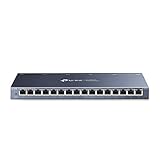
- One Switch Made to Expand Network-16× 10/100/1000Mbps RJ45 Ports supporting Auto Negotiation and Auto MDI/MDIX
- Gigabit that Saves Energy-Latest innovative energy-efficient technology greatly expands your network capacity with much less power consumption and helps save money
- Reliable and Quiet-IEEE 802.3X flow control provides reliable data transfer and Fanless design ensures quiet operation
- Plug and Play-Easy setup with no software installation or configuration needed
- Advanced Software Features-Prioritize your traffic and guarantee high quality of video or voice data transmission with Port-based 802.1p/DSCP QoS and IGMP Snooping
6. Escalate with test results, not just a symptom
If the switch or device remains suspect after basic isolation, collect the exact model, software version, observed LED states, topology, substitutions performed, and ping results. Include logs or screenshots where available. MikroTik asks users to provide a description and support output; TP-Link requests troubleshooting details and ping screenshots in its unstable-internet and no-Internet guides. The TP-Link articles are dated 2026-06-24.
Quick Recap
Quick fault-isolation checklist
- Scope: Is one host affected, or are multiple devices offline?
- Layer: Is the symptom about power or link, local switching, router/ISP reachability, or a particular service?
- Substitution: What changed when you used a known-good cable or a different port?
- Reachability: Does local traffic work while external access fails, or does the local test fail too?
- Cost and reversibility: Have you tried reseating connections or borrowing a known-good cable before purchasing a replacement device?
Product prices and availability are accurate as of the date/time indicated and are subject to change. Any price and availability information displayed on Amazon at the time of purchase will apply.

