
iTechGuides is reader-supported. When you buy through links on our site, we may earn an affiliate commission. As an Amazon Associate I earn from qualifying purchases. Learn more
Evaluate a construction company by looking beyond reported profit: examine whether earnings turn into cash, whether working capital and financing can support active projects, and whether backlog is likely to become profitable, collectible work. Read the company’s filings as a whole; no single ratio or backlog figure establishes financial health.
Start with the company’s financial statements and disclosures
Use a consistent reporting baseline
For a public company, begin with its latest annual report and subsequent quarterly filings. Read the income statement, balance sheet and cash flow statement alongside the notes, management’s discussion and analysis, and risk factors. A growing revenue or profit line can look different when you account for cash collection, debt maturities, contract assets, or project claims.



For a private company, seek audited financial statements where available, along with debt and surety information and schedules showing project status, contract economics, and customer exposure. Public-company filings provide useful examples, but their disclosures do not substitute for company-specific records.
What’s actually slowing this PC down?
Pick the symptom - the matching free tool is one click away.
Compare like periods and definitions
Use the same reporting dates and comparable periods when reviewing a company’s trend or comparing it with peers. Check whether a figure is an annual result, a quarter-end balance, or a company-defined operating measure. Backlog and remaining performance obligations, for example, are not automatically interchangeable; consult the issuer’s definition and any reconciliation before comparing them.
#1 Best Overall
Do earnings turn into cash?
Compare operating cash flow with earnings over time
Review cash provided by operating activities across multiple periods, then compare its direction with revenue and operating profit. A gap is not automatically a warning: project milestones and payment terms can make cash receipts lumpy. A large or persistent gap deserves investigation, especially if reported growth coincides with rising receivables, unbilled contract assets, or borrowing.
Construction work can be recognized before the customer pays. Retainage may be held until completion and acceptance, while change orders, claims, project progress, and customer payment terms can shift cash timing. Granite Construction’s 2025 Annual Report discusses project progress and working-capital changes as factors in operating cash flow; it reported $468.9 million of net cash provided by operating activities in 2025. That is a dated, company-specific result—not a sector benchmark.
Trace the working-capital balances behind the cash flow
Track receivables, contract assets, contract liabilities, payables, retainage, and disclosed claims or change orders. Ask whether balances are growing faster than the work they support, whether unbilled amounts are being converted into invoices and cash, and whether collections depend on disputed work or final project acceptance. Consider project duration: longer periods between spending and collection can tie up more cash even when a project is profitable on paper.
Quick wins for a faster PC:
Scan for outdated or missing drivers - takes under a minuteDriver Scan →Clear out junk files and repair common Windows errorsFree Scan →Rank #2

- Keep track of everything from attendance to test scores
- Spiral bound
- Measures 8-1/2" x 11"
Then assess what operating cash must cover: capital expenditures, debt service, dividends, and other commitments. Determine whether ordinary project cash generation is meeting those needs or whether the company is relying on cash reserves or borrowing to bridge working-capital requirements.
Can liquidity and financing support the work?
Review obligations as well as cash
Examine cash and equivalents, committed credit availability, debt maturities, interest expense, covenant requirements, lease obligations, and expected equipment or acquisition spending. Consider whether the company could meet those obligations if customer payments or project completion were delayed. A large credit line is less reassuring if it is uncommitted, close to maturity, restricted by covenants, or already needed for ordinary operations.
Quanta Services reported $2.77 billion in cash and available senior credit commitments as of June 30, 2026, in its 2026 Form 10-Q. This is one issuer’s liquidity disclosure at a specific date, not a benchmark for construction companies generally.
Use ratios as clues, not pass-or-fail tests
Current ratio, debt-to-equity, and leverage measures can help organize questions, but no universal cutoff establishes that a construction company is financially sound. Interpret a ratio against the company’s contract structure, asset mix, payment practices, seasonality, and debt terms. For example, the same working-capital balance can mean different things for companies with different project duration and customer payment schedules.
Is reported backlog likely to convert into revenue and cash?
Read the definition before relying on the headline
Record what the company includes in backlog, the measurement date, which award stages qualify, and whether the filing reconciles backlog to a GAAP measure such as remaining performance obligations. Check whether projects are signed and funded, whether notices to proceed have been issued, and what portion is expected to convert in the next year. A headline total is less informative without those details.
Backlog is an issuer-defined measure in the filings discussed here, and the definition can differ from one company to another. Sterling Infrastructure’s 2025 Annual Report describes its backlog as excluding unsigned awards and says its typical backlog projects are completed in six to 36 months. Those terms apply to Sterling’s disclosure, not automatically to another contractor.
Rank #4
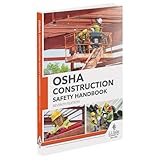
- 2024 OSHA Construction Safety Book is the seventh edition with the new OSHA HazCom final rule on 5/20/24. While the rule takes effect 7/19/24, the compliance dates don’t begin until 1/19/26 per 29 CFR 1910.1200(j).
- Construction Site Book offers quick access to essential OSHA regulations, jobsite hazards, and practical safety tips. It also helps employees identify hazards and prevent injuries and illnesses.
- Features easy-to-read format, full-color images, chapter quizzes with answer key, and comes in a compact size making it a convenient reference for employees.
- Critical topics include Confined Space Entry; Cranes & Derricks; Electrical Safety; Emergency Response; Ergonomics & Back Safety; Excavations; Fall Protection; First Aid & Bloodborne Pathogens; HazCom; Health & Wellness; Jobsite Exposures; Lockout/Tagout; Ladders & Stairways; Materials Handling/Storage; Motor Vehicles; PPE; Scaffolds; Site Safety & Security; Slips, Trips & Falls; Tool Safety; Welding, Cutting & Brazing; and Work Zone Safety.
- Specifications: 5 1/4” x 7 1/4", English, Soft bound. 7th Edition. Copyright 2024.
Test conversion and concentration
Compare historical backlog growth with revenue and operating cash flow. Ask whether additions to backlog have historically become completed work and whether the company has disclosed delays, cancellations, scope changes, or cost adjustments. Identify concentration in a small number of customers or large projects, and consider whether customer funding or project approvals remain outstanding.
For scale, Sterling reported backlog of $3.01 billion at December 31, 2025, compared with $1.69 billion at December 31, 2024. Quanta Services reported $53.44 billion of backlog and $33.55 billion of remaining performance obligations at June 30, 2026, with a reconciliation discussion in its 2026 Form 10-Q. These are issuer-specific figures using issuer-specific definitions; they should not be read as directly comparable totals or as guaranteed future sales.
The Tool Desk
Outbyte PC Repair FREEClear out junk files and repair common Windows errorsFree Scan →Outbyte Driver Updater FREEScan for outdated or missing drivers - takes under a minuteDriver Scan →Could contract terms or execution problems erase expected returns?
Review the company’s discussion of fixed-price and cost-reimbursable work, change-order practices, claims, customer and project concentration, joint ventures, termination rights, warranties, and liquidated damages. Fixed-price work can expose a contractor to cost overruns, while disputed changes or claims can delay collection. The effect depends on the contract terms and the company’s ability to execute.
Check for disclosed pressure from labor, equipment, fuel, or materials constraints, and consider seasonality when interpreting margins and cash flow. Ask whether a project loss or delayed payment could consume working capital, affect covenant headroom, or require additional financing. Risk disclosures are not predictions, but they help identify exposures that can change the economics of reported work.
What does bonding capacity tell you?
For companies pursuing public or otherwise bonded projects, review disclosures about bid, performance, payment, and maintenance bonds; bonded backlog; collateral pledged; and indemnity commitments. Sureties may assess capitalization, working capital, aggregate contract size, past performance, management expertise, existing bonded backlog, and market conditions. Bonding capacity can support access to certain work, but it does not prove that projects will be profitable or that cash will arrive on schedule.
One issuer’s filing describes typical bid bonds of 5% to 10% of a bid and performance and payment bonds that may cover up to 100% of construction costs. Those are issuer disclosures, not universal requirements for every contract. Review the company’s actual obligations and distinguish bonded work from its total reported backlog.
Do these 3 things before closing this tab:
1Fix the driver behind crashes, sound loss and screen glitches2Clear out junk files and repair common Windows errors3Scan for outdated or missing drivers - takes under a minuteHow should you compare construction companies?
When comparing candidates, use the same reporting date and consistent definitions. A practical review can be organized around these questions:
- Does operating cash flow broadly track earnings over time, and how much cash is needed for capital expenditures and debt service?
- How are receivables, contract assets, retainage, payables, and other working-capital balances changing?
- What qualifies as backlog, what stage are those awards in, how concentrated are they, and how have they converted historically?
- What contract mix and execution exposures are disclosed, including claims, change orders, termination rights, and joint-venture risk?
- Can cash, committed credit, and expected operating cash cover debt maturities, covenants, equipment needs, and other obligations?
- What are the company’s surety capacity, bonded backlog, collateral, and indemnity obligations?
- How might seasonality, labor availability, materials costs, or customer concentration affect delivery and collection?
Give more weight to trends and disclosure detail than to a single favorable quarter or large backlog total. A company-specific investment decision also depends on its latest records, contract exposures, financing terms, valuation, and your investment horizon.
Quick Recap
Product prices and availability are accurate as of the date/time indicated and are subject to change. Any price and availability information displayed on Amazon at the time of purchase will apply.

