
Do these 3 things before closing this tab:
1Scan for outdated or missing drivers - takes under a minute2Clear out junk files and repair common Windows errors3Fix the driver behind crashes, sound loss and screen glitchesiTechGuides is reader-supported. When you buy through links on our site, we may earn an affiliate commission. As an Amazon Associate I earn from qualifying purchases. Learn more
On wet pavement, slow down, leave more room to stop, and adjust to what you can see and how the car handles. If water covers the road—or a barrier closes it—turn around and take another route. Do not try to judge a safe crossing depth: floodwater can conceal a washed-out road, and moving water can sweep vehicles away.
Wet pavement and a flooded road call for different decisions
| Road condition | What to do |
|---|---|
| Wet pavement, with no water covering the road | Reduce speed, increase following distance, use headlights, and stop in a protected place if visibility or control becomes unsafe. |
| Water covering the road, or a road closed by barriers | Do not proceed, even if the water appears shallow. Turn around and reroute. |
The key distinction is whether the road is merely wet or is covered or closed—not your vehicle type, confidence, or guess about the water’s depth. U.S. National Highway Traffic Safety Administration (NHTSA) guidance says, “When you see the road is flooded, or if there are barriers blocking the road, turn around.”
Before you set out in heavy rain
- Check the forecast, local road conditions, traffic, closures, and evacuation routes. If conditions are dangerous, postpone the trip when possible. Use your local weather service and road authority for route information and warnings.
- Check that your tires, windshield wipers, headlights, tail lights, brake lights, and turn signals work. The National Weather Service (NWS) warns that bald tires provide less wet-road traction and little resistance to hydroplaning; replace old or brittle wipers before rain.
- Keep a charged phone available and prepare an emergency roadside kit. These are general travel preparations, not equipment that makes entering floodwater safe.
How to drive safely in heavy rain
Slow down and leave more space
Wet roads make it harder to control or stop a vehicle. Reduce speed and increase the gap to the vehicle ahead. In its heavy-rain guidance, NWS suggests allowing an extra two seconds beyond its two-second following rule. That is guidance from that page, not a universal law or a guarantee of safe stopping distance; leave more room if visibility, speed, or handling calls for it. Vehicles handle differently, so do not assume another vehicle’s behavior predicts yours.
Make smooth adjustments
Ease off the accelerator to slow gradually. Avoid sudden braking, which can cause a skid. Turn on your headlights so you can see and be seen, and take extra care around vehicles that are harder to see through rain-spattered windows. Spray from large trucks and buses can sharply reduce visibility, so avoid following them closely.
#1 Best Overall

- 2-in-1 emergency-escape tool provides a window hammer and seat-belt cutter; 2-pack
- Tungsten double-head hammer: 1800HV hardness, 3 times stronger than common carbon steel – for instant car-door window breakage
- Sharp blade for easily cutting through a seat belt; bright-orange plastic handle provides a secure grip
- Designed to help escape from a sinking, over-turned, crashed, or burning car
- Protective bracket included for safe storage; store in center console or driver-side door pocket
Water may pool in outside lanes, according to NWS Tulsa guidance. Do not make a risky lane change just to avoid a puddle; slow down and drive according to the conditions you can see. Take particular care during the first half hour after rain starts: NWS says grime and oil can mix with the water and make roads slippery.
Stop safely if you cannot see well enough
If rain overwhelms the wipers and you cannot see road edges or other vehicles at a safe distance, leave the roadway at a rest area or another protected location and wait for conditions to improve. If you have no safer option than pulling onto the roadside, get as far off the road as possible—NWS advises going beyond the end of a guardrail if possible—and use headlights and hazard flashers to warn other drivers.
Rank #2

- Vehicle Window Breaker: This smosun 2-in-1 safehammer glass breaker has a built-in high-pressure spring and a sturdy tungsten steel blade with a hardness of 55. Along with a 20KGF impact force can break the solid window glass in an instant. Note: Metal Tip Stays Inside The Tool - Only Springs Out When Breaking Glass.
- Seat Belt Cutter: The seat belt cutter features a built-in stainless steel cutter with a U-shaped hidden knife edge design, ensuring safety and preventing hand injuries. Simply align the U-shaped mouth of the cutter with the seat belt, push it forward swiftly, and get out of the vehicle easily and quickly.
- Upgraded Anti-Slip Design: The anti-slip bumps of the smosun window breaker have been designed and modified by designers hundreds of times to ensure that the handle is non-slip, comfortable and beautiful. The bumps can prevent your hand from slipping and making mistakes when using it, and break the window in one second, saving every second for your safety.
- Fashionable & Portable: This escape tool is only 4 inches, lightweight, and powerful. It is easy to carry and can be hung on your keychain or on your vehicle's center console using Velcro tape. You can buy two, one in the front row and one in the rear row.
- Widely Used: smosun Glass breaker is suitable for rescue, disaster response, escape, lifesaving, and any unexpected situations. Important Note: Only the tempered glass of the side windows of the car can be broken, and the laminated glass such as the front and rear windshield sunroofs cannot be broken. It's absolutely worth it.
How much water is too much to drive through?
If water covers the road, any amount is too much to treat as a safe crossing: turn around. The NWS campaign puts it plainly: “It is NEVER safe to drive or walk into flood waters.” Water can hide a washed-out roadbed, debris, or other hazards, and it can be difficult to judge depth and current from the driver’s seat, especially at night. Never go around a road-closure barrier.
What’s actually slowing this PC down?
Pick the symptom - the matching free tool is one click away.
NWS gives these figures to show how dangerous moving water can be; they are not clearance limits or permission to drive through shallower water. NHTSA gives the same vehicle warnings for 12 inches and 2 feet.
Rank #3
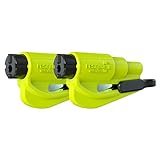
- The original 2-in-1 lifesaving compact car safety tool: this emergency keychain hammer provides peace of mind in case of car entrapment. Can be used in various situations: rollover, electrical system failure, car fire, floods, sinking car accident.
- Jammed seatbelt cutter: the razor-sharp, stainless-steel blade allows to cut a jammed seat belt in no time. Slice the seat belt diagonally for a quick and clean cut. Can be used multiple times.
- Tempered glass window breaker: the solid, heavy-duty, stainless-steel spike easily breaks tempered glass car side windows. Hit preferably one of the corners of the window. Spring-loaded mechanism and resets after each use. Reusable multiple times.
- Made in USA. We pride ourselves in offering efficient and reliable, made in the US, safety tools for the last 20 years.
- Trusted by first responders, Law Enforcement and EMTs and carried by more than 15 million motorists worldwide. The resqme seat belt cutter and window breaker saves a life on average every 15 days. Tested and certified by TUV, a German certification.
| Moving-water depth | Danger described by NWS |
|---|---|
| 6 inches | Fast-moving water can knock an adult off their feet. |
| 12 inches | Rushing water can carry most cars. |
| 2 feet | Water can carry SUVs and trucks. |
What to do if your car is caught in floodwater
- If the vehicle stalls in water or is caught in rising floodwater, leave it immediately if you can do so safely.
- Move to higher ground if it is safe to do so. Do not remain in a vehicle that may be swept away.
- Avoid walking through moving floodwater. Follow local emergency warnings and instructions.
Use local warnings and closures
The NHTSA and NWS guidance cited here is U.S. federal safety advice. Elsewhere, check your local weather service, road authority, emergency warnings, and closure notices; route information and emergency numbers vary by location.
Quick Recap
Best Value

- 【Manual Inflation Design】Inflates quickly via pull cord, offering reliable buoyancy during emergencies or water rescues.
- 【Durable & High Buoyancy】Made of 600D Oxford fabric and TPU nylon bladder, supports up to 320 lbs (145 kg) with a buoyancy of 120N, ensuring safety in critical moments.
- 【Tungsten Steel Glass Breaker】Equipped with a durable tungsten steel tip for breaking car windows in emergencies, ensuring quick escapes.
- 【Compact & Lightweight】Weighs only 1 lb (0.45 kg) and measures 25×8×8 cm, designed for easy portability with a hook and Velcro strap for convenient storage.
- 【Versatile Use】Perfect for vehicle rescue, fishing, and water safety; can also be thrown to aid others in distress. Reflective safety strip ensures visibility in low-light conditions.
Rank #4

- Professional Auto-Only Survival Tool, Non-Defensive Daily Gear Designed exclusively for vehicle emergency survival scenarios, including car collisions, vehicle rollovers, and water flooding accidents. Equipped with a concealed safety belt cutter and high-strength breaking tip, this tool can quickly release trapped passengers by cutting tight seat belts and breaking automotive side tempered glass, providing reliable life-saving support during driving emergencies.
- Enhanced Underwater Working Stability Featuring an upgraded premium spring mechanism, this car rescue tool maintains stable and effective performance even under water pressure after vehicle submersion. It will not fail in flooded vehicle environments, delivering dependable emergency escape solutions for various water-related driving accidents, strictly for automotive rescue use only.(Special Note: The tungsten steel tip is concealed; it activates only when pressed. It is not missing.)
- Dual-Pack Design for Multi-Car Safety Preparation This package includes two independent auto emergency tools, allowing flexible placement in different vehicles such as sedans, SUVs, pickup trucks and vans. You can store them in car glove boxes, door storage slots and center consoles to prepare adequate safety supplies for family daily driving and long-distance travel.
- Humanized Protective Structure for Safe Storage The sharp cutting blade is fully covered with a dedicated protective cover to effectively prevent accidental scratches and injuries during daily placement and touching. With a lightweight and compact body, it saves car storage space and can be easily grasped with one hand in sudden emergency situations.
- Essential Standard Car Safety Accessory for All Drivers This device is professionally manufactured for automotive emergency escape, and is not allowed for personal defense, physical confrontation, outdoor self-protection or any non-automotive purposes. It is a must-have safety accessory for novice drivers, daily commuters and family travel enthusiasts.
Product prices and availability are accurate as of the date/time indicated and are subject to change. Any price and availability information displayed on Amazon at the time of purchase will apply.

