
Free tools Windows power users keep installed
One-click scans. No signup required.
iTechGuides is reader-supported. When you buy through links on our site, we may earn an affiliate commission. As an Amazon Associate I earn from qualifying purchases. Learn more
A pharmaceutical AIoT pipeline connects process sensors and control systems to edge connectivity, manufacturing and quality systems, and governed analytics. Design it as interoperating layers—not as a single AI platform—and define each data stream’s purpose, authority, security, and validation needs before connecting systems. Pharma 4.0 is an organizational and quality-system transformation as well as a technology effort; connectivity alone does not establish regulatory compliance.
What a pharmaceutical AIoT pipeline does
AIoT combines connected industrial devices and data flows with analytics, including AI where it is appropriate. In pharmaceutical manufacturing, the pipeline moves measurements and context from equipment toward operational systems and analytics while preserving the controls needed to use that information responsibly.
A useful reference flow is process instrument or smart sensor → control or acquisition system → edge connectivity and data handling → IT or cloud services and operations systems. Destinations can include a historian, manufacturing execution system (MES), laboratory and quality systems, analytics, and enterprise applications. This is a design pattern, not a prescribed topology: installed systems, intended use, risk, and site constraints determine the actual architecture.
Quick wins for a faster PC:
Fix the driver behind crashes, sound loss and screen glitchesFind Drivers →Repair Windows errors before they cause bigger problemsFix Now →How the layers fit together
| Layer | Role in the pipeline | Design questions |
|---|---|---|
| Equipment and instruments | Measure process conditions or equipment state and provide the originating values. | What is measured, in which units, and with what identity, timestamp, and context? How will bad, missing, or out-of-range readings be identified? |
| Control or acquisition system | A distributed control system (DCS) or another local system supports process control and operational visibility. | Which data can be exposed without disrupting control? Which system remains authoritative for control and its records? |
| Edge connectivity | Connects devices and systems using plant-relevant interfaces, selects or routes data, and provides a managed exchange point between operational technology (OT) and information technology (IT) or cloud environments. | What is processed or buffered locally? How are access, updates, outages, and recovery managed? |
| Operations and data systems | Historians, MES, laboratory and quality systems, and enterprise applications use data for their defined operational purposes. | Which system owns each record? How is data linked to the relevant process, product, equipment, and batch context? |
| Analytics and AI | Analytics can present information or generate predictions and recommendations for an explicitly defined use. | Is the output advisory or does it affect a GxP-relevant decision? How are model versions, inputs, changes, and use controlled? |
The edge layer is not automatically a replacement for control systems, MES, or historians. Its value is as a managed connectivity and data-handling layer whose responsibilities are explicit.
#1 Best Overall
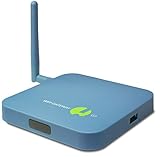
- REMOTE MONITORING: The SensorPush G1 WiFi Gateway allows you to monitor your SensorPush sensors (sold separately) from anywhere via the internet, providing real-time data access on both mobile and computer devices.
- CLOUD STORAGE: With unlimited cloud storage included (no monthly fee), you can easily access your data history, current conditions, and alerts, ensuring peace of mind even when you're far from home.
- EASY TO USE: The G1 WiFi Gateway offers a simple, user-friendly interface that lets you stay connected to your wifi temperature sensor, providing the same experience, accuracy, and functionality as local monitoring.
- VERSATILE APPLICATIONS: Ideal for remote vacation home monitoring, greenhouses, or collections like cigars or wine, ensuring your valuable items are always safe, whether you're near or far.
- A STANDARD OF EXCELLENCE: SensorPush is a U.S. based company. Development and support is handled in-house by our small, caring team. Thousands of satisfied customers agree that our quality, accurate components, careful design, and dedicated, responsive support make the SensorPush digital hygrometer thermometer a one-of-a-kind premium environmental monitoring experience. Any questions? Just reach out. We're always happy to help, before or after your purchase.
What the ISPE proof of concept demonstrates
ISPE’s Plug & Produce concept paper describes one proof of concept, not a regulator-approved reference architecture. In that demonstrator, a smart sensor connected to a DCS using OPC UA and also connected to an edge device using Bluetooth Low Energy (BLE) and OPC UA. Two secure communication paths to a cloud environment were implemented: an edge-device path using MQTT and a connectivity-server path using WebSocket Secure. The cloud platform collected, analyzed, and presented data; the paper describes the communication paths as redundant in the demonstrator.
The paper reports that the setup demonstrated retrofitting smart sensors into a brownfield plant. It also reports that OPC UA and MQTT were easy to implement and robust in information transfer in that proof of concept. These are results from that specific setup, not a controlled comparison, a performance guarantee, or evidence that every plant’s devices and systems will interoperate. Brownfield feasibility does not by itself establish integration cost, compatibility, or implementation simplicity.
Rank #2
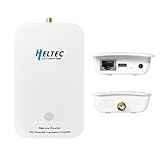
- Ultra-Long Range Wi-Fi HaLow 802.11ah Gateway: Adopts sub-1GHz low-frequency RF to achieve 1km+ transmission distance, stronger penetration through obstacles, max 32.5Mbps throughput, perfect for remote agricultural, industrial monitoring IoT sensors.
- Dual-Band + Multi-Interface Integration: Dual wireless: 802.11ah HaLow + 2.4GHz Wi-Fi; comes with RJ45 Ethernet, USB-C, SMA antenna port, high-speed MT7628 core, sufficient memory for heavy-duty IoT networking.
- High-Density Node Access & Mesh Networking: Handles far more connected devices than regular Wi-Fi routers; supports AP/STA/Mesh three core modes to construct large-area wireless sensor networks without extra bridging hardware.
- Browser-Based Setup & Remote OTA Upgrade: Intuitive web configuration page for all network parameters; remote OTA firmware update function avoids field visits, simplifies long-term network management for commercial IoT projects.
- Industrial-Grade Reliable Hardware: Wide -20~70℃ working temperature, wall-mount compact casing, visible LED status lights, low power consumption, stable 24/7 operation for smart agriculture, manufacturing, smart city applications.
Where OPC UA, MQTT, and other standards fit
Protocols and standards address different parts of the problem. Protocol selection should reflect what the installed equipment supports, which systems exchange data, and how the site manages security, semantics, and lifecycle changes.
| Technology | Role described in the source material | Design implication |
|---|---|---|
| OPC UA | ISPE describes it as a cross-platform data-exchange standard; it was used for sensor connections in the proof of concept. | Check endpoint support, information models, identity and access controls, and how the receiving system interprets each value. |
| MQTT | Used for the edge-device cloud path in the proof of concept; ISPE reports implementation and information-transfer results for that test. | Define the broker and trust boundaries, message context, delivery behavior, and handling of disconnection or delayed data. |
| BLE | Used between the smart sensor and edge device in the proof of concept. | Confirm device support, operating conditions, and how wireless connectivity is secured and managed at the site. |
| WebSocket Secure | Used for the separate connectivity-server path to the cloud in the proof of concept. | Evaluate its role within the full connection design and the site’s security controls. |
| ISA-95 | ISPE describes it as a standard way to describe information flow between manufacturing operations management and other systems. | Use it to clarify system boundaries and information exchange, not as a substitute for defining site-specific data meaning. |
| PackML | ISPE describes it as a way to improve consistency in machine data. | Consider it where consistent machine-state information supports integration. |
| IEC 61499 | ISPE’s discussion mentions it in relation to distributed automation. | Assess its relevance to the automation design; its use does not by itself address pharmaceutical quality-system requirements. |
No protocol or standard, by itself, fulfills pharmaceutical regulatory requirements. Interoperability requires more than a successful connection: systems also need consistent definitions, units, timestamps, equipment and process context, and agreed handling of quality and error conditions.
Rank #3

- Seamless Internet Connectivity: Effortlessly connect industrial thermometers (PT100 RTD) to the Internet, transmitting temperature data via HTTP(s), MQTT, TCP, Modbus/TCP, and more.
- Comprehensive Data Processing: Rescale, filter, and add additional information such as timestamps and device IDs to PT100 RTD temperature values before transmission.
- Versatile Protocol Support: Compatible with multiple formats (JSON, XML, CSV) and protocols, ideal for integration with MQTT brokers like AWS IoT Core, Mosquitto, and HiveMQ.
- Embedded Web Server Capability: Easily monitor real-time PT100 RTD temperature data from any web browser with a customizable web interface, minimizing infrastructure needs.
- Easy Programming with PHPoC: Simple to program with the PHP-based language PHPoC, with optional customized service available to meet specific programming and data management requirements.
How to design and implement the pipeline
- Define intended use. For every proposed stream and output, record whether it supports process control, quality evidence, maintenance, monitoring, or advisory analytics. Identify decisions that could affect product quality or a regulated process.
- Map the installed environment. Inventory relevant sensors, DCS and acquisition systems, MES, historians, laboratory and quality systems, and enterprise connections. Record supported interfaces, data ownership, and operational constraints before choosing an integration path.
- Specify data meaning and provenance. Define the source, timestamp, identity, units, context, lineage, and authoritative system for each value. Decide how to represent stale, missing, invalid, or delayed data rather than allowing downstream systems to interpret it inconsistently.
- Choose the connection pattern. Determine which interfaces are supported and where translation, routing, buffering, or selection belongs. Evaluate data access at source versus replication in light of the actual use, system capabilities, integrity needs, and operational constraints.
- Design the OT/IT boundary. Set network zones, permitted communication paths, trusted identities, access rights, and responsibilities for edge-device and system maintenance. Specify how the pipeline behaves during a network outage and how it recovers without confusing delayed data with current values.
- Assess qualification, validation, and change controls. Determine evidence and controls according to intended use and risk. Include system configuration, interfaces, access, audit trails where relevant, and lifecycle changes; define how sensor, software, and model changes are reviewed.
- Introduce analytics under governance. Define the model’s purpose, inputs, output interpretation, user responsibilities, version control, monitoring, and response to unexpected behavior. Keep AI output within its assessed use; a technically connected model is not thereby suitable for a particular GxP decision.
- Expand deliberately. Test integration and failure handling in the chosen environment, document results and limitations, and use the lessons to inform expansion across lines or sites. Do not infer site-wide performance from a proof of concept.
Governance: security, data integrity, and regulatory fit
ISPE’s Pharma 4.0 materials frame the transformation as involving organizational, cultural, process, resource, and technology changes. They identify an established pharmaceutical quality system and controlled processes and products as prerequisites, and warn that greater connectedness raises security needs. That means the architecture must sit within an operating model that assigns responsibilities and controls; it is not a stand-alone compliance solution.
- Protect the boundary. Define trusted access and permitted flows between OT, IT, edge, and cloud environments. Include how credentials, configuration, updates, and support access are governed.
- Preserve data integrity and traceability. Keep enough source and context information to establish what a value represents, when it was captured, and how it reached its destination. Identify which system is authoritative for each use.
- Plan for degraded conditions. Specify what happens when a sensor is faulty, a link is unavailable, or an edge component restarts. Ensure downstream users can distinguish current information from delayed, incomplete, or suspect data.
- Control lifecycle changes. Define review and change processes for interface configuration, system versions, and AI models in proportion to their intended use and risk.
- Match evidence to intended use. Determine what qualification or validation is appropriate for each component and function rather than assuming that every connected component has the same regulatory impact.
ISPE’s Plug & Produce paper notes that data access at the source can avoid replication and some associated data-integrity and configuration or validation overhead. Treat this as an architectural consideration, not an automatic benefit: source access still needs suitable controls, and the right choice depends on the systems and intended use.
Rank #4

- REMOTE MONITORING: The SensorPush G1 WiFi Gateway allows you to monitor your SensorPush sensors (sold separately) from anywhere via the internet, providing real-time data access on both mobile and computer devices.
- CLOUD STORAGE: With unlimited cloud storage included (no monthly fee), you can easily access your data history, current conditions, and alerts, ensuring peace of mind even when you're far from home.
- EASY TO USE: The G1 WiFi Gateway offers a simple, user-friendly interface that lets your SensorPush devices function as wifi temperature sensors, giving you remote access with the same accuracy and functionality as local monitoring.
- VERSATILE APPLICATIONS: Ideal for remote vacation home monitoring, greenhouses, or collections like cigars or wine, ensuring your valuable items are always safe, whether you're near or far.
- A STANDARD OF EXCELLENCE: SensorPush is a U.S.-based company, with development and support handled in-house by our small, dedicated team. Carefully inspected and verified for reliable operation, this SensorPush G1 WiFi Gateway delivers the same dependable remote monitoring experience trusted by thousands of customers. Have questions? Just reach out– we're always happy to help before or after your purchase.
What current FDA activity does—and does not—establish about AI
FDA’s Center for Drug Evaluation and Research (CDER) FRAME page lists public feedback on regulatory considerations for AI in drug manufacturing, published in May 2025, and a related FDA/PQRI workshop held September 26–27, 2023. This establishes that regulatory discussion of AI in drug manufacturing is active. It does not establish a blanket approval rule, approve a particular pipeline, or show that a specific model is appropriate for a particular GxP decision.
ISPE describes its Pharma 4.0 mission as providing practical guidance that embeds regulatory best practices to accelerate Pharma 4.0 transformations. In practice, organizations still need to establish how an AI use fits their quality system, intended use, risk assessment, and applicable requirements.
How to assess an architecture before scaling it
Compare candidate designs against the same operational questions rather than choosing a platform on connectivity claims alone:
- Can it interoperate with the installed sensors, DCS, MES, historians, and enterprise systems?
- Does it support the necessary protocols and preserve the semantics and context of the data?
- Should data be accessed at source or replicated for the defined purpose, and what integrity and traceability controls follow?
- Are cybersecurity responsibilities and OT/IT boundaries explicit, including access and lifecycle management?
- Can the design identify stale, missing, or questionable values and behave safely during disconnection?
- What qualification, validation, and change-control burden follows from each component’s intended use and risk?
- Can the approach scale across lines and sites without losing consistent data definitions or governance?
These questions make the pipeline a system-design and quality-governance problem, not simply a choice of sensor, edge gateway, MES, or AI model.
Quick Recap
Product prices and availability are accurate as of the date/time indicated and are subject to change. Any price and availability information displayed on Amazon at the time of purchase will apply.
Do these 3 things before closing this tab:
1Fix the driver behind crashes, sound loss and screen glitches2Repair Windows errors before they cause bigger problems3Scan for outdated or missing drivers - takes under a minute
