
Free tools Windows power users keep installed
One-click scans. No signup required.
iTechGuides is reader-supported. When you buy through links on our site, we may earn an affiliate commission. As an Amazon Associate I earn from qualifying purchases. Learn more
You can transfer photos and videos directly from an iPhone to a compatible Seagate external drive using Apple’s Photos app. Connect the drive, select the items, then choose Export Unmodified Original and save them to the drive. Before you start, check the iPhone connector, drive format, partition layout, and power needs: a Seagate label alone does not guarantee that a specific drive will work directly with every iPhone.
What you need before connecting the drive
- A compatible connection: Identify whether your iPhone has USB-C or Lightning and use a cable or adapter that matches the phone and drive. Apple describes direct connection or a compatible adapter; for Lightning, it names the Lightning to USB 3 Camera Adapter. That adapter is for Lightning iPhones, not USB-C models. Apple’s adapter guidance also explains importing and exporting with camera adapters.
- A supported drive format and layout: Apple requires a single data partition. Supported formats include APFS, encrypted APFS, macOS Extended (HFS+), exFAT, FAT32, and FAT. Apple’s external-storage guide lists these requirements.
- Enough power: Some external hard drives need more power than the iPhone connection supplies. Apple describes using a powered USB hub with a USB-C iPhone when the drive lacks its own power, or connecting the Lightning to USB 3 Camera Adapter to a USB power adapter for a Lightning iPhone. Check the specific drive’s power requirements rather than assuming every model behaves alike.
- Originals available on the phone: If iCloud Photos is on and the full-resolution originals are not stored locally, download them before exporting (see below).
Transfer photos and videos from Photos to the drive
- Connect the external drive. Attach it directly or through the appropriate compatible adapter. Supply additional power if the drive needs it.
- Confirm the iPhone recognizes it. Open Files, tap Browse, and look under Locations for the external storage. If it is missing, troubleshoot the connection before opening Photos.
- Select the items in Photos. Open the Photos app, tap Select, and choose the photos and videos to copy.
- Export the originals. Tap Share, choose Export Unmodified Original, select the external drive under Locations, choose a destination folder if needed, and tap Save. Apple documents this workflow in its iPhone Photos import and export guide.
- Verify the saved files. In Files, open the destination folder and check that the expected photos and videos are present before deleting anything from the iPhone. The export workflow does not describe an automatic deletion step.
Know what this export includes
It exports unmodified originals
Export Unmodified Original saves the original files, not the rendered versions of edits made in Photos. If a photo looks different on the drive, that is expected when you have edited it in Photos. Preserve the original with this command, or use another workflow if you specifically need an edited rendering.
Locked Hidden album items are excluded
Apple says items in a locked Hidden album are not transferred. Unlock the album in Photos before exporting those items, following Apple’s Hidden photos guidance.
Do these 3 things before closing this tab:
1Fix the driver behind crashes, sound loss and screen glitches2Clear out junk files and repair common Windows errors3Scan for outdated or missing drivers - takes under a minuteIf iCloud Photos originals are not on your iPhone
When iCloud Photos is enabled, your iPhone may keep optimized versions locally while full-resolution originals remain in iCloud. Apple’s iCloud archiving guidance says to select Download and Keep Originals before choosing items to export. Allow the originals to download before starting the transfer; the cited guidance does not specify a guaranteed download time.
#1 Best Overall

- Easily store and access 2TB to content on the go with the Seagate Portable Drive, a USB external hard drive
- Designed to work with Windows or Mac computers, this external hard drive makes backup a snap just drag and drop
- To get set up, connect the portable hard drive to a computer for automatic recognition no software required
- This USB drive provides plug and play simplicity with the included 18 inch USB 3.0 cable
- The available storage capacity may vary.
Why a Seagate drive may not appear or complete the transfer
It is missing from Files under Locations
- Check that the cable and adapter match the iPhone’s Lightning or USB-C port and are connected securely.
- Confirm the drive has one data partition and uses a file system supported by iPhone.
- Provide external power or use the appropriate powered hub or adapter if the drive requires it.
- Disconnect and reconnect the drive, then check Files > Browse > Locations again.
It appears, then disconnects or fails during export
Check the physical connection and the drive’s power needs. Apple gives general power guidance, but the power draw of a particular Seagate model is not established here. If the drive remains unstable, consult its model-specific instructions rather than assuming the iPhone can power it.
The exported photo differs from the one in Photos
Check whether you chose Export Unmodified Original. That option intentionally exports the unedited original rather than the Photos-edited rendering.
Rank #2
- Easily store and access 1TB to content on the go with the Seagate Portable Drive, a USB external hard drive.Specific uses: Personal
- Designed to work with Windows or Mac computers, this external hard drive makes backup a snap just drag and drop. Reformatting may be required for Mac
- To get set up, connect the portable hard drive to a computer for automatic recognition no software required
- This USB drive provides plug and play simplicity with the included 18 inch USB 3.0 cable
- The available storage capacity may vary.
Seagate-specific compatibility and apps
Seagate’s USB-C iPhone and iPad support article says compatible USB-C iPhones running iOS 17 or later can access, share, and copy files with many LaCie devices through Files. That statement is about many LaCie devices; it does not establish direct iPhone compatibility for every Seagate-branded drive or every model. Verify the exact model, connector, format, and power requirements.
Do not install Toolkit on the iPhone for this task: Seagate says Toolkit is unavailable for iOS and iPadOS. Toolkit features vary by drive, and its cited feature table identifies backup as a computer feature for Windows, not the direct iPhone Photos export method. Seagate’s Mobile Backup app has been discontinued, so Apple’s Photos export is the current direct workflow described here.
Rank #3
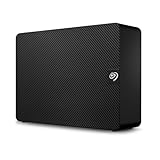
- Easy-to-use desktop hard drive—simply plug in the power adapter and USB cable
- Fast file transfers with USB 3.3
- Drag-and-drop file saving right out of the box
- Automatic recognition of Windows and Mac computers for simple setup (Reformatting required for use with Time Machine)
- Enjoy peace of mind with the included limited warranty and Rescue Data Recovery Services
Seagate’s general operating-system requirements page is aimed at supported consumer hardware and software for computers; it lists Windows 10 or later and macOS 12 Monterey or later, notes that most drives are formatted exFAT, and cautions that compatibility can vary by hardware configuration. Those computer requirements do not prove that a particular drive works directly with an iPhone.
Quick Recap
Product prices and availability are accurate as of the date/time indicated and are subject to change. Any price and availability information displayed on Amazon at the time of purchase will apply.

