
iTechGuides is reader-supported. When you buy through links on our site, we may earn an affiliate commission. As an Amazon Associate I earn from qualifying purchases. Learn more
A backyard weather station can report measurements through APRS by pairing a compatible sensor or console with a formatter and a route onto the APRS network. For over-the-air coverage, that route uses a packet-capable amateur radio; for internet-only reporting, software can send data directly to APRS-IS without transmitting on radio. The right setup depends on what your instrument outputs, which weather fields you want to report, and whether you need nearby radio operators to hear the packets.
What you need for an APRS weather station
The basic chain has three parts: an instrument that measures weather, a formatter that turns its readings into APRS weather data, and a way to deliver the packet. The formatter may be software that polls a weather console or a weather-capable terminal node controller (TNC). A radio-based system adds an amateur transceiver and antenna; an internet-based system sends data to APRS-IS instead.
- Weather instrument: A console or sensor system with an output the formatter supports. APRS documentation describes serial data support for Peet Brothers, Ultimeter, and Davis home weather stations, but compatibility with current models and interfaces should be checked rather than assumed.
- Formatter: Software or a TNC that reads the instrument and constructs a valid APRS weather packet.
- Network route: A VHF radio for RF transmission, or an internet connection and supported software for a direct APRS-IS feed.
The APRS World guide describes this general architecture and advises checking current product documentation because models and support can change: APRS Weather Stations — Live Ham Radio Weather. The protocol reference documents weather-report formats and historical serial support: APRS Protocol Reference, Chapter 12: Weather Reports.
Do these 3 things before closing this tab:
1Clear out junk files and repair common Windows errors2Fix the driver behind crashes, sound loss and screen glitches3Repair Windows errors before they cause bigger problemsChoose how the readings will reach APRS
| Route | What happens | Best fit and checks |
|---|---|---|
| Sensor + formatter/TNC + VHF radio | The station transmits packets over amateur radio. Nearby APRS stations may hear them; an iGate can forward received packets to APRS-IS, and digipeaters can retransmit packets to extend radio coverage. | Choose this when an on-air beacon and local RF reception matter. Confirm the sensor-to-formatter interface, radio/TNC compatibility, antenna and coverage, and applicable licensing and frequency rules. |
| Sensor + formatter + direct APRS-IS feed | Software sends the weather data over the internet to APRS-IS without an RF beacon. | Choose this when internet display is the goal and local operators do not need to receive a radio transmission. Confirm software support for the data source and reliable network access. |
| Supported 433 MHz sensor + RTL-SDR + Raspberry Pi project | A receiver captures certain consumer weather-station transmissions and a project forwards readings to APRS-IS. | This is specific to the sensors and instructions supported by the project, not a general capability of all consumer stations. The documented callsign-based APRS-IS workflow is for licensed amateur operators; check current project compatibility and maintenance. |
For a radio path, an iGate is the bridge that can carry a packet heard on RF onto the internet. A direct APRS-IS feed skips that radio path entirely, so an online map entry does not by itself mean the station has transmitted over the air. APRS.fi documents its data collection and display service in its user guide.
#1 Best Overall
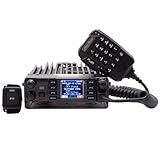
- Includes a FREE $97 Training Course from BridgeCom Systems, designed to help you quickly understand setup, programming, and key features, plus a FREE Codeplug to make getting started easier and faster.
- Bluetooth Audio: Seamless wireless audio connectivity allows for hands-free operation and convenient integration with compatible audio accessories
- Powerful Speaker: High-performance built-in speaker delivers clear, loud audio output ensuring reliable communication in noisy environments
- Learning Support: Includes comprehensive step-by-step course material to help users maximize the radio's features and capabilities for amateur radio operations
The SDR method is documented as a particular project at WxAlerts.org’s One-command SDR to APRS installer. Treat its sensor list and setup instructions as project-specific and subject to change.
Decide which weather fields to report
APRS weather packets can carry wind direction, sustained wind speed, peak gust, temperature, rainfall, humidity, and pressure. A station reports only the fields its instrument measures and formatter supports. The APRS Protocol Reference distinguishes raw, positionless, and complete weather reports; required layout details depend on packet type, so not every field is mandatory in every configuration.
Rank #2

- 【Enhanced Solar Performance】Equipped with a large 8500mm² monocrystalline panel, this emergency radio captures more sunlight and converts it into usable power faster than standard models. A reliable backup power source for blackouts, outdoor use, and emergency situations.
- 【Fast & Efficient Hand Crank Generator】Crank just 1 minute to power emergency calls, lighting, or news updates—2× faster than standard models. With a reinforced crank arm and high-efficiency internal dynamo, it's designed for real-world emergencies.
- 【Real 12000mAh Emergency Power Supply】Unlike radios with exaggerated claims, this weather radio built-in real 12000mAh battery delivers dependable power whenever you need—charging your phone, running lights, and keeping you connected during blackouts, storms, and disasters. No guesswork—just real, tested capacity you can trust.
- 【Dual Emergency Lights】Features a powerful 5W adjustable-beam flashlight and a soft 12-LED reading lamp. Both offer multiple brightness levels for reliable lighting in blackouts, camping, or nighttime use.
- 【Home & Outdoor Essential】This IPX6 waterproof weather radio keeps you powered, informed, and heard—with 5 ways to charge, NOAA alerts, and a loud SOS alarm. Compact, durable, and reliable—perfect for both emergency preparedness and outdoor adventures.
| Measurement | Documented raw-field convention |
|---|---|
| Wind direction | Degrees |
| Sustained wind speed | Miles per hour; the reference specifies a one-minute wind speed |
| Peak gust | Miles per hour; the reference specifies the peak over the preceding five minutes |
| Temperature | Degrees Fahrenheit |
| Rainfall | Hundredths of an inch, with fields for the last hour, last 24 hours, and since midnight |
| Humidity | Percent |
| Pressure | Tenths of millibars or hectopascals |
These conventions come from the APRS Protocol Reference, version 1.0.1, dated 29 August 2000. A map or viewer may convert units for display, but that does not change the encoded convention. If a raw or positionless weather report does not include location, the protocol reference says the station must also transmit a separate position packet periodically for map display.
What’s actually slowing this PC down?
Pick the symptom - the matching free tool is one click away.
Plan the RF installation before transmitting
For an RF station, assemble a compatible weather data source, formatter or TNC, VHF transceiver, antenna, and suitable power. The National Weather Service Western Region’s historical packet-radio field report describes these component roles, including computers, radios, TNCs, power supplies, antennas, and weather instruments. Its prototype began field deployment in spring 1995, so it is useful for understanding system components and siting considerations, not as a current product list or performance guarantee: Western Region Technical Attachment: Packet Radio Weather System.
Rank #3

- NOAA Weather Scan & Alert - This emergency weather alert radio features S.A.M.E localized programming and alert you to over 60 kinds of weather hazards and emergencies. NOAA Weather Scan will automatically alert you of events.
- S.A.M.E Localized Programming - The Specific Area Message Encoding (S.A.M.E.) allows the user to enter a code that is specific to your country, state, county and in some cases partial county.
- Notification Settings - Program your radio to receive weather alerts from up to 25 different counties and be alerted only when those specific counties are threatened. Color-coded alert indicators show the alert type and its severity.
- Additional Features - SAME localized programming, continuous backlighting option which keeps the LCD on, 25 programmable counties, color-coded alert indicators, alert override automatically switches to warn of impending danger.
- Experience a comprehensive range of radios from Midland, designed to keep you connected and informed. Our radios offer an array of features, including reliable real-time weather alerts, and robust two-way communication capabilities.
- Verify instrument output: Check the exact console or sensor model and the available data connection. Confirm that your formatter or TNC supports that combination.
- Set up packet formatting: Configure the station identity, weather fields, and packet type in the supported software or TNC. Use the relevant device documentation for current settings.
- Check location and coverage: A weather packet without location may not appear as a mapped station until a separate position packet is sent. RF reception also depends on local stations and radio paths; the presence of an iGate or digipeater cannot be assumed.
- Confirm local operating rules: Frequency and legal requirements vary by jurisdiction and configuration. Check your regulator and local amateur-radio band plan before transmitting; do not rely on a frequency found in an older guide as a universal current setting.
Check whether a displayed reading is useful
A public APRS marker is only as current as its most recent packet. Check the station’s timestamp before treating a reading as current, and consider which sensors are actually installed and reporting. Geographic coverage is uneven, and amateur instruments can differ in calibration. APRS weather is supplementary information, not a certified observation network or a replacement for official radar, watches, or warnings.
Service documentation can help explain what a map is displaying, but a plotted value alone does not establish sensor accuracy or continuous transmission. See the aprs.fi user guide for the service’s APRS data and visualization context.
Quick Recap
Rank #4

- 50W DUAL-BAND MOBILE FOR LICENSED AMATEURS – High-power VHF/UHF mobile built for road and base use with 5W/25W/50W selectable output, a mobile-ready control workflow, and fast access to the functions you actually use while installed.
- APP-CONNECTED PROGRAMMING + CSV FLEET SETUPS – Program from the BTECH UV Programmer app (iOS/Android) over Bluetooth: edit channels, tones, offsets, and zones from your phone, then sync back in seconds. Import/export via CSV to clone templates for clubs, convoys, events, or multiple vehicles.
- BLUETOOTH HFP AUDIO + DATA MODES – Supports Bluetooth HFP audio for hands-free listening with compatible devices, plus Bluetooth data support for workflows like KISS TNC where enabled—built for modern “connected mobile” operation, not just keypad programming.
- BRING YOUR OWN BLUETOOTH AUDIO (VOX/PTT OPTIONS) – Pair with common Bluetooth HFP gear like vehicle Bluetooth and compatible headsets for clear listening on the move. Transmit using VOX (voice-activated) or with a compatible PTT option for quick callouts when hands need to stay on the wheel or on the job.
- GPS + APRS LOCATION TOOLS FOR REAL COORDINATION – Built-in GPS plus APRS features for tracking and position workflows in the field: smart beaconing, Mic-E support, improved ACK handling, destination settings, GPWPL upload, and custom location override for fixed sites or when GPS isn’t available.
Product prices and availability are accurate as of the date/time indicated and are subject to change. Any price and availability information displayed on Amazon at the time of purchase will apply.
Free tools Windows power users keep installed
One-click scans. No signup required.

