
iTechGuides is reader-supported. When you buy through links on our site, we may earn an affiliate commission. As an Amazon Associate I earn from qualifying purchases. Learn more
For a car, use the vehicle maker’s recommended cold pressure on the tire and loading placard or in the owner’s manual—not the maximum PSI printed on the tire sidewall. For a bicycle, choose a pressure within both the tire’s marked range and the rim or wheel maker’s limits, adjusting for load, tire width, surface and comfort. There is no single PSI that fits every car or bike.
What PSI should my car tires be?
Use the vehicle-specific cold pressure listed on the tire and loading placard or in the owner’s manual. The placard is commonly on the driver-side door edge or pillar. Check its entries for each axle and the spare, if listed: front, rear and spare specifications may differ. NHTSA’s TireWise guidance explains that the vehicle manufacturer’s recommended pressure is the proper setting when the tire is cold.
Why you should not use the tire-sidewall maximum
The number on a tire sidewall identifies its maximum permissible pressure; it is not necessarily the pressure recommended for your particular vehicle. Follow the vehicle placard or manual rather than inflating to the sidewall maximum. See NHTSA’s tire pressure guidance and its tire-labeling information.
The Tool Desk
Outbyte Driver Updater FREEScan for outdated or missing drivers - takes under a minuteDriver Scan →Outbyte PC Repair FREERepair Windows errors before they cause bigger problemsFix Now →How to check and adjust car pressure
- Park the car and let it sit for at least three hours before checking. NHTSA defines tires as cold when the vehicle has not been driven for at least three hours.
- Find the placard or owner’s manual and note the pressure for each tire position, including the spare if specified.
- Measure every tire with a pressure gauge. Add air if a tire is below its prescribed cold pressure; if it is above, release air gradually and measure again.
- If you had to add air after driving, use the placard specification and recheck the pressure once the tires are cold.
NHTSA recommends checking all tires, including the spare, at least once a month. A tire-pressure monitoring system does not replace manual checks: it warns when pressure is significantly low, rather than serving as a routine pressure gauge. NHTSA also recommends keeping a gauge in the car.
#1 Best Overall

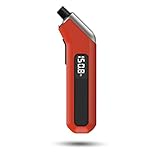
- Accurate, Dependable Readings: Factory‑calibrated to ±1 PSI, so you can confidently match your vehicle’s recommended PSI (check the door jamb sticker). Ideal for monthly checks and road trips — consistent results every time, cold or warm.
- Bright Backlit Display & Nozzle Light: The illuminated nozzle helps you find the valve stem in the dark, while the backlit LCD makes readings crystal clear in dim garages or at night. No more squinting or holding a flashlight.
- 4 Measurement Units, One Button: Quickly switch among PSI, Bar, Kgf/cm², and KPA with a single press. No complex settings — just press and cycle to your preferred unit. Perfect for drivers who need multiple scales.
- Broad Compatibility for Everyday Vehicles: 0–150 PSI covers cars, SUVs, motorcycles, and spare tires (often 60 PSI). Fits standard Schrader valves; just press on for a reading.
- Auto‑Off to Extend Battery Life: The gauge automatically powers down after 30 seconds of inactivity, so the included 2*AAA batteries last longer. Always ready for your monthly checks without surprise dead batteries.
What PSI should bicycle tires be?
Start with the pressure range printed on the tire, then check the rim or wheel maker’s pressure limits. Your usable range must respect both: never exceed either maximum, and follow the lower maximum when the two differ. Pay particular attention to the wheel maker’s instructions for tubeless and hookless setups. See Schwalbe’s inflation-pressure guidance and Continental’s bicycle tire pressure guidance.
Within those limits, pressure is a setup choice, not a universal number. Tire width, total rider-and-luggage load, tire construction, riding surface and your preferences all matter. Schwalbe notes that a narrower tire and heavier system load generally call for more pressure than a wider tire under a lighter load; rider and luggage weight matter more than the bicycle’s own weight in its explanation.
Rank #2
- PROCESS LEVEL ACCURACY: Each ETENWOLF’s digital tire pressure gauge is calibrated manually to ANSI B40.7 Grade 2A(plus-minus 1 PSI).Presta valve adapter not included, if used for bicycles, it must be purchased separately
- ACCURACY IN EXTREME PRESSURE RANGE: Whether tire pressure is below 12 PSI or above 140 PSI, ETENWOLF’s digital tire gauge is accurate as well
- ACCURACY IN EXTREME WEATHER: Built-in AI chip with thermal compensation inside, ETENWOLF’s tire gauge works normally even in extreme cold or hot weather(-4°F-130°F/-20°C-54°C)
- PRESSURE RANGE 3-200 PSI : ETENWOLF’s digital tire pressure gauge can measure pressure of all types of vehicles
- REPLACEABLE AAA BATTERIES: Batteries are easy to replace and helps to extend the tire pressure gauge’s life span, with LED light to illuminate dark areas for easy tire pressure reading
Balance comfort, grip and rolling resistance
- More pressure can reduce rolling resistance on smooth roads and, in Schwalbe’s broad description, susceptibility to punctures.
- Less pressure can help a tire absorb bumps and improve comfort and grip.
- These are general tendencies, not guarantees. Construction and riding conditions affect how a particular tire behaves, so stay within the tire and rim limits while tuning the setup.
Schwalbe cautions that there is no general inflation-pressure recommendation for a particular bicycle or tire. Avoid treating a PSI figure from one tire model as a recommendation for all bikes.
How to check bicycle pressure
- Read the tire’s permitted pressure range and consult the rim or wheel maker’s limits. Use the lower applicable maximum.
- Use a pressure gauge, such as one on a bicycle pump. Schwalbe says the thumb test is inaccurate and recommends a gauge-equipped floor pump for active cyclists.
- Choose a starting pressure within the allowed limits, taking load, width and intended surface into account, then adjust for the preferred balance of comfort, grip and rolling resistance.
Check intervals vary by manufacturer. Schwalbe recommends checking at least monthly; Continental says to check before every ride. Temperature also matters: Continental notes that pressure rises with temperature, so account for temperature differences between where you check the tire and where you ride or store it.
Quick Recap
Best Value

- Digital Tire Pressure Gauge 2 Pack, Industrial Tire Gauge 3-200 PSI, Calibrated to ANSI B40.7 Grade 2A(plus-minus 0.5%), Air Pressure Gauge with Replaceable AAA Batteries
- ACCURACY IN EXTREME PRESSURE RANGE: Whether tire pressure is below 12 PSI or above 140 PSI, ETENWOLF’s digital tire gauge is accurate as well
- ACCURACY IN EXTREME WEATHER: Built-in AI chip with thermal compensation inside, ETENWOLF’s tire gauge works normally even in extreme cold or hot weather(-4°F-130°F/-20°C-54°C)
- PRESSURE RANGE 3-200 PSI : ETENWOLF’s digital tire pressure gauge can measure pressure of all types of vehicles
- REPLACEABLE AAA BATTERIES: Batteries are easy to replace and helps to extend the tire pressure gauge’s life span, with LED light to illuminate dark areas for easy tire pressure reading
Rank #4

- Enhanced Visibility in Low Light: Features a green backlit LCD screen and integrated flashlight, allowing for clear reading of tire pressure even in dark or dimly light conditions.
- Durable & Heavy-Duty Design: Constructed from robust stainless steel, specially engineered for RV and truck use. Helps maintain proper tire pressure to reduce wear and extend tire lifespan.
- Nozzle easily forms a seal with the valve stem giving quick and accurate readings in 0.1 increments; 4 settings with longer range: 0-230 PSI / 0-16 Bar / 0-16 Kg/cm² / 0-1585 Kpa
- Wide Pressure Range & Easy Operation: Covers 0-230 PSI / 0-16 Bar / 0-16 Kg/cm² / 0-1585 Kpa. Simply press the “ON/UNIT/OFF” button to turn on, select your unit, and it auto-shuts off after 30-40 seconds to conserve battery.
- User-Friendly & Versatile: Ergonomic non-slip texture ensures a firm grip. Includes batteries and comes with a 1-year warranty. Suitable for cars, trucks, motorcycles, bicycles, and more.
Rank #3

- PRO ACCURACY - mechanic recommended, performance tested, & calibrated accurate to professional ANSI 2A standards - with dual pressure sensors certified to ±0.50% FS (0.50 PSI), offering reliable readings up to 100 PSI w/ precise readout resolution of 0.10 PSI - so you can now maintain your tires with a shop-grade mechanic trusted tool
- STRONG & RUGGED - feels solid in the hand & built to last from 100% solid brass & steel parts shielded by our shock-resistant gear-style protective guard to protect against drops & impact. Features ultra soft & strong 10" fully rotational, leak-proof HybridFlex air hose w/ 360 swivel angled air chuck that can be swapped out w/ any 1/4" NPT chuck
- ADVANCED ENGINEERING - all readings lock-on to the display until the "ON" button is pressed once to reset to zero. Features built-in air bleeder valve that bleeds pressure in real time without needing to reset the display - ideal for cars, trucks, motorcycles, bikes, RV & trailers, spare tires, and much more
- SMART DISPLAY - features high-resolution digital 2.5 inch LCD display screen w/ battery life indicator & bright LED backlight for high visibility in the dark. Gauge is programmed to auto shut-off after 150 seconds of inactivity to save battery (2x AAA batteries included)
- 100% Lifetime Warranty by JACO - serving the automotive industry for 35+ years. Enjoy longer-lasting tires, improved fuel economy, and superior vehicle performance & handling with properly inflated tires.
Which pressure-checking habits apply to both?
- Use a gauge rather than estimating by feel.
- Match the pressure to the relevant specification: the vehicle placard for a car, and the tire range plus wheel limits for a bicycle.
- Check regularly. For cars, NHTSA specifies at least monthly checks, including the spare; for bicycles, follow the manufacturer’s interval because the recommendations differ.
Product prices and availability are accurate as of the date/time indicated and are subject to change. Any price and availability information displayed on Amazon at the time of purchase will apply.

