
What’s actually slowing this PC down?
Pick the symptom - the matching free tool is one click away.
iTechGuides is reader-supported. When you buy through links on our site, we may earn an affiliate commission. As an Amazon Associate I earn from qualifying purchases. Learn more
For an OLED laptop, set brightness to suit the room and your comfort—not to a single universal number. When comparing laptops for outdoor work, check the exact panel’s typical SDR brightness and screen finish. Treat HDR peak brightness as a separate specification: it does not tell you how bright ordinary desktop content will be, and no universal nit figure guarantees readability in direct sunlight.
What brightness should I use on my OLED laptop indoors?
Start at a lower setting in a dim room, then raise brightness until text and details are easy to see without discomfort. Re-adjust if the room gets brighter or the display faces a window. Your preferred setting depends on ambient light, the panel, and your vision.
ASUS illustrates the relationship between room light and display brightness with values of 152 nits at 0 lux, 177 nits at 100 lux, 303 nits at 500 lux, and 305 nits at 1,000 lux. The company presents these as OLED brightness levels intended to reproduce colors comparable to a 400-nit LCD at those ambient-light levels. They are an illustrative manufacturer comparison, not a calibrated recommendation for every OLED panel or viewer. ASUS’s OLED guidance explains the comparison.
Do these 3 things before closing this tab:
1Repair Windows errors before they cause bigger problems2Scan for outdated or missing drivers - takes under a minute3Clear out junk files and repair common Windows errorsIs a 500-nit OLED laptop bright enough outside?
It may work in some outdoor conditions, especially in shade, but the number alone cannot guarantee readability. Direct sun, reflections, screen angle, and the display’s finish all affect what you can see. In shade, try increasing brightness and shifting the screen or your position to reduce reflections.
#1 Best Overall

- High-Performance DUO Take your productivity further in Windows 11 with the 16-core Intel Core Ultra 9 Processor 386H, delivering responsive multitasking and enhanced graphics performance. Paired with 32 GB RAM and 1 TB storage, demanding workloads stay smooth and efficient.
- AI That Works Supercharge your productivity with 50 TOPS on Copilot, giving you instant file retrieval, quick summaries, faster searches, and more without the waits that break your flow.
- Transforms in Seconds Switch modes fast with a magnetic keyboard and integrated kickstand. Move from dual-screen productivity to laptop or sharing mode in just a few seconds, keeping your workflow fluid wherever you are.
- Immerse Your Senses Dual 3K 144 Hz ASUS Lumina OLED touchscreens with 100% DCI-P3 color deliver vivid clarity and up to 1000 nits HDR brightness, while the anti reflection coating and E Reading mode help reduce eye strain during extended use. Six speakers with Dolby Atmos support add rich, spacious sound.
- All-Day Power A 99Wh battery setup keeps you moving through busy days, and fast-charge technology brings you to 60% in just 49 minutes.
For a concrete, model-specific example, Lenovo lists one ThinkPad X9 15p Gen 1 Aura Edition OLED configuration with 500 nits typical SDR brightness, 1,100 nits HDR peak brightness, and an anti-reflection, anti-fingerprint surface. Those specifications apply to that listed configuration; they do not establish 500 nits as a general sunlight threshold. Check the exact panel and regional configuration in the Lenovo PSREF.
What is the difference between SDR brightness and HDR peak brightness?
SDR and HDR figures describe different operating conditions. Typical SDR brightness is the more relevant figure for ordinary desktop work; HDR peak brightness refers to bright highlights in HDR content and should not be read as the brightness the panel sustains across normal desktop use.
Rank #2

- DISCLOSURE — Brand New Computer has been resealed to upgrade SSD. 1 Year warranty by Issaquash Highlands Tech
- PREMIUM PORTABILITY - The ASUS Zenbook 14 OLED features a slim, lightweight build paired with a long-lasting battery to support business trips, campus schedules, and remote workdays. The ASUS Lumina OLED touchscreen and immersive audio enhance both productivity and entertainment, making it a strong fit for professionals, students, and digital nomads
- POWERFUL PERFORMANCE - Equipped with the AMD Ryzen AI 9 465 processor (10 cores, up to 5.0GHz), Configurable with storage options from 256GB to 2TB M.2 NVMe PCIE SSD, enabling smooth multitasking and fast loading across a wide range of applications. Ideal for programmers, designers, and office users handling demanding applications or parallel workloads
- CRISP DISPLAY & PRIVACY - The 14-inch WUXGA (1920x1200) OLED touchscreen with 500nits brightness delivers accurate color output for design, media editing, and streaming. An FHD camera with a physical shutter supports clear video calls, making it suitable for remote meetings, online classes, and professional conferencing. Supports expanding the workspace with 3 external monitors via HDMI and USB-C ports, with resolution up to 4K@60Hz without a docking station
- VERSATILE CONNECTIVITY - With USB-C, USB-A, and HDMI 2.1, you can easily connect external displays, storage devices, and essential peripherals. Stay fast and reliable on the go with Wi-Fi 6E and Bluetooth 5.4, perfect for video calls, cloud work, and wireless devices without lag. Plus, the backlit keyboard enables effortless work in dim conditions
Lenovo’s cited configuration, for example, lists 500 nits typical SDR and 1,100 nits HDR peak. Microsoft describes HDR as a distinct display mode and advises checking the device manufacturer for exact specifications. Its Windows HDR guidance says built-in displays used for HDR video should have a resolution of at least 1080p and recommends maximum brightness of 300 nits or more. That recommendation is for HDR video requirements, not a general outdoor-readability threshold.
What to compare when choosing an OLED laptop for outdoor use
- Typical SDR brightness: Compare the manufacturer’s stated SDR figure for ordinary desktop use, rather than relying on an HDR peak number.
- Screen finish: Look for disclosed anti-reflection or matte treatment. A surface specification is separate from brightness and can affect reflections.
- Exact panel and conditions: Confirm the laptop’s specific display configuration and whether the listed figure is typical, peak, or mode-specific.
- Comparable independent measurements: If you expect to work in direct sunlight regularly, look for measurements of the exact panel taken under clearly stated conditions. A manufacturer specification alone does not guarantee legibility in every setting.
Microsoft’s Surface measurement instructions also show why figures and settings need context: the guide prescribes different settings for SDR and HDR measurements on eligible Surface devices and notes that “Brightness slider values are device-specific.” Those instructions are for accurate measurement on specified Surface devices, not general brightness settings for all laptops. See Microsoft’s Surface SDR and HDR measurement guide.
Rank #3
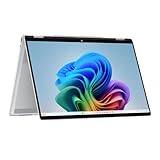
- Intel Evo Platform Powered by Intel Core Ultra 7 258V (8-Core), Built-in NPU (47 TOPS)
- Windows 11 Copilot+ PC: Boost Creativity & Productivity with AI Assistance
- 5MP Camera: Enhanced by AI Noise Reduction & Poly Studio Audio Tuning
- Backlit Keyboard, Intel Arc 140V Graphics, WiFi7 & Bluetooth 5.4
- HP USB-C Rechargeable Pen Included
Can I use an OLED laptop in direct sunlight?
Possibly, but the available manufacturer and platform guidance does not support a universal brightness minimum that guarantees readability in direct sun. Judge the exact display, its reflections and finish, and measurements made under conditions similar to how you will use it. If you can, test the laptop in the intended environment before relying on it for outdoor work.
Quick Recap
Rank #4

- Expansive Display with High Screen-to-Body Ratio: 16-inch 16:10 aspect ratio with 1920x1200 resolution and an impressive 89% screen-to-body ratio brings you expansive view
- Premium OLED Panel Technology: OLED panel with 95% DCI-P3 color gamut features extreme blacks, high perceptual brightness and superfast 1 ms response time for astonishing color reproduction
- Power Pass Through Capability: The MQ16FC portable monitor can be powered by a laptop, or deliver power to a laptop via pass-through charging
- Auto Rotate Functionality: Automatically sense its orientation and switch the monitor between landscape and portrait modes via DisplayWidget Center software
- Eye Care Technology: ASUS Eye Care monitors feature TV Rheinland-certified Flicker-free and Low Blue Light technologies to ensure a comfortable viewing experience
Product prices and availability are accurate as of the date/time indicated and are subject to change. Any price and availability information displayed on Amazon at the time of purchase will apply.

