
iTechGuides is reader-supported. When you buy through links on our site, we may earn an affiliate commission. As an Amazon Associate I earn from qualifying purchases. Learn more
Choose an anchor that suits the seabed you use most, then size that specific model with its manufacturer’s chart and your boat’s length and loaded displacement. Wind exposure, expected conditions, depth, rode, and bow fit matter too. No single anchor works best on every bottom or for every boat; if you regularly anchor over very different seabeds, carrying complementary anchor styles may make sense.
Start with the seabed you anchor over
An anchor has to engage the bottom to hold. A design that performs well in sand may be a poor choice in weed or rock, so start with the seabed you encounter most often rather than choosing by appearance or weight alone. West Marine’s anchor-selection guide compares common designs and their bottom compatibility.
| Anchor style | Typical fit by seabed | Trade-offs |
|---|---|---|
| Fluke, including Danforth-style | Good performance in sand and mud | Light and easy to stow; poor performance in grassy or rocky bottoms. |
| Plow or scoop | Broader all-around performance across varying bottoms | Compare the specific model’s sizing chart, dimensions, and fit with your boat. |
| Grapnel | May be relevant on rocky ground | Holding can depend on snagging, making it less predictable than embedding in sand or mud. |
These are general design comparisons, not guarantees for every model or anchoring situation. For example, a Danforth-style fluke boat anchor is a plausible option for sand or mud, but its suitability changes if you often anchor in grass or rock.
Size the exact anchor model for your boat
There is no dependable universal rule that converts boat length directly into anchor weight. Manufacturers size their designs using their own charts and assumptions. Start with the chart for the specific model you are considering, and use the boat specifications the maker requests.
#1 Best Overall

- KEEP YOUR BOAT SECURE IN CHALLENGING BOTTOMS: 15 lb weight and integrated flukes help the Navy Anchor dig into sand and mud for dependable holding power.
- RECOVER ANCHORS WITH LESS EFFORT: Reverse-action shank design helps free and retrieve a fouled Navy Anchor more easily when conditions become challenging.
- PROTECT YOUR VESSEL FROM DAMAGE: Black PVC-coated finish helps resist rust while reducing scratches and scuffs on boat surfaces.
- ATTACH LINES QUICKLY AND CONFIDENTLY: Large eye opening allows easy connection to anchor rope, chain, or rode for convenient setup.
- RELY ON DURABLE MARINE CONSTRUCTION: Solid cast iron construction provides strength, durability, and reliable performance for boating applications.
Rocna’s anchor sizing guide uses vessel length and displacement to recommend a Rocna model. Rocna presents the chart as a guideline and says multihull owners should use it, then select one size larger. That instruction is specific to Rocna; consult the relevant manufacturer’s guidance for another brand or design.
Account for the boat and the conditions
Boat length is only part of the decision. Vessel dimensions and wind exposure affect the load on the anchor, while weather, current, wave action, and bottom conditions affect how well an anchoring setup performs. Consider the conditions in which you expect to leave the boat, not only calm-weather use. West Marine’s guide to anchoring securely explains how the boat, seabed, weather, and rode work together.
Rank #2

- Fits 8-16 ft Boats: This 5 lb boat anchor kit is perfect for pontoons, fishing boats, dinghies, and other vessels in the 8 to 16 ft range. It's a reliable choice for lake days, offshore fishing, or coastal cruising
- All-in-One Boat Anchor Kit: Includes a 5 lb galvanized fluke anchor, 6.5 ft steel chain, 2 D-ring shackles, and 100 ft of nylon rope; everything you need to secure your boat without extra purchases
- Strong Holding in Sand or Mud: The fluke anchor is designed to dig deep into sand or mud, while the weighted chain enhances grip. Keeps your boat stable even in strong currents or windy conditions
- Rust-Resistant Galvanized Steel: Made with hot-dipped galvanized steel, this boat anchor kit resists rust, corrosion, and wear—ideal for both saltwater and freshwater use over long periods
- Durable and Flexible Nylon Rope: The included 100 ft nylon rope offers excellent stretch resistance and tensile strength. It’s soft to handle yet tough enough for secure anchoring in changing conditions
- Use the actual boat specifications requested by the anchor maker, including displacement where its chart calls for it.
- Consider exposure to wind, current, and waves at your usual anchoring locations.
- Do not treat a manufacturer’s or retailer’s holding-power comparison as a universal guarantee; performance depends on the design, bottom, and conditions.
Check storage, bow fit, and the rode
A correctly sized anchor still has to fit and work with the boat. Compare the model’s dimensions and geometry with your bow roller, locker, or other storage arrangement before buying. Rocna publishes model dimensions and bow-fit considerations alongside its sizing resources.
The anchor is one part of a system. Choose enough line or chain for the depth and conditions where you operate, and make sure the rode can be safely secured to the boat. The Western Australia Government’s recreational boating anchor guide advises lowering the anchor rather than throwing it, paying out line as the boat moves astern, and securing the end of the line to the vessel.
Rank #3

- Hold Your Boat Firmly in Place: This anchor combines the features of a traditional mushroom anchor with flukes for better bottom penetration; it’s one of our must-have boat accessories
- Durable & Works in a Variety of Waters: Designed for protected inland waters, the SeaSense River Anchor works effectively in strong currents and tidal waters, as well as sand, mud or weed bottoms; it’s made of one piece cast iron with black vinyl coating to help protect the gel coat
- Ideal for Pontoons & Bass Boats: These anchors can hold a small boat, kayak, jet ski, canoe and other small watercraft; take this equipment with you on the river, lake and beyond
- Save Time & Money, Have More Fun: Whether you’re a weekend boater or an experienced buyer, we keep your needs at the forefront of everything we do; every one of our products and parts is designed to work quickly and reduce costs
- Quality Marine Products That Make Sense: At SeaSense, we’ve been providing innovative marine and trailer products since 1984; we’ve rigorously tested and improved our catalog for decades to help deliver the best on-the-water experience possible
Consider a second anchor if your seabeds vary
If your boat routinely moves between materially different bottoms, one anchor style may not cover every situation well. West Marine notes that a useful anchor choice can involve more than one type. A second anchor is most useful when it complements the primary anchor’s weakness—for example, a style suited to a bottom where the primary design performs poorly.
Quick Recap
Rank #4
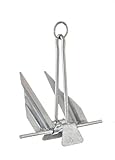
- Penetrates deep in a variety of seafloor compositions
- Slip ring shank makes it simple to retrieve stuck anchor
- Recommended for boats 15-19 feet in length
- Fluke Length: 9-1/16 inch
- Stock Width: 12-5/8 inch
A practical selection sequence
- Identify your usual bottom. Note whether you most often anchor in sand, mud, grass or weed, rock, or mixed ground.
- Shortlist compatible designs. Use bottom compatibility as the first filter, then compare handling and storage needs.
- Check the maker’s sizing chart. Use the chart for the exact anchor model and the boat specifications it requires; apply any model-specific instructions.
- Confirm physical fit. Compare anchor dimensions with the bow roller, locker, and storage arrangement.
- Plan the whole setup. Match rode and depth to your operating conditions and ensure the line can be secured to the vessel.
- Review where you will anchor. When you can choose the location, the Western Australia safety guide recommends sand or firm mud. Deploy by lowering the anchor and paying out line as the boat moves astern.
- Decide whether varied use calls for another style. If your regular bottoms differ significantly, consider a second anchor that covers the primary anchor’s weaker seabed.
Product prices and availability are accurate as of the date/time indicated and are subject to change. Any price and availability information displayed on Amazon at the time of purchase will apply.

