
iTechGuides is reader-supported. When you buy through links on our site, we may earn an affiliate commission. As an Amazon Associate I earn from qualifying purchases. Learn more
Choose a managed IT service provider (MSP) by defining what your business needs first, then comparing providers against the same scope, service commitments, security controls, costs, and exit terms. A familiar monthly fee or a broad promise to “manage IT” is not enough: the contract should make clear which systems are covered, who does what, and what happens when something fails.
Define your needs before contacting providers
An MSP commonly monitors and manages IT infrastructure and end-user systems. Services may include proactive maintenance, help desk or network operations support, and predictable billing, but those characteristics do not guarantee that any particular service is included. The Canadian Centre for Cyber Security (CCCS) describes them as common features of managed services, not a standard package: Cyber security considerations for consumers of managed services.
Start with your business requirements rather than a provider’s menu. The CCCS notes that a procurement document cannot identify your organization’s requirements on its behalf. Before requesting proposals, record:
Quick wins for a faster PC:
Repair Windows errors before they cause bigger problemsFix Now →Fix the driver behind crashes, sound loss and screen glitchesFind Drivers →- Which business processes and applications must remain available, and what downtime each can tolerate.
- Which data is sensitive, where it is stored, and what impact a loss or disclosure could have.
- What data loss you can tolerate and how quickly critical services must be restored.
- Which systems are cloud-hosted, on-site, or managed by other vendors.
- Which users, locations, devices, and third-party applications need support.
- What legal, regulatory, contractual, or customer obligations apply in your location and industry.
- What your staff will continue to own, including approvals, business decisions, and internal communications.
Requirements depend on your operating context. For example, UK adult social-care guidance can offer practical prompts, but it is not universal legal advice. Confirm regulatory and contractual duties with an appropriate adviser for your jurisdiction and industry.
#1 Best Overall
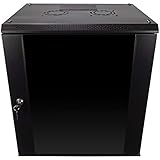
- DURABLE BUILD: Constructed from high-quality Cold Rolled Steel, the NavePoint Consumer Series 12U network cabinet boasts a sturdy, welded frame. Fitting EIA standard 19” networking equipment, this server cabinet confidently supports up to 110 lbs, providing a resilient base for your vital IT gear and equipment
- CONVENIENT DESIGN: This 12U cabinet features a reinforced, heat-treated, tempered glass front door with a security lock. Perfect for applications requiring both security and accessibility, its compact design of 17.72"L x 21.65"W x 24.42"H offers a practical solution for space-constrained settings.
- EASY & CUSTOMIZABLE EQUIPMENT SET UP - The 12U IT cabinet, with removable side panels and security locks, offers customization at its finest. Whether it's for an efficient device or cable management, this data cabinet ensures secure, adaptable configurations that suit your networking server requirements
- ENHANCED VENTILATION & SECURITY - Built-in fans and flow-through ventilation work to prevent overheating, ensuring optimal operation of your equipment. The reinforced, lockable tempered glass front door not only boosts security but also facilitates easy monitoring of installed equipment.
- SAFETY & COMPLIANCE - All NavePoint products are built to industry standards.
Make providers answer the same scope questions
Use one written checklist for every proposal. Ask each MSP to identify included work, exclusions, dependencies, and the party responsible for each task. The UK National Cyber Security Centre (NCSC) says a reputable MSP should clearly explain the services, policies, and responsibilities it offers: Choosing a managed service provider (MSP).
- Systems and users: Which endpoints, networks, cloud services, identities, locations, users, and third-party applications are covered?
- Security work: Are patching, security monitoring, vulnerability remediation, backup administration, and incident response included? Specify what “included” means and what remains yours.
- Support availability: What hours, time zones, holidays, and locations are covered? Is after-hours or on-site support available, and at what additional cost?
- Ticket handling: How are priorities assigned, what information must customers provide, and how can a ticket be escalated?
- Reporting: What service, security, and incident reports will you receive, and how often?
- Third parties: Who coordinates with cloud providers, software vendors, telecom companies, or other contractors?
- Ownership: Who approves changes, maintains records, communicates outages, and decides when a service is safe to restore?
Ask for a clear schedule of charges beyond the recurring fee. The GOV.UK adult social-care guide lists after-hours and on-site work, added users, and work beyond a monthly allowance as examples of possible extras; use them as questions, not as universal pricing rules: IT managed services.
Turn the SLA into measurable commitments
A service-level agreement (SLA) should distinguish acknowledging or beginning to investigate a problem from resolving it or providing a workaround. A response target is generally easier to promise than a fixed repair time because the work needed to fix an issue is difficult to predict. Define the measures and their boundaries in the contract.
The Tool Desk
Outbyte Driver Updater FREEFix the driver behind crashes, sound loss and screen glitchesFind Drivers →Outbyte PC Repair FREEClear out junk files and repair common Windows errorsFree Scan →Rank #2

- Optimized for Small Spaces: With a depth of 23 in (585 mm), this open frame network rack allows easy access to ports and devices from multiple angles. It accommodates servers and network equipment, maximizing even tight spaces
- Strong Weight Capacity: This open frame server rack supports up to 500 lbs (226.8 kg) when floor-standing and 200 lbs (90.7 kg) when wall-mounted. Made from carbon steel with reliable weld quality, it is built to last and can handle a variety of devices
- User-Friendly Design: The open frame rack is designed with ergonomics in mind, making it more convenient to use. The top shelf gives you extra space for storage, allowing you to maximize the available area
- Widely Applicable: Maximize your space with this open frame AV rack, ideal for retail spaces, classrooms, offices, and any other area where valuable space is limited. It helps you keep everything organized without compromising accessibility
- Everything You Need: Our open frame network rack comes with a fully equipped accessory kit for easy setup and secure installation: 2 x trays, 1 x screw set, 1 x top panel, 16 x cage nuts, 1 x grounding wire, and 1 x user manual
The NCSC offers illustrative starting points—not industry averages, mandatory standards, or guarantees from any provider—of a one-business-day response for general requests or minor issues, under one hour for urgent issues, and two to three business days to resolve routine medium-priority issues. It also cautions that faster response commitments can affect contract costs. Set targets based on your own impact and support needs, then ask the provider to confirm what it can commit to.
- Define severity levels with business-impact examples, not just labels such as “high” or “critical.”
- State the support hours that apply to each target, including holidays and time zones.
- Specify when the clock starts and stops, how pauses for customer input are handled, and how progress is communicated.
- Set escalation routes and identify who can authorize emergency changes.
- Define reporting cadence, service credits or other remedies, and exclusions.
- Document customer dependencies, such as providing access, approvals, or required information.
Assess security and privacy as shared responsibilities
An MSP may have powerful administrative access to your systems, so its access practices and the consequences of a provider compromise belong in your evaluation. Ask how staff authenticate, how privileged credentials are protected, whether least privilege is applied, and how access is logged, reviewed, and removed when no longer needed. The NCSC specifically recommends least privilege and two-step verification for MSP access.
Also ask how the provider separates and retains customer data, what subcontractors can access it, how security incidents are detected and reported, and what evidence supports its security practices. Review relevant assurance materials and references, but do not treat a certification on its own as proof that the specific service is configured safely.
Rank #3

- 15U WALL MOUNT SVR RACK
Security duties are shared rather than transferred wholesale. CCCS puts it plainly: “Your organization and the MSP both have roles when it comes to protecting systems and data.” Its guidance also states that the organization remains accountable for incident response even when the provider carries out some response steps. Clarify who makes decisions, handles notifications, preserves evidence, and coordinates with other vendors.
Do these 3 things before closing this tab:
1Clear out junk files and repair common Windows errors2Scan for outdated or missing drivers - takes under a minute3Repair Windows errors before they cause bigger problemsAgree incident response and recovery arrangements
Write an incident plan alongside the service description. It should fit your organization’s systems and obligations, not rely on a vague promise that the MSP will “handle incidents.” Identify:
- What qualifies as an incident and who leads the response.
- How the MSP and your staff contact one another, including an out-of-hours route.
- What initial facts the MSP must provide, and the expected notification and update timing.
- How issues are escalated and how the MSP coordinates with other vendors or advisers.
- Who authorizes containment, restoration, and external communications.
- Who is responsible for recovery, post-incident reporting, and follow-up actions.
- Whether the provider will participate in exercises or simulations.
Assess business continuity and disaster recovery separately from routine help desk support. Define recovery priorities, tolerable downtime, and tolerable data loss. Do not infer that “backups included” means a full recovery service or that recovery has been tested; ask what is backed up, who monitors it, who restores it, and what evidence or exercises demonstrate the agreed recovery process.
Rank #4

- READY-TO-USE IT SOLUTION – Pre-configured server rack cabinet designed for small business and office environments to quickly organize servers, NAS, networking and AV equipment without complex setup.
- ALL-IN-ONE CONFIGURATION – Includes pre-installed PDU, cooling fan, vented shelf, mounting hardware and cable management to eliminate extra purchases and simplify deployment.
- SUPPORTS FULL-DEPTH EQUIPMENT – 35" deep cabinet with up to 31” rail depth fits servers, power backup systems and AV gear that do not fit in standard shallow racks.
- COMPACT, MOBILE & SECURE DESIGN – Rolling floor cabinet with locking casters, tempered glass door and removable panels allows flexible placement while protecting equipment.
- OPTIMIZED FOR OFFICE IT SETUPS – Ideal for structured office networks, small server environments and AV systems requiring clean, organized and low-maintenance installation.
Compare the full cost and fit, not just the monthly fee
Compare proposals on the same assumptions: the same users, locations, systems, support hours, service levels, and security responsibilities. Ask providers to itemize recurring fees and likely one-time or variable charges so you can see the total commitment.
- Recurring service charges and any user, device, or usage limits.
- Onboarding, assessment, and remediation work needed to bring systems into scope.
- After-hours, on-site, additional-user, and overage charges.
- Hardware, software, or third-party services billed separately.
- Incident-response, recovery, or project work not included in the base service.
- Exit, data-transfer, and transition costs.
Fit matters as much as price. Check relevant experience and references, ask how the provider adapts to your environment, and assess whether its communication style and ownership model work for your team. There is no source-supported universal price or industry-wide performance figure that can replace a proposal based on your requirements.
Review onboarding, renewal, and exit before signing
Plan for the relationship’s beginning and end as carefully as its steady-state support. The GOV.UK adult social-care guide lists possible onboarding tasks such as removing the former provider’s access, installing support tools, documenting systems, changing passwords, assessing security, and contacting other suppliers. Agree which party performs each task, when it happens, and whether any remediation is extra.
Best Value
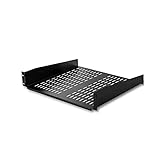
- UNIVERSAL 19'' FIT: This 2U vented server rack mount shelf is designed to fit virtually any 19in server rack and can accommodate an internal depth of 16in (41cm) for your data, IT, networking, or other non-rack mount equipment
- MAXIMIZE VENTILIATION: The vented shelf plate on the cantilever rack shelf ensures consistent airflow to effectively dissipate heat on servers; it also works great to keep your computer and AV equipment cool in your home, studio, or office space
- HEAVY-DUTY & DURABLE DESIGN: Constructed with SPCC commercial cold-rolled steel, the sturdy front mounted cabinet shelf ensures long term durability and supports a total weight of 50lbs/23kg making it the perfect rack shelf solution for any environment
- VERSATILE FUNCTIONALITY: At 16in deep, this fixed rack mount shelf is designed to work with any 19in cabinet or equipment rack. It provides additional storage space for mission critical hardware, and can even store your tools or audio / video accessories
- INDUSTRY-LEADING SUPPORT: This TAA compliant 2U vented server rack mount shelf is backed for life, including free lifetime 24/5 technical assistance
Before signing, check the contract duration, renewal and renegotiation terms, notice period, termination rights, and transition assistance. Specify your access to documentation and logs, how data will be returned or securely deleted, how provider credentials and access will be revoked, and whether a transition overlap is needed. The NCSC also advises reviewing duration, renewal, renegotiation, and termination terms as part of MSP selection.
Use a consistent decision checklist
- Scope: Covered systems, users, locations, security and backup tasks, third-party support, and explicit exclusions are documented.
- Performance: Response and resolution measures, priorities, hours, escalation, reporting, remedies, and customer dependencies are clear.
- Security: Access controls, authentication, incident notification, data handling, subcontractors, assurance, liability, and insurance have been addressed.
- Cost: Recurring fees and onboarding, remediation, after-hours, on-site, overage, software, and exit charges are visible.
- Continuity: Contract term, renewal, termination, data portability, documentation, and handover are workable.
- Fit: Experience, references, communication, adaptability, and task ownership suit your operating environment.
Pause if a provider cannot explain an exclusion, relies on an undefined “best efforts” promise for a critical service, or leaves you unable to access essential records or regain control at exit. Resolve those gaps in writing before you commit.
Quick Recap
Product prices and availability are accurate as of the date/time indicated and are subject to change. Any price and availability information displayed on Amazon at the time of purchase will apply.
What’s actually slowing this PC down?
Pick the symptom - the matching free tool is one click away.

