
iTechGuides is reader-supported. When you buy through links on our site, we may earn an affiliate commission. As an Amazon Associate I earn from qualifying purchases. Learn more
Choose HR curriculum topics by comparing structured feedback from employers, practicing HR professionals, students, alumni, and faculty against a recognized HR knowledge and competency framework. Use the feedback to identify entry-level readiness gaps, then decide what to teach, how deeply to teach it, and where students need applied experience. SHRM’s curriculum guidance offers a flexible starting point—not a substitute for local academic requirements or evidence from your own community.
Start with your program’s scope and constraints
Before asking stakeholders what to add, define the program you are reviewing. Specify its level, student population, degree requirements, local employment context, and whether the work concerns a full curriculum redesign or a smaller update. This keeps feedback grounded in what the program can responsibly change.
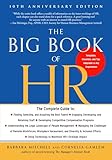


SHRM describes its curriculum guidance as a baseline that programs can adapt to their institutional environments while retaining a minimum level of standardization. Treat it as a reference framework, alongside your institution’s academic governance and requirements. SHRM also notes that HR practice changes and its guidebook should be updated regularly. See SHRM’s 2022 HR Curriculum Guidebook and Templates and HR Curriculum 2022: The Changing Nature of HR Education.
Quick wins for a faster PC:
Scan for outdated or missing drivers - takes under a minuteDriver Scan →Clear out junk files and repair common Windows errorsFree Scan →Build a baseline inventory of HR topics
Start by mapping what the program already teaches. SHRM’s published course outlines cover a useful range of subject areas:
#1 Best Overall
- Employment opportunity and employment law
- Workforce planning, recruitment, selection, and interviewing
- Performance management
- Training, including needs assessment and evaluation
- Compensation and benefits
- Employee relations and labor relations
- Global HR
- Health and safety
- Discipline and termination
For each area, record where it appears, how much depth it receives, whether another course duplicates it, and whether students practice applying it. A topic can be technically present in a syllabus but still be thin in depth or application. SHRM’s Curriculum-in-a-Box Toolkit provides course outlines for reference; use them to check coverage, not to assume every program needs identical course packaging.
Gather feedback from groups who see different parts of the problem
Do not treat a single stakeholder group as a proxy for all the others. Employers can describe hiring needs; practicing HR professionals can identify day-to-day tasks and common early-career gaps; students and alumni can report where coursework did or did not prepare them for practice; faculty can assess learning outcomes, sequencing, and teaching capacity.
SHRM’s 2022 curriculum revalidation drew on HR academics and U.S.-based HR professionals, including practitioners who hire entry-level graduates. Its broader guidebook development also used surveys of academics, students, and practitioners, plus academic focus groups. This supports gathering perspectives across constituencies, but the available sources do not establish a validated alumni-feedback protocol or prove that surveys, interviews, or focus groups are the most reliable method.
Outdated Drivers Are Slowing You Down
One free scan finds every outdated or missing driver and matches the right update for your exact hardware.Free scan · exact hardware matchWindows Errors? Fix Them Before They Spread
Repair common Windows errors and clear accumulated junk for a smoother, more stable PC - no reinstall needed.Free scan · no reinstallRank #2
Ask for specific observations rather than general preferences. For example, invite an employer to name an entry-level task a new hire struggled with, or ask an alumnus which work situation exposed a gap in their preparation. Record who offered each suggestion and the role or experience behind it so that feedback is interpreted in context.
Turn requests into evidence of learning needs
A request for a new topic is a starting point, not proof that a new course is needed. For each suggestion, document:
- Who raised it and which stakeholder group they represent
- The job task, competency, or learning outcome it relates to
- Whether it calls for a new topic, more depth in existing material, or less duplication
- What students should be able to do after learning it
- What evidence—such as an assessment, case exercise, or internship reflection—would show that they can do it
This decision record is a practical way to connect stakeholder input to competencies and outcomes; it is not a published SHRM scoring instrument. Keep requests distinct from demonstrated needs, particularly when a suggestion reflects one employer’s workflow rather than a broad entry-level requirement.
Rank #3
Prioritize topics and choose where students should learn them
Compare candidate topics on the same dimensions rather than deciding by the loudest request. Consider relevance to entry-level responsibilities, evidence of a readiness or experience gap, fit with your competency framework, agreement across stakeholder groups, legal or operational significance, available instructional time and faculty capacity, and whether students need applied practice.
The Tool Desk
Outbyte Driver Updater FREEFix the driver behind crashes, sound loss and screen glitchesFind Drivers →Outbyte PC Repair FREERepair Windows errors before they cause bigger problemsFix Now →Use the comparison to make different kinds of decisions. A missing foundational area may warrant required course coverage; a topic already taught may need a deeper case or assessment; a task that is difficult to learn from lectures alone may call for an internship, simulation, or other applied experience. These are local curriculum judgments, not a ranking formula published by SHRM.
Experience deserves particular attention. In SHRM’s 2022 survey, 76% of surveyed employers indicated that at least six months of experience is needed for an entry-level HR position. SHRM recommends internships and other HR-specific experiential learning. The finding is a U.S.-oriented employer signal, not a universal requirement for every role or labor market. Use local employer evidence to determine which experiences students need and how to make them accessible.
Rank #4

- Explains every topic covered on each of the four individual 2022 CPA licensing tests
- Offers answer rationales so you can understand why your answer is correct or incorrect, and where any errors are located
- Shows you how exam questions are presented on the real exam
Validate the draft and keep the feedback loop active
Share the proposed topic map with representatives of the groups you consulted. Explain which recommendations were accepted, deferred, or declined and why. Then set a review date and track whether the changes improve the intended learning outcomes or respond to the identified work needs.
Employer involvement can extend beyond suggesting topics. SHRM’s summary of employer–educator partnership research describes employers influencing curriculum, providing apprenticeships, tracking data, coordinating hiring and teaching calendars, training faculty, and giving access to current technology. Those activities can help connect curriculum decisions to implementation and ongoing review. The survey summarized by SHRM included 347 community-college presidents, deans, or provosts and 800 business leaders; those figures describe that study’s respondents, not a measure of how common any one partnership practice is. See SHRM’s October 9, 2023 summary of employer–educator partnership research.
Consider external curriculum alignment separately
SHRM and HRCI offer curriculum alignment routes, but recognition is a separate decision from choosing topics. Compare the content standard, eligibility, review process, renewal obligations, directory or recognition benefits, teaching resources, and terms before applying. SHRM says its review is free for qualifying institutions and describes an exclusivity expectation for its academic alignment program. HRCI describes independent review, a directory listing, and annual renewal. Confirm current requirements directly with each organization, since conditions can change.
See SHRM Educators’ academic alignment information and the HRCI Higher Education Network. SHRM’s guidebook also reports that 85% of surveyed faculty members viewed SHRM recognition as an advantage over schools without SHRM-recognized HR programs; that is a faculty perception, not evidence of improved graduate performance.
Keep the evidence in its proper context
The SHRM employer findings cited here are primarily U.S.-oriented, so programs elsewhere should not generalize them without local feedback. The sources describe student, academic, and practitioner input, but do not establish a specific, proven method for collecting alumni feedback. Use your own stakeholder mix and document the limits of what it can show.
Quick Recap
Product prices and availability are accurate as of the date/time indicated and are subject to change. Any price and availability information displayed on Amazon at the time of purchase will apply.

