
Recommended Free Tools
iTechGuides is reader-supported. When you buy through links on our site, we may earn an affiliate commission. As an Amazon Associate I earn from qualifying purchases. Learn more
Choose an identity and access management (IAM) platform by checking how well it handles your actual people, applications, devices, sign-in requirements, and employee lifecycle—not by choosing the longest feature list. Build a shortlist from those requirements, compare the full cost of the features you need, then test the leading candidates with representative users before rolling one out.
What should you map before comparing IAM platforms?
Start with a practical inventory. The platform must fit the systems and work patterns you already have, as well as the ones you expect as the business grows.
People, accounts, and lifecycle events
- List employees, contractors, guests, administrators, and any service identities that are in scope.
- Identify the authoritative source for each person’s status and details, such as a directory or HR system.
- Write down what should happen when someone joins, changes roles or teams, or leaves. Include who approves access and which systems must create, update, or deactivate accounts.
- Find shared accounts and other cases where an individual user account or automatic lifecycle process is not currently in place.
Applications, devices, and infrastructure
- Inventory critical SaaS, on-premises, and cloud applications, plus the devices people use to access them.
- For each application, record its sign-in options, provisioning method, account owner, and any application-side license requirements.
- Mark which applications support standards-based federation or provisioning, which have a vendor connector, and which will need a manual workflow.
- Include current directories and any other systems that supply identity or device information.
Do not assume every application supports single sign-on (SSO) or automated provisioning. Microsoft’s deployment guidance describes OpenID Connect (OIDC) or OAuth for compatible applications; SAML for existing applications that do not use OIDC or OAuth; and password-based SSO for applications without federation support. Confirm the available method with each app owner before treating an app as covered.
Which IAM requirements matter most?
Use the inventory to define requirements before looking at product tiers. For every candidate, compare the same important users, applications, and lifecycle workflows.
#1 Best Overall

- POWERFUL SECURITY KEY: The Security Key C NFC is the essential physical passkey for protecting your digital life from phishing attacks. It ensures only you can access your accounts.
- WORKS WITH 1000+ ACCOUNTS: Compatible with Google, Microsoft, and Apple. A single Security Key C NFC secures 100 of your favorite accounts, including email, password managers, and more.
- FAST & CONVENIENT LOGIN: Plug in your Security Key C NFC via USB-C and tap it, or tap it against your phone (NFC) to authenticate. No batteries, no internet connection, and no extra fees required.
- TRUSTED PASSKEY TECHNOLOGY: Uses the latest passkey standards (FIDO2/WebAuthn & FIDO U2F) but does not support One-Time Passwords. For complex needs, check out the YubiKey 5 Series.
- BUILT TO LAST: Made from tough, waterproof, and crush-resistant materials. Manufactured in Sweden and programmed in the USA with the highest security standards.
| Selection area | Questions to answer |
|---|---|
| Identity population and lifecycle | Can the platform represent the employees, contractors, guests, and service identities in scope? Can it use your source of truth and handle joiner, mover, and leaver events? Which account changes and deactivations are automatic, and which need human action? Do you need access reviews or other governance capabilities? |
| Authentication and access policy | Does it support the MFA methods your users can use, along with the access policies you require? Can you manage administrator access, recovery, and relevant device or access-context signals? |
| Applications and infrastructure | Does it work with your critical SaaS, on-premises, and cloud applications using the sign-in and provisioning methods those applications support? What directory, HR, and device integrations are available? Which shared-account or unsupported-app workflows remain? |
| Administration and operations | Can you separate administrative roles and review sign-in or audit logs? Who owns day-to-day administration, support, recovery, change communications, and certificate renewal? What skills and effort will a pilot and ongoing operation require? |
| Commercial fit | Which tier contains each required feature? Which users need licenses? What add-ons, application licenses, implementation work, contract terms, taxes, or regional pricing affect the total? |
| Portability and ecosystem | How deeply does the platform integrate with your existing and expected systems? Does it support open standards that fit your applications and reduce reliance on a single integration path? |
Okta’s 2023 buyer guide recommends evaluating prebuilt integrations, open standards, directory integrations for identity lifecycle, hybrid access, and flexibility. That is vendor-authored guidance, not an independent product comparison; use it as a prompt for questions rather than proof of a particular platform’s fit.
How should you choose authentication and recovery methods?
Require multifactor authentication (MFA) wherever feasible and plan enrollment and recovery alongside the sign-in policy. CISA advises small and midsize businesses to require MFA where possible and aim for phishing-resistant methods. In the order listed in its guidance, the methods are:
Rank #2

- POWERFUL SECURITY KEY: The YubiKey 5C NFC is the most versatile physical passkey, protecting your digital life from phishing attacks. It ensures only you can access your accounts
- WORKS WITH 1000+ ACCOUNTS: Compatible with popular accounts like Google, Microsoft, and Apple. A single YubiKey 5C NFC secures 100+ of your favorite accounts, including email, password managers, and more
- FAST & CONVENIENT LOGIN: Plug in your YubiKey 5C NFC via USB and tap it, or tap it against your phone (NFC), to authenticate. No batteries, no internet connection, and no extra fees required
- MOST SECURE PASSKEY: Supports FIDO2/WebAuthn, FIDO U2F, Yubico OTP, OATH-TOTP/HOTP, Smart card (PIV), and OpenPGP. That means it’s versatile, working almost anywhere you need it
- PRIMARY & SPARE KEYS: Just like having a spare house key, we recommend buying two YubiKeys - one for daily use and one as a spare. That way you’ll never get locked out of your accounts
- Physical security key, such as a YubiKey.
- Authenticator app with number matching.
- Authenticator app with a one-time code.
- Biometrics, usually paired with another method.
- SMS or email code.
This is CISA’s ordering of the methods it lists, not a guarantee that any one factor prevents every compromise. Ask each vendor which methods its platform supports and confirm compatibility with the devices and applications your workforce uses. If considering a FIDO2 security key, verify platform support and test enrollment and recovery; the key complements IAM software rather than replacing SSO or lifecycle automation.
The Tool Desk
Outbyte PC Repair FREEClear out junk files and repair common Windows errorsFree Scan →Outbyte Driver Updater FREEScan for outdated or missing drivers - takes under a minuteDriver Scan →Decide how users will enroll, what happens when they lose a device or key, and how support staff will verify a recovery request. Test backup methods and recovery procedures during the pilot instead of leaving them for after rollout.
Rank #3
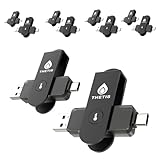
- FIDO2 & Passkey Ready: Business-ready and FIDO2 L1 certified. This key is supported by major management suites and is ideal for both individual and enterprise deployment. Works seamlessly with Gmail, Facebook, GitHub, Dropbox, Coinbase, and more.
- Dedicated Manager App: Use the Thetis Manager App for the initial hardware PIN setup. Setting the PIN on the device first ensures a smooth registration process. Once the PIN is configured, you can begin registering the key across your favorite FIDO2-compatible online services.
- Universal Connectivity (USB-C, USB-A, & NFC): Designed for PCs, Macs, iPhones, and Android. For mobile use, simply unfold the key, align it with your phone’s NFC antenna, and hold for a few seconds to authenticate.
- Enhanced MFA (FIDO2 & TOTP/HOTP): Strengthen your security with flexible options. Use the Manager App to access TOTP/HOTP features for accounts that do not yet support FIDO2.
- Check FIDO2 compatibility before purchase - Known limitations: ID Austria is not supported (requires FIDO2 Level 2). Windows Hello login only works with Windows Enterprise editions that support Entra ID. NFC is supported only through mobile authentication, Not MacOS/windows.
NIST’s Digital Identity Guidelines, SP 800-63 Revision 4, address identity proofing, authentication, and federation, including security, privacy, and user-experience considerations. NIST’s page was updated September 30, 2025. Use the relevant requirements for your organization’s assurance needs; buying an IAM platform does not, by itself, mean that a business must claim NIST conformance.
How do you compare SSO and provisioning fit?
Ask vendors and application owners to demonstrate the full path for each critical application: sign-in, access assignment, changes to access, and removal. A working SSO connection alone does not show that accounts are being provisioned or deactivated correctly.
Rank #4

- POWERFUL SECURITY KEY: The Security Key NFC is the essential physical passkey for protecting your digital life from phishing attacks. It ensures only you can access your accounts.
- WORKS WITH 1000+ ACCOUNTS: Compatible with Google, Microsoft, and Apple. A single Security Key NFC secures 100 of your favorite accounts, including email, password managers, and more.
- FAST & CONVENIENT LOGIN: Plug in your Security Key NFC via USB-A and tap it, or tap it against your phone (NFC) to authenticate. No batteries, no internet connection, and no extra fees required.
- TRUSTED PASSKEY TECHNOLOGY: Uses the latest passkey standards (FIDO2/WebAuthn & FIDO U2F) but does not support One-Time Passwords. For complex needs, check out the YubiKey 5 Series.
- BUILT TO LAST: Made from tough, waterproof, and crush-resistant materials. Manufactured in Sweden and programmed in the USA with the highest security standards.
- For federation, establish whether the app supports OIDC/OAuth, SAML, password-based SSO, or another method, and confirm the setup requirements.
- For provisioning, identify whether the app supports SCIM or another automated method, a platform connector, or manual administration.
- Check which user and group attributes flow into the app and whether changes to role or team produce the intended access change.
- Confirm that each person is assigned the application-side license entitlement needed for the account and features they are meant to use.
Microsoft warns that a mismatch between platform assignments and application licenses can cause provisioning or update errors. Record application licensing as part of the workflow, not as a separate assumption.
Quick wins for a faster PC:
Fix the driver behind crashes, sound loss and screen glitchesFind Drivers →Clear out junk files and repair common Windows errorsFree Scan →Scan for outdated or missing drivers - takes under a minuteDriver Scan →How should you compare price and total cost?
Compare the cost of the required capabilities, not just the lowest advertised entry tier. The following are vendor-published US prices observed on October 4, 2026; they are not a complete cost model or evidence that one candidate will cost less for your organization.
Best Value

- FIDO2 & Passkey Ready: Business-ready and FIDO2 L1 certified. This key is supported by major management suites and is ideal for both individual and enterprise deployment. Works seamlessly with Gmail, Facebook, GitHub, Dropbox, Coinbase, and more.
- Dedicated Manager App: Use the Thetis Manager App for the initial hardware PIN setup. Setting the PIN on the device first ensures a smooth registration process. Once the PIN is configured, you can begin registering the key across your favorite FIDO2-compatible online services.
- USB TYPE A Connectivity & DONGLE Design: Designed for PCs, Macs, laptops and Android devices that utilize a USB-A port. Plug and stay, or carry it on a keychain. (Item Size: 0.75 X 0.74 IN x 0.25 IN)
- Enhanced MFA (FIDO2 & TOTP/HOTP): Strengthen your security with flexible options. Use the Manager App to access TOTP/HOTP features for accounts that do not yet support FIDO2.
- Check FIDO2 compatibility before purchase - Known limitations: ID Austria is not supported (requires FIDO2 Level 2). Windows Hello login only works with Windows Enterprise editions that support Entra ID. NFC functionality is not supported.
| Vendor and offering | Published price | Pricing context |
|---|---|---|
| Microsoft Entra ID P1 | $7 per user per month | Paid yearly; Microsoft says P1 is included in Microsoft 365 Business Premium. |
| Microsoft Entra ID P2 | $10 per user per month | Paid yearly. |
| Microsoft Entra Suite | $12 per user per month | Paid yearly. |
| Okta Workforce Identity Starter | Starts at $6 per user per month | Billed annually; starting price. |
| Okta Workforce Identity Essentials | $17 per user per month | Billed annually. |
| Okta Professional and Enterprise | Not stated; quote required | Okta lists these as custom quote. |
| JumpCloud SSO & MFA | $9 per user per month billed annually; $11 billed monthly | Vendor-listed price; the pricing page said listed prices exclude VAT. |
| JumpCloud Device Identity Management | $13 per user per month billed annually; $15 billed monthly | Vendor-listed price; the pricing page said listed prices exclude VAT. |
Prices and package descriptions can change. Verify current availability, geography, contract term, taxes, and inclusions with each vendor. Add any required application licenses, paid feature tiers or add-ons, implementation effort, and ongoing administration to your comparison. If you already use Microsoft 365 or Azure, calculate the actual incremental cost and confirm that the plan you have includes each feature you need.
Independent reader supportYour contribution helps us test, update, and keep practical guides available for everyone.Which named platforms belong on a shortlist?
Microsoft Entra ID, Okta Workforce Identity, and JumpCloud are examples to investigate, not ranked recommendations. Compare each against the same requirements and verify plan-level features before deciding.
- Microsoft Entra ID: Microsoft documents Free, P1, and P2 licensing, with features dependent on plan; P1 is included in Microsoft 365 Business Premium. Existing Microsoft 365 or Azure use may affect the commercial comparison, but it does not establish the incremental cost or feature fit for a particular business.
- Okta Workforce Identity: Okta describes its suites as per-user, per-month offerings billed annually. Its buyer guide provides vendor-authored prompts on integrations, standards, directories, and lifecycle fit; it is dated 2023.
- JumpCloud: Its pricing page separates SSO & MFA from Device Identity Management and platform tiers. Check the current package contents and whether combining identity and device management matches your requirements.
How do you run a useful IAM pilot?
Keep the pilot limited but representative: include users with different roles and devices, administrators, and applications that exercise the sign-in and provisioning methods you expect to use. Apply the same tests to each candidate.
Crashes, No Sound, or Screen Glitches?
Random freezes, missing sound and display glitches usually trace back to one bad driver. Find and replace yours safely.Free scan · under a minuteWindows Errors? Fix Them Before They Spread
Repair common Windows errors and clear accumulated junk for a smoother, more stable PC - no reinstall needed.Free scan · no reinstall- Choose the test cases. Select critical apps and representative joiner, mover, and leaver workflows from your inventory. Include an application with automated provisioning and one whose process may remain manual, if both are part of your environment.
- Configure roles and support. Identify the administrative and business owners, define who can approve access, and give pilot users a clear support route.
- Test the complete workflow. Verify sign-in with the required MFA factor, correct access assignment, account creation and updates, and access removal. Record what works automatically, what needs manual steps, and what fails.
- Check commercial and operational dependencies. Confirm the feature tier and required application licenses for each test. Document certificate ownership and renewal, recovery procedures, and support responsibilities.
- Collect user feedback and compare results. Note enrollment friction, device or app incompatibilities, support load, and administrative effort. Use those observations alongside requirements coverage and total cost to decide whether to proceed, adjust the design, or reject a candidate.
- Plan communications before expansion. Explain what is changing, when users will see a new sign-in experience, and where they can get help.
Microsoft’s deployment guidance recommends defining administrative and business roles, communicating changes, checking platform and application licenses, and planning the SSO method and certificate handling. For example, Microsoft says the default SAML application certificate is valid for three years. Assign renewal ownership and a tracking process for the chosen platform and applications rather than assuming renewal is automatic.
What should determine the final choice?
Choose the candidate that meets your must-have authentication and application requirements, handles the lifecycle events you can automate, makes remaining manual work visible, and can be supported by your team at a cost that fits your expected growth. If a critical requirement cannot be demonstrated in the pilot or verified for the tier you would buy, treat it as unresolved—not as a promised feature.
Quick Recap
Product prices and availability are accurate as of the date/time indicated and are subject to change. Any price and availability information displayed on Amazon at the time of purchase will apply.

