
Recommended Free Tools
iTechGuides is reader-supported. When you buy through links on our site, we may earn an affiliate commission. As an Amazon Associate I earn from qualifying purchases. Learn more
A birth record’s clock reading does not identify a time zone by itself. To determine what it meant, you need the complete birth date, the most precise birthplace available, and the historical civil-time rule in effect there. Convert to UTC only after establishing that rule; calculate solar time separately, because it is not the same as local clock time.
What information do you need to interpret a birth time?
Start with the time as recorded, the full local birth date, and the birthplace. A city or town is more useful than a country, and a more precise location can help if you later calculate solar time. Also note where the record came from and whether it appears to report a clock time or a time already converted by someone.
- Recorded time: Preserve the original digits and any label or notation on the record.
- Date: The date matters because the jurisdiction’s offset or daylight-saving rule may change during the year.
- Place: Identify the civil-time jurisdiction that governed the location on that date, which may differ from present-day borders or rules.
- Record reliability: A remembered time, a rounded entry, or a later transcription may not have the same precision as a contemporaneous record.
These details answer “What time zone was I born in?” more reliably than a present-day map or the name of a nearby city. The applicable time is the historical local civil time at the place of birth—not necessarily the rule used there today.
How do you identify the historical time zone?
Look up the location and date in a historical time-zone source, then record the offset from UTC that applied at that moment. Prefer a regional identifier—such as one tied to a specific city or region—over an abbreviation. Abbreviations such as CST are not globally unique, so an abbreviation alone cannot establish which offset or daylight-saving rule applied.
#1 Best Overall
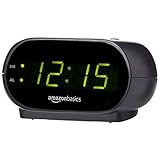
- Digital alarm clock with a 0.7-inch green LED display for easily checking the time at a glance
- Built-in nightlight gently illuminates a dark room
- Repeating snooze function makes it possible to sleep a little longer
- AC powered with integrated power supply. Batteries may be used as a backup power source to ensure time and alarms are retained in memory for 8 hours (refer to User Manual for details)
- Measures 4.5 x 3.5 x 2.4 inches (LxWxH); weighs 0.4 pounds (6.6 oz) Note: Batteries are not included
The IANA Time Zone Database (tzdb) records regional clock offsets and daylight-saving rules. Its release history and current version are listed on IANA’s Time Zones page; the theory document explains the database’s scope and warns that historical data before 1970 can be incomplete or challenging to document (IANA’s tzdb theory and pragmatics). IANA describes regional identifiers and timezone data, including the problems with abbreviations, in its time zone and daylight saving data guide.
For older births, treat a database result as evidence about documented practice, not proof that every local clock followed it exactly. Local authorities, institutions, or record keepers may have used practices that are difficult to reconstruct. If the date is before 1970 or the record’s locality is uncertain, state that limitation and avoid presenting a single offset as certain unless a reliable contemporaneous source supports it.
Rank #2

- Small & Compact Plug-in Alarm Clock for Every Room: Perfect for modern homes ditching cable boxes—place it under your living room TV to replace the lost clock display, or use it as a sleek bedside alarm in the bedroom. Also ideal for home offices, gyms, or dorm desks.
- 3-in-1 Multispace Display: Stay organized with a bright, easy-to-read display showing time, date, and indoor temperature—no more switching apps or devices.Its compact design fits seamlessly into any space, keeping you on schedule whether you’re streaming, working, or sweating.
- Adjustable Brightness for Day & Night: Adjust screen brightness in 4 levels+OFF with a single touch of the top-mounted button—no confusing menus. Keep it dim for a distraction-free bedroom at night or boost it for clear visibility in bright gyms or sunlit home offices.
- Plug-in Power Clock: This alarm runs on AC power (cable included), ensuring it’s always on and accurate.
- Sleek, User-Friendly Design:Designed with simplicity in mind: a single top button controls brightness, while the clean, modern look complements any decor—from minimalist living rooms to industrial-style home gyms. Its intuitive interface works for all ages.
Was daylight saving time in effect?
Daylight saving time is jurisdiction- and date-dependent. Establish the historical rule for the birth location rather than assuming that a modern rule—or a rule from another country or year—applied. The offset used for conversion to UTC must include any daylight-saving adjustment that was in force at the recorded time.
Do these 3 things before closing this tab:
1Repair Windows errors before they cause bigger problems2Scan for outdated or missing drivers - takes under a minute3Clear out junk files and repair common Windows errorsIn the United States, NIST lists the 2026 daylight-saving period as beginning March 8 at 2 a.m. local time and ending November 1 at 2 a.m. local time. That is a current-year example, not a rule to apply to other jurisdictions or historical years. NIST explains the U.S. rule and its transitions on its Daylight Saving Time Rules page.
Rank #3

- PLUG IN ALARM CLOCK WITH BATTERY MEMORY: This plug in alarm clock powered by USB only — all functions, including the display, require a wired power connection. You can also insert three AAA batteries (not included) as a battery backup to save all your time & alarm settings and ensure alarms still ring when power fails, but they CANNOT light up the screen or power the clock for regular daily use.
- BEDROOM CLOCK WITH DIMABLE LED DISPLAY: The compact digital clock (6.2" x 3" x 2.8") has a 48mm blue bold font for easy time viewing from a distance. You can easily toggle between 5 brightness levels, from very bright to completely dim. It also offers 12 or 24-hour time formats to meet different time reading habits.
- DUAL ALARM CLOCK WITH SNOOZE FUNCTION: Our bedside alarm clock supports setting two separate wake up times, convenient for family members with different schedules. There is an easily accessible snooze button on the top, enabling you to easily activate an additional 9 minutes of snooze even in a half-awake state.
- LOUD ALARM CLOCK WITH 4 VOLUME LEVELS: Our loud alarm clock offers four levels of volume. With one click you can switch to the volume that suits you best, effectively waking you up and starting your day with a fresh start!
- EASY-TO-USE ALARM CLOCK FOR GIFT GIVING: With clearly labeled buttons for easy operation, this table clock pleases as both functional bedside timekeeper and a considerate present. Ideal for personal use or as a considerate gift for children, seniors, teenagers, or loved ones.
Why transition dates can make a clock time ambiguous
When clocks move forward, a span of local clock readings is skipped. A recorded time within that nonexistent interval cannot be interpreted as an ordinary local time without resolving a discrepancy in the record or its date, place, or notation.
When clocks move back, a span of clock readings occurs twice. A time in that repeated interval can correspond to two different UTC instants. If the record or a reliable historical source does not distinguish which occurrence was intended, preserve both possibilities rather than silently choosing one.
Rank #4

- 【RGB Plug-in Alarm Clocks for Bedrooms】- Add a touch of magic to your bedroom with our clock's unique RGB color changing display. Easily toggle through different digit colors to suit your mood or preference. Say goodbye to boring, monochrome clocks and elevate your room decor with our colorful and eye-catching option.
- 【Alarm Clock with Vibrant RGB Night Light】- Create a beautiful and calming ambiance in your sleeping space with the vibrant RGB night light. With 9 color light effects, you can easily adjust the colors to your preferred sequence. Whether you want a gentle night light or a colorful addition to your room, our clock has got you covered.
- 【Large Numbers Desk Clock】- Our clock features a 7-inch LED display with large, clear numbers. The 2.36-inch height of the numbers ensures they can easily be read from a distance. This makes it perfect for those with sight issues, allowing them to easily tell the time without any difficulty.
- 【Outlet Powered Alarm Clocks】- Our digital alarm clock is powered by an outlet. The battery is solely used to preserve your time settings in the event of a power outage and does not enable the alarm clock to function normally. Tip:The battery backup function requires 2 AAA batteries, which are not included with the product.
- 【Adjustable Brightness Bedroom Clock】- Customize the brightness of your clock to meet your needs. The night light can be easily tapped on and off, and it can be dimmed to your desired level or turned off completely. The numbers on the clock can also be dimmed or turned off for those who prefer complete darkness while sleeping.
How do you convert a birth time to UTC?
- Keep the original local date and clock reading together. Do not change the date while copying the time from the record.
- Identify the historical civil-time jurisdiction. Use the birthplace and date to find a regional time-zone history, not just an abbreviation.
- Determine the applicable offset. Confirm whether daylight saving was in effect and whether the local reading falls in a skipped or repeated interval.
- Apply the offset to get UTC. For example, if the confirmed local offset is UTC−05:00, add five hours to the local clock reading to obtain UTC. Check whether this moves the calendar date forward.
- Record the assumptions. Keep the location, date, timezone identifier or rule source, offset, and any uncertainty alongside the converted result.
If the time falls in a repeated interval, there may be two valid UTC results; if it falls in a skipped interval, the recorded time conflicts with the local clock rule. A converter that returns one answer without exposing its historical rule or handling of ambiguity does not resolve that uncertainty.
What is local solar time, and how is it different?
Local civil time is the time shown by clocks under a jurisdiction’s legal rules. Solar time describes the Sun’s position in the sky. NOAA distinguishes two solar-time concepts: mean solar time follows a uniformly moving mean Sun, while apparent solar time (also called true solar time) follows the actual Sun. The difference between apparent and mean solar time is described by the equation of time. See NOAA’s glossary.
Best Value

- Easy To Use Wooden Digital Alarm Clock with Large Numbers: This modern electric alarm clock is designed with big bold 1.8 inches numbers that can be easily seen across the room, and simple to set, making it an ideal small digital clock for kids, teenagers, adults, seniors and the elderly. (Notice: The display only lit when plugged in)
- 6 Dimmable Brightness Level: DreamSky wooden bedside clock can be easily set with adjustable dimmer for different situation of using, dark enough for sleep and bright enough to watch in the day.
- 5 Adjustable Volume Level and Snooze Feature: Featuring an alarm volume of up to 105dB, this loud alarm clock is perfect for heavy sleepers and also accommodate light sleepers with an adjustable volume range from 70 to 105dB. And with the snooze function, you can earn a 9 minutes extra rest.
- Plug In Clock (Not Battery Powered): The DreamSky nightstand table clock is powered by the included adapter, which can provide a stable time display, making a handy wood clock for living room, bedroom, office, kids room etc.
- Alarm and Setting Backup: The battery backup feature of this wooden alarm clocks for bedrooms will keep the alarm work during the power outage, no worry for oversleeping. Meanwhile it can save the time setting, which can save the trouble of reset the clock. (Notice: Battery only operates alarm, not time display. The batteries are not included)
To derive local mean solar time from a civil clock reading, account for the birthplace’s longitude relative to the standard meridian associated with the clock’s timezone offset. Apparent solar time additionally depends on the date through the equation of time. NOAA’s solar-position method describes the equation-of-time, longitude, and timezone-offset inputs used for true solar time (General Solar Position Calculations).
Longitude conventions matter: a calculation must use the sign convention expected by its method or tool. Solar-time results also depend on the timezone offset chosen for the original clock reading. If that offset is uncertain, the solar-time result inherits the uncertainty; apparent solar time additionally needs the correct date.
Why can a birth chart change when you enter a different time?
Chart software generally needs an instant and a location, not merely a clock-face reading. Changing the time can change the instant used in the calculation; changing the date, location, timezone, or daylight-saving interpretation can do so as well. A chart can therefore differ because the entered civil time was interpreted under another offset, because a transition created two possible instants, or because the software received a different location or time scale.
Free tools Windows power users keep installed
One-click scans. No signup required.
Before treating two results as contradictory, compare the inputs: the time scale (civil, mean solar, or apparent solar), complete date and historical jurisdiction, location and longitude precision, timezone-history source or version, and reliability of the original record. If more than one interpretation remains plausible, keep the alternatives and their assumptions visible rather than claiming unsupported precision.
Quick Recap
Product prices and availability are accurate as of the date/time indicated and are subject to change. Any price and availability information displayed on Amazon at the time of purchase will apply.

