
Quick wins for a faster PC:
Scan for outdated or missing drivers - takes under a minuteDriver Scan →Repair Windows errors before they cause bigger problemsFix Now →Fix the driver behind crashes, sound loss and screen glitchesFind Drivers →iTechGuides is reader-supported. When you buy through links on our site, we may earn an affiliate commission. As an Amazon Associate I earn from qualifying purchases. Learn more
You can build a water tester that collects readings from selected probes—such as pH, temperature, conductivity, or turbidity—and logs them over time. It is a useful electronics and monitoring project, but it is not a universal water-quality test and cannot certify that water is safe to drink.
The practical goal is to measure a few defined properties consistently, learn to calibrate and maintain the sensors, and notice changes that merit investigation. If you need to know whether drinking water contains a particular contaminant, use appropriate testing guidance and qualified laboratory analysis.
What a DIY water tester can measure
Water quality is not a single value. Each probe measures a particular characteristic, and combining several readings does not make the device detect substances its sensors were not designed to measure. The EPA’s Water Sensors Toolbox describes sensors for parameters including pH, temperature, conductivity, dissolved oxygen, and turbidity.
What’s actually slowing this PC down?
Pick the symptom - the matching free tool is one click away.
| Sensor | What it measures | What to keep in mind |
|---|---|---|
| pH | How acidic or alkaline a sample is. | Requires suitable reference buffers, calibration, and probe care. Read the sensor maker’s specifications for range and resolution. |
| Temperature | The sample’s temperature. | Record it with other readings; sample temperature can be relevant to interpreting measurements and following sensor instructions. |
| Conductivity | How readily the sample conducts electricity. | It is a measurement of conductivity, not a direct identification of particular dissolved contaminants. |
| Turbidity | Cloudiness caused by suspended material. | A turbidity reading does not identify what the material is or establish that the water is safe. |
| Dissolved oxygen | Oxygen dissolved in water. | An additional sensor brings its own calibration and maintenance requirements. |
These are educational and monitoring measurements, not a contaminant screen. Generic pH, conductivity, temperature, or turbidity sensors do not establish the presence or absence of pathogens, lead, arsenic, PFAS, pesticides, or other substances unless the instrument specifically measures the analyte using an appropriate validated method.
#1 Best Overall

- Reliable Brand: MEXYBE was founded with a simple yet important mission: to provide everyone with a accurate and reliable way to test their water quality. We believe that access to clean and safe drinking water is a basic human right, and our tds meter digital water tester is one professional way that can help people achieve that. We are committed to providing high-quality products and excellent customer service. Join us in our mission to make clean and safe water accessible to everyone
- Accurate and Reliable Results: Tired of getting unreliable readings from other water testers? Look no further. The MEXYBE 2025 ALL-NEW water quality tester features a high-precision chip and a premium titanium alloy probe, ensuring accurate and reliable results every time. Equipped with cutting-edge technology and advanced features, it's the ultimate choice for precise water testing. So why wait? Experience dependable testing performance for you and your family today
- Multifunctional (4 in 1) and 5 Upgraded: Professional TDS (Total Dissolved Solids), EC (Electrical Conductivity), Temperature (Degree Centigrade) and Temperature (Fahrenheit) Meter 4 in 1. Upgraded with big backlit LCD for easier reading, auto-lock function for easier use, factory calibrated and hold function for direct use and auto-0ff in 2 minutes to conserve battery. These enhancements make it a user-friendly tds meter digital water tester for a variety of applications
- Two User-Friendly Features:1. 25% Larger Backlit LCD: The MEXYBE 2025 4-in-1 water quality tester has a screen that's 25% bigger than older 3 in 1 models the market, making it easier to read for everyone, including seniors and children. 2. Convenient TDS Chart: A colorful TDS chart is placed on the back of the tester and in the user guide, so you can quickly understand PPM values without searching online—saving you time with every test
- Multipurpose Tds Tester: Test the purity of drinking water to ensure it's safe and healthy, monitor if Reverse Osmosis (RO)/Deionization(DI) System works properly, whether filter need replaced, maintenance aquarium, hydroponics(test nutrients), well, pool, hot tub, spa and testing tap water, bottle water etc
Choose a build scope before buying parts
Decide what you want to observe and under what conditions. A reasonable educational starting set is pH, temperature, conductivity, and turbidity; add dissolved oxygen only if it answers a real project question and you can support the extra sensor’s care and calibration. EPA notes that sensor results can vary between devices and that maintenance, calibration standardization, lifecycle costs, and site conditions matter.
A basic architecture has four parts: one or more probes, compatible signal-conditioning or interface modules, a microcontroller with suitable inputs, and an optional display or data logger. This is a general design pattern, not a wiring diagram. Check the documentation for the exact probe, interface, and controller combination before connecting anything; do not assume pin assignments, calibration constants, range, or accuracy from a generic kit description.
Rank #2

- 4-IN-1 WATER TESTING METER – Measures Total Dissolved Solids (TDS), Electrical Conductivity (EC), and temperature in °C/°F. Compact digital design suitable for testing drinking water, aquariums, hydroponics, and RO systems.
- FAST DIGITAL READINGS – Provides TDS, EC, and temperature measurements within seconds. Features one-button operation and a backlit LCD display for clear visibility during testing.
- DURABLE DESIGN WITH TITANIUM SENSOR – Built with a titanium alloy probe, auto-off function, and compact handheld design. Suitable for home, aquarium, hydroponic, and water filtration testing.
- INCLUDES DIGITAL TDS GUIDE – Comes with a downloadable reference guide to help interpret TDS readings for common water applications such as drinking water and aquariums.
- COMPLETE TESTING KIT – Includes TDS meter, batteries, and a quick-start guide so you can begin testing right away.
Compare components by evidence, not by the word “water quality”
- Target parameter: Confirm exactly which property the probe measures and whether that matches your project.
- Documented range and resolution: Check the manufacturer’s specifications for the exact model. A displayed decimal place is not proof of accuracy.
- Calibration: Find out what standards or reference solutions are needed, how often the manufacturer calls for checks, and how much sample handling the procedure requires.
- Maintenance and replacement: Check cleaning, storage, service-life, and replacement guidance, especially for pH probes.
- Sample conditions: Determine whether the probe is intended for a cup or tank, or for continuous placement, and whether temperature or other conditions affect its use.
- Data and verification: Prefer a setup that can save readings with timestamps and let you compare them with a suitable reference.
A category search such as “Arduino water quality sensor kit” may help locate educational parts, but a kit is not thereby lab-validated. No specific brand or model is established here; verify the documentation for whatever you choose.
Free tools Windows power users keep installed
One-click scans. No signup required.
Assemble the tester and collect useful readings
- Define the question. Write down the parameter you want to track, the sample locations, and whether you need occasional cup measurements or ongoing monitoring.
- Check compatibility. Confirm the probe’s output and power requirements, the interface module’s compatibility, and the microcontroller’s supported inputs using the manufacturers’ documentation. Keep electronics dry and protect connections from splashes.
- Set up the display or logger. Record each reading with its parameter, date and time, sensor identity, sample source, and relevant sample conditions. A bare number without context is difficult to compare later.
- Calibrate according to the probe instructions. For pH, use appropriate reference buffers and follow the manufacturer’s directions for rinsing, stabilization, calibration, cleaning, and storage. Do not substitute an arbitrary software offset for calibration.
- Measure consistently. Use the same sample-handling approach and allow the reading to stabilize as directed for the sensor. Record unusual conditions rather than treating readings from different setups as directly comparable.
- Check against a reference and maintain the probes. Keep a record of calibration dates, reference solutions, temperature where relevant, cleaning, and replacements. If a reading drifts, disagrees with a reference, or behaves inconsistently, investigate and recalibrate or replace the sensor before relying on it.
For a remote or continuous setup, placement, power, communications, logging, site conditions, calibration, and maintenance all affect how useful the data will be. The EPA’s Guidance for Building Online Water Quality Monitoring Stations addresses utility monitoring stations and offers broader design context; it is not a certification standard for a hobby device.
Rank #3

- Accurate and Reliable TDS Meter: Equipped with a premium quality titanium alloy probe, our TDS meter, Electric Conductivity Meter, digital water tester ensures stable performance and exceptional accuracy for reliable water quality testing. Ideal for testing drinking water, filter water, bottle purified water, RO filters, aquariums, and hydroponics.
- 3-in-1 Water Tester: Measures TDS, EC (conductivity) and water temperature in one reading. Perfect for drinking water, RO systems, aquariums and hydroponics.
- Easy-to-Read Backlit LCD Display: Features a large backlit screen for clear readings, even in low light conditions. The auto-lock function holds the reading for ease of use, making it an excellent tds water tester.
- Instant and Simple Operation: Just turn on the ppm water tester and dip it into the water for quick, accurate readings. Great for use as a digital TDS water tester or ppm meter.
- Customer Satisfaction Guaranteed: Includes a 3-year warranty and a 90-day money-back guarantee for complete peace of mind with your purchase. Trust our total dissolved solids (TDS) meter for all your water quality testing needs.
Calibrate and interpret readings carefully
Calibration is ongoing work, not a one-time software adjustment. EPA Method 150.3, which covers pH determination in drinking water, describes relevant procedures using at least two calibration buffers, along with verification checks, rinsing, stabilization, and maintenance. Its portable and bench-top procedures include calibration and quality-control requirements; those method requirements should not be treated as a universal schedule for every hobby sensor.
The method specifies measurement to 0.1 pH-unit resolution for its procedures. That is not evidence that an inexpensive DIY probe achieves 0.1-unit accuracy, nor does following one element of the method make a project compliant with it. Compliance would depend on meeting all applicable method requirements. For a maker project, follow the sensor manufacturer’s instructions, calibrate before measurements, check against a known reference regularly, and label those practices as project quality control—not regulatory approval.
Rank #4
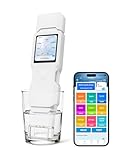
- LKBird Exclusive 9-in-1 Water Tester: All-in-One Detection for Turbidity, Hardness, pH, TDS, EC, Salinity, TOC, COD & UV Absorbance with Unique Dual-Core Advantages in Turbidity (NTU) and Water Hardness Testing. Whether checking excessive suspended particles via precise NTU readings or assessing hard water scale risks, this all-in-one device eliminates the need for multiple testers.
- Smart App Connectivity: Equipped with seamless Bluetooth connectivity, simply pair it with our dedicated "Kactoily" App to sync test results to your phone in real time—eliminating the hassle and errors of manual logging. Enjoy permanent storage of historical data, auto-generated trend charts, and multi-scenario data classification and tagging. Whether at home or on the go, easily access past records to gain precise insights for improving water quality, making household health management effortless and worry-free.
- Lab-Grade Precision Testing: Equipped with imported high-sensitivity sensors and dual optical-electrochemical modules, it uses 90° scattered light for turbidity testing and precisely quantifies calcium/magnesium ions for hardness detection. With ≤±2% measurement error and 0.01-unit resolution, its accuracy matches professional lab equipment. The built-in Automatic Temperature Compensation (ATC) ensures stable readings from 0-60°C, making TDS meter ideal for both household and professional use.
- Ultra-Simple Operation & Durable Design: Auto-calibrates on startup—no complicated setup. Immerse the probe in water for just 3 seconds to get stable, accurate readings. The backlit LCD screen ensures clear visibility even in dim environments. With an IP67 waterproof and dustproof rating, it withstands accidental water submersion. Weighing only 90g, its compact pen-style design fits easily into pockets or toolboxes, making it the ideal digital water tester for home, fieldwork, and travel—reliable testing anytime, anywhere.
- Full-Scenario Coverage: Far Beyond Ordinary water tester- Perfect for households testing drinking water and purified water quality; aquarium enthusiasts regulating fish tank water; growers monitoring hydroponic nutrient solutions; businesses inspecting swimming pool and spa water quality; industrial settings assisting in boiler water and cooling water hardness monitoring to prevent scaling and corrosion; even suitable for emergency outdoor water source screening and basic laboratory testing. One device, unlimited scenarios.
Use the readings to observe selected parameters and trends, not to make a safety verdict. A change can be a reason to investigate, but a normal-looking value does not rule out a contaminant that the instrument does not measure.
Do these 3 things before closing this tab:
1Repair Windows errors before they cause bigger problems2Fix the driver behind crashes, sound loss and screen glitches3Clear out junk files and repair common Windows errorsWhen you need a laboratory test
If you are concerned about drinking water from a private well or another source, consult the EPA’s Home Drinking Water Testing guidance and the relevant state or local health or drinking-water authority. Choose testing based on the concern and local guidance; there is no single panel established here as necessary for every household.
Best Value
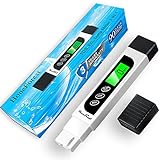
- ACCURATE AND RELIABLE: To achieve high accuracy, the TDS water tester is equipped with a premium quality titanium alloy probe, and an efficient intelligent chip that not only ensures stable performance but also contributes to exceptional accuracy, making it a trustworthy water quality tester
- MULTIFUNCTIONAL AND UPGRADED: Professional TDS (Total Dissolved Solids), EC (Electrical Conductivity) and Temperature Meter 3 in 1. Upgraded with big backlit LCD for easier reading, and auto-lock function for easier use. These enhancements make it a user-friendly tds meter digital water tester for a variety of applications
- EASY AND INSTANTLY: Just turn TDS meter on and stir water gently, then stabilized readings will be auto-locked on LCD in seconds, and the tds ppm meter will shut off automatically if without operation over 2 minutes
- MULTIPURPOSE TDS TESTER: Test the purity of drinking water to ensure it's healthy, monitor if Reverse Osmosis (RO)/DI System works properly, whether filter need replaced, maintenance aquarium, hydroponics(test nutrients), pool and spa, etc
- OUTSTANDING AFTER-SALES SERVICE: We are committed to providing exceptional after-sales customer service for the digital TDS water tester meter, ensuring a worry-free purchase
For regulatory drinking-water compliance decisions, laboratories use EPA-approved analytical methods. The EPA’s page on approved drinking-water analytical methods explains that framework. A DIY meter can complement a properly scoped investigation by recording selected parameters, but it cannot replace contaminant-specific laboratory analysis or establish that water is safe to drink.
Quick Recap
Product prices and availability are accurate as of the date/time indicated and are subject to change. Any price and availability information displayed on Amazon at the time of purchase will apply.

