
iTechGuides is reader-supported. When you buy through links on our site, we may earn an affiliate commission. As an Amazon Associate I earn from qualifying purchases. Learn more
A browser can mix two tracks using a single HTML file and the Web Audio API: route each track through its own audio path, combine the paths, and send the result to the speakers. The key is the AudioContext, which acts as the console’s audio-routing graph. Playback should begin after a user clicks a control, and remote tracks need suitable CORS permission or the browser will output silence.
The design below explains the building blocks for a software console. It does not claim that any particular implementation includes specific controls or has been tested on particular browsers or devices.
What makes a browser-based DJ console?
A useful two-deck console has two track sources, controls for starting and seeking playback, and a way to mix their audio. Deck gain and a crossfader are natural additions; filtering and other effects can be added as needed. These are design choices, not requirements imposed by Web Audio.
Recommended Free Tools
The browser’s audio graph provides the routing. Each audio source connects to any processing and gain nodes for its deck. The deck paths then feed a shared mix stage and master output:
#1 Best Overall
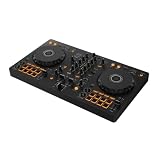
- The All-Rounder to Learn On: A simple, user-friendly layout inherited from pro Pioneer DJ gear makes it easy to start and grow
- No Beatmatching Skills Needed: Smart Fader auto-adjusts volume, bass, and BPM so you can blend genres by moving one fader
- Room to Grow: 2-channel, 2-deck control with 16 Performance Pads for Hot Cues, Pad FX, Beat Jump, and Sampler
- Built for Streaming and Streaming Out: Mix from Apple Music, Tidal, and Beatport, and live-stream or MC from a single device
- Plug In Anywhere: Connects to PC, Mac, iPhone, iPad, or Android by USB or Bluetooth with a built-in sound card for speakers
Deck A: <audio> → source → deck gain ─┐
                                      ├→ mix/crossfader → master gain → destination
Deck B: <audio> → source → deck gain ─┘
In this diagram, the crossfader is a conceptual mix stage: its behavior must be implemented with suitable nodes and control logic. A simple mix can connect both deck paths to the master path without a dedicated crossfader node.
How does the Web Audio graph route each track?
An AudioContext owns the graph. Sources, processing nodes, and output nodes are connected to describe how audio flows. The final node should connect to audioContext.destination, the context’s output. MDN’s Web Audio API guide explains this graph model.
Rank #2

- Made for Your First Mix: Designed for anyone thinking of starting to DJ, so you can learn quickly and have fun from day one
- Smart Fader Does the Beatmatching: Automatically matches volume, BPM, and bass as you move the crossfader, even across genres
- Start With the Music You Have: Mix from Apple Music, Spotify, Tidal, and more through compatible apps like rekordbox and djay
- Grab It and Go: AlphaTheta's lightest, most compact controller runs on USB-C bus power from a phone, tablet, or PC/Mac
- Play Your Way: Play through your phone or laptop's own speaker, connect external speakers via the 3.5 mm output, or cue on headphones
For tracks loaded in HTML <audio> elements, call audioContext.createMediaElementSource(audioElement) to create a MediaElementAudioSourceNode. Connect that node through the deck’s processing and gain path. MDN documents the method in its createMediaElementSource() reference.
Windows Errors? Fix Them Before They Spread
Repair common Windows errors and clear accumulated junk for a smoother, more stable PC - no reinstall needed.Free scan · no reinstallOutdated Drivers Are Slowing You Down
One free scan finds every outdated or missing driver and matches the right update for your exact hardware.Free scan · exact hardware matchThe media element remains useful after routing: its playback, pause, seeking, and source controls still apply. But its rendered audio is heard through the Web Audio graph rather than directly from the element. The W3C Web Audio API 1.1 specification defines that behavior and notes that the node output is resampled to match the context’s sample rate when necessary.
Rank #3

- Complete Serato DJ System - DJ Controller for Serato DJ Lite (Included) with 4 decks of control, built-in 24bit audio interface and plug and play USB connectivity for Mac and Windows
- Visualize Your DJ Mix - Large 6-inch capacitive-touch jog wheels with high-resolution color displays that show beats per minute (BPM), platter position, beats remaining and pitch adjustment or key
- Personalize your DJ Set - Six Fun, quick-launch FX with dual paddle triggers; dedicated instant loop controls; eight performance pads per deck to access cues, loops, fader cuts and samples
- Stream Millions of Tracks - Gain access to your existing subscription through Serato DJ Lite (Included) from leading providers including Apple Music, Tidal, Spotify, SoundCloud, Beatport Link and Beatsource Link
- Ready to Connect To all Your DJ Equipment - Microphone input, headphone output and RCA output to connect to DJ speakers, plus a mixer with 3-band EQ, filter knobs, channel faders and crossfader
How should deck gain, mixing, and master output work?
Give each deck an independent level
A gain node on each deck path provides independent volume control before the decks are combined. This lets the mix change one track’s level without changing the other’s. If you want a crossfader, arrange the mix stage so a control can vary how much each deck contributes to the master path.
Keep the master path distinct
After the deck signals are combined, a master gain node can provide overall level control. Connect the master path to audioContext.destination; without a connection to the destination, the graph has no audible output. The Web Audio API supplies the building blocks, but the exact control layout, crossfader curve, and effects depend on the implementation.
Rank #4

- The All-Rounder to Learn On: A simple, user-friendly layout inherited from pro Pioneer DJ gear makes it easy to start and grow
- No Beatmatching Skills Needed: Smart Fader auto-adjusts volume, bass, and BPM so you can blend genres by moving one fader
- Room to Grow: 2-channel, 2-deck control with 16 Performance Pads for Hot Cues, Pad FX, Beat Jump, and Sampler
- Built for Streaming and Streaming Out: Mix from Apple Music, Tidal, and Beatport, and live-stream or MC from a single device
- Plug In Anywhere: Connects to PC, Mac, iPhone, iPad, or Android by USB or Bluetooth with a built-in sound card for speakers
Add processing only when it serves the console
Built-in graph nodes can cover ordinary mixing and filtering needs. If a project needs custom sample-level processing, AudioWorklet is an option rather than a prerequisite for a complete console. MDN’s AudioWorklet documentation describes the API; check current browser support and implementation details before relying on it.
Why must playback start from a user action?
Browsers may block programmatic playback or audio-context startup under autoplay policies, depending on browser policy and user settings. Provide an obvious Start or Play control and initialize or resume the context in response to that user action. MDN discusses autoplay restrictions in its Web Audio API guide. Do not assume a page can start audible playback automatically just because its code has created an audio graph.
Best Value

- The Party-Starter - 2-deck DJ controller designed to help first time and casual DJs create party moments with a built in light show, USB-C connectivity and pro DJ tools, no complex gear or prior experience needed; Bluetooth MIDI connectivity allows for wireless DJing from iOS and Android devices via the Algoriddim djay app
- Instant Party Atmosphere - Built-in, beat-synchronized LED light show projects colorful patterns that automatically move in time with your music to energize any room
- Includes Industry-Standard Software - Start mixing right out of the box with included free access to Serato DJ Lite for Mac and Windows, and Algoriddim djay for multiple platforms
- Beginner-Friendly Learning Tools - Visual Beat Align indicators on each deck guide your timing for manual beatmatching, while automatic Fade FX help you create professional-sounding transitions
- Portable Design - The compact, lightweight chassis is USB-powered, making it easy to pack up and perform anywhere using a laptop, tablet, smartphone or a standard power bank
Why can a remote track play silently?
A remote URL alone does not grant a page permission to route that media through Web Audio. Under the W3C specification, if the media element is classified as cross-origin, its MediaElementAudioSourceNode must output silence. Use local files or a remote host that sends suitable CORS headers; setting a source URL or connecting nodes does not bypass the restriction. This requirement is specified in the W3C MediaElementAudioSourceNode section.
When are AudioWorklet and MIDI useful?
AudioWorklet for custom audio processing
Use AudioWorklet when the console needs processing at the sample level that existing nodes do not provide. For routine routing, gain, and filtering, it is not necessary to add a worklet just to make a console complete. See MDN’s AudioWorklet reference for details.
Web MIDI for an optional physical control surface
Web MIDI can let a compatible MIDI controller provide physical input, such as control changes or button presses, when an implementation adds that support. It is an optional extension, not a requirement for a browser-based console. MDN’s Web MIDI API reference describes the separate API.
Quick wins for a faster PC:
Fix the driver behind crashes, sound loss and screen glitchesFind Drivers →Repair Windows errors before they cause bigger problemsFix Now →Scan for outdated or missing drivers - takes under a minuteDriver Scan →What does “one HTML file” change?
A single-file version can keep its interface, styles, and JavaScript together without a framework or separate build system. That packaging choice does not change the audio graph’s core requirements: create sources, connect the desired processing and mixing paths, route the master to the context destination, and start playback in response to user interaction. Track availability still depends on where the media comes from and, for cross-origin media, the host’s CORS behavior.
Quick Recap
Product prices and availability are accurate as of the date/time indicated and are subject to change. Any price and availability information displayed on Amazon at the time of purchase will apply.

