
Quick wins for a faster PC:
Scan for outdated or missing drivers - takes under a minuteDriver Scan →Clear out junk files and repair common Windows errorsFree Scan →Fix the driver behind crashes, sound loss and screen glitchesFind Drivers →iTechGuides is reader-supported. When you buy through links on our site, we may earn an affiliate commission. As an Amazon Associate I earn from qualifying purchases. Learn more
To manage risk in a market downturn, start with an asset mix that fits your goal, time horizon, and ability and willingness to tolerate losses. Diversify across asset categories and within each category, then rebalance periodically or when your allocation drifts from its target. Diversification can reduce concentration risk, but it cannot prevent losses when markets fall.
How do I diversify my portfolio?
Build the portfolio around the purpose of the money and when you expect to need it—not around a forecast of the next downturn. The U.S. Securities and Exchange Commission (SEC) says an appropriate asset mix depends substantially on your time horizon and risk tolerance. A long-term goal may allow more volatility; money needed soon may call for less investment risk. Risk tolerance includes both your willingness to endure losses and your financial ability to do so.



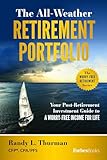
There is no stock, bond, and cash percentage that suits every investor. Too much risk can make a near-term loss difficult to absorb, while an overly conservative mix may not support the growth needs of a long-term goal. These are general principles, not a personal allocation recommendation. The SEC’s Beginners’ Guide to Asset Allocation, Diversification, and Rebalancing explains how goals and risk tolerance inform the decision.
Recommended Free Tools
Choose broad asset categories first
Stocks, bonds, and cash are common building blocks, but they have different risks. The SEC describes stocks as historically higher-risk with higher potential returns, bonds as generally less volatile with more modest returns, and cash equivalents as generally having low investment-loss risk. Cash can still lose purchasing power to inflation. Bonds are not guaranteed protection, and high-yield bonds carry higher risk than many other bonds.
#1 Best Overall
Different categories may behave differently under some market conditions, but their returns do not always move independently. The SEC says including asset categories whose returns move up and down under different conditions can help protect against significant losses; that is a risk-management rationale, not a promise that any mix will hold its value.
Diversify within each category
Within stocks, broad exposure across companies and industries generally reduces reliance on a few issuers or sectors. Apply the same principle when reviewing bonds and other investments: consider the underlying issuers and exposures, not just the number of holdings or funds.
Rank #2
Mutual funds and exchange-traded funds (ETFs) can make it easier to own portions of many investments, but a fund is not automatically diversified. Several funds may own the same large companies, and a narrowly focused fund may concentrate exposure in one sector. Review a fund’s holdings and sector exposure to see whether it adds diversification or repeats risks already in the portfolio. The SEC discusses this distinction in its guidance on diversification.
How should I protect my investments in a market downturn?
Use a portfolio structure suited to your circumstances rather than trying to predict when to move in or out of the market. Diversification can improve the chances of limiting losses compared with an undiversified portfolio, but it does not eliminate market risk. As the SEC’s Investor.gov puts it, “Diversification can’t guarantee that your investments won’t suffer if the market drops.”
That distinction matters: a diversified portfolio can still decline, and assets that often behave differently can fall together during a particular downturn. The purpose is to avoid depending too heavily on one investment, issuer, or category—not to create a guaranteed hedge or a loss-free portfolio.
How often should I rebalance my portfolio?
Rebalancing brings your holdings back toward the allocation you selected for your goal and risk tolerance. Market moves can cause one category to grow into a larger share of your portfolio than intended, changing the amount of risk you are taking. Choose a review method in advance rather than reacting to headlines.
Choose a review rule
- Calendar review: Check the allocation at regular intervals. The SEC notes that some experts use intervals such as six or twelve months; those are examples, not a schedule suited to everyone.
- Allocation thresholds: Review or rebalance when a category moves beyond a preset percentage band around its target. The appropriate band depends on your plan; the SEC does not prescribe one threshold for all investors.
The SEC says rebalancing generally works best when it is relatively infrequent. A defined rule can help avoid unnecessary trading, but it does not remove the need to consider your circumstances and costs.
Bring the mix back toward its target
You can trim an overweight category, add to an underweight one, or direct new contributions toward the underweight holdings. Before selling or trading, check potential tax consequences and transaction costs. If those implications are unclear or your portfolio is complex, a qualified financial or tax professional may help you assess them.
Best Value
Can a target-date fund simplify the process?
A target-date, or lifecycle, fund pools investments and generally shifts toward a more conservative allocation as its target year approaches. The fund’s adviser manages its allocation and rebalancing, which can simplify upkeep for someone who prefers a packaged approach.
A target date does not guarantee against losses or ensure the fund is right for your goal. Review its target year, holdings, investment strategy, risks, and costs before investing. The SEC’s overview of mutual funds and ETFs explains these pooled investment products; fund-specific details should be checked in the current disclosures.
Quick Recap
Product prices and availability are accurate as of the date/time indicated and are subject to change. Any price and availability information displayed on Amazon at the time of purchase will apply.
What’s actually slowing this PC down?
Pick the symptom - the matching free tool is one click away.

