
Free tools Windows power users keep installed
One-click scans. No signup required.
iTechGuides is reader-supported. When you buy through links on our site, we may earn an affiliate commission. As an Amazon Associate I earn from qualifying purchases. Learn more
To diversify beyond the Nifty 50, first decide what you want to add: the next tier of large companies, broader exposure across company sizes, or a deliberate mid-cap or small-cap allocation. You can get that exposure through a broader index fund or ETF, a combination of index funds, or an active fund whose SEBI category sets minimum segment exposures. None is automatically better: check what you already own, what the fund actually holds, and whether you can tolerate the risks of the additional segment.
What “beyond the Nifty 50” can mean
There are three distinct ways to broaden a portfolio. They are not interchangeable, and adding more stocks does not guarantee higher returns or lower risk.


- Add adjacent large companies: Nifty Next 50 covers the other companies in the Nifty 100 after the Nifty 50 constituents are excluded.
- Cover more of the listed market: a Nifty 500-based approach reaches across large-, mid- and small-company segments, though larger companies can still account for more of a market-cap-weighted index.
- Choose a size segment deliberately: a mid-cap or small-cap fund adds exposure to smaller companies, with corresponding differences in risk and liquidity.
The right choice depends on your existing holdings, investment horizon, capacity for loss and liquidity needs. There is no universally suitable percentage to allocate to any of these segments.
Outdated Drivers Are Slowing You Down
One free scan finds every outdated or missing driver and matches the right update for your exact hardware.Free scan · exact hardware matchPC Slower Than It Used to Be?
A free scan shows the junk files, broken settings and background clutter dragging Windows down - then fixes them in one click.Free scan · Windows 10 & 11How the main indices differ
| Index | What it covers | Published market-cap coverage |
|---|---|---|
| Nifty 50 | 50 companies selected from the Nifty 100 using free-float market-capitalization and liquidity criteria. | 53.73% of the free-float market capitalization of NSE-listed stocks, according to NSE Indices, as of March 30, 2026. |
| Nifty Next 50 | The other 50 Nifty 100 companies after excluding Nifty 50 constituents. NSE Indices describes it as disjoint from the Nifty 50. | 11.22% of the free-float market capitalization of NSE-listed stocks, according to NSE Indices, as of March 30, 2026. |
| Nifty Midcap 150 | Companies ranked 101–250 by full market capitalization in the Nifty 500. | 18.18% of the free-float market capitalization of NSE-listed stocks, according to NSE Indices, as of March 30, 2026. |
| Nifty Smallcap 250 | Nifty 500 companies ranked 251–500 by full market capitalization. | Not stated in the cited NSE Indices figures. |
| Nifty 500 | The top 500 companies by full market capitalization in the eligible universe, spanning large-, mid- and small-company segments. | Not stated in the cited NSE Indices figures. |
The three percentages are dated measures of index coverage of NSE-listed stocks’ free-float market capitalization. They are not a fund’s portfolio weights, the share of the entire Indian economy represented, or a forecast of returns. Index membership, weights and coverage can change; consult the latest methodology and factsheet when comparing current products.
#1 Best Overall
Combining the Nifty 50 and Nifty Next 50
Because the two indices do not share constituents under NSE Indices’ description, combining them expands large-company exposure to 100 names. NSE Indices’ Index Concepts FAQs says, “Hence it is always meaningful to pool the NIFTY 50 and the NIFTY Next 50 into a composite 100 stock index or portfolio.” That is the index provider’s explanation of the relationship, not a recommendation for every investor. Check the actual benchmark and weights of any fund you consider.
Going broader with the Nifty 500
A single fund tracking a broad index may be simpler than assembling separate large-, mid- and small-cap funds. But broad does not mean equally weighted: a market-cap-weighted portfolio can remain substantially concentrated in larger companies. Review the index’s current weights and the fund’s tracking implementation rather than inferring its size exposure from the name alone.
Rank #2
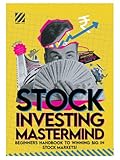
- Master Stock Investing: Beginner's guide covers fundamental analysis, Indian market strategies, and risk management, offering confidence in navigating the stock market effectively.
- Indian Market Strategies: Strategies for profitable investing by understanding market dynamics, regulations, and opportunities available in the Indian market.
- Manage Risk, Maximize Returns: Learn essential strategies for protecting and optimizing investments, including diversification, position sizing, and hedging against volatility.
- Fundamental Analysis Strategies & Methods for Investing in Growing, Multibagger stocks, at the right price | Buy, Hold, & Sell Based on Stock Performance | Long Term Investing
- Proven Investment Strategies: Uncover effective approaches to navigate market fluctuations and achieve sustainable long-term financial objectives with confidence.
Choose a construction pattern
Broaden large-company coverage
Use a Nifty 50 and Nifty Next 50 combination, or a broader large-company benchmark, if the goal is to include more large companies rather than deliberately add mid- and small-cap exposure. Check how much each holding contributes to the overall portfolio and whether other funds already own the same companies.
Do these 3 things before closing this tab:
1Scan for outdated or missing drivers - takes under a minute2Clear out junk files and repair common Windows errors3Fix the driver behind crashes, sound loss and screen glitchesUse one broad-market exposure
A broad-market fund can provide exposure across multiple company sizes in one scheme. It can simplify implementation, but it does not remove the need to inspect market-cap weights, concentration and overlap with your other investments.
Add a mid-cap or small-cap segment intentionally
Consider a segment fund only when you have chosen that exposure and can tolerate its volatility and liquidity characteristics. The index definitions establish which company-size ranks are included; they do not establish that either segment will outperform or belongs in every portfolio.
Use an active fund category
An active fund may fit if you want a manager to select holdings within a defined mandate. SEBI category rules set minimum exposures for several categories, but the category label alone does not establish a fund’s quality, cost or suitability.
What SEBI category rules require
SEBI’s mutual-fund categorization circular dated February 26, 2026 sets the following minimum allocations for these India fund categories. These are scheme requirements, not suggested allocations for an investor.
| SEBI scheme category | Minimum allocation specified |
|---|---|
| Multi Cap Fund | At least 75% of total assets in equity and equity-related instruments, with at least 25% each in large-cap, mid-cap and small-cap companies. |
| Large Cap Fund | At least 80% of total assets in large-cap companies. |
| Large & Mid Cap Fund | At least 35% in large-cap and at least 35% in mid-cap companies. |
| Mid Cap Fund | At least 65% in mid-cap companies. |
| Small Cap Fund | At least 65% in small-cap companies. |
| Flexi Cap Fund | At least 65% in equity and equity-related instruments across large-, mid- and small-cap stocks, with a dynamic mandate. |
The fund’s scheme documents explain its mandate and implementation. The March 20, 2026 SEBI Master Circular classifies index funds and ETFs as passive schemes; an active category fund and a passive index-tracking scheme are different implementation choices.
Best Value

- WHAT'S INCLUDED: 110 durable (3"x5") flashcards covering all the essential aspects of fundamental analysis. Learn to analyze financial statements, key ratios, valuation metrics, and stock evaluation techniques like a pro. Plus, get 1 month of exclusive access to an online training and research platform focused on fundamental analysis for evaluating companies. Simply scan the QR code on your thank-you card to access your digital content.
- MASTER DEFINITIVE INVESTMENT PRINCIPLES, SUITABLE FOR INVESTORS AND TRADERS, Providing a Clear Roadmap for Understanding Financial Metrics and Analyzing Stocks.
- DISCOVER THE POWER OF QUICK STUDY CARDS: An Effective Alternative to Lengthy Books. They Deliver Precise, Focused Information on Financial Metrics and Stock Analysis, Making Learning Fun and Efficient for Investors and Traders.
- INSTANTLY RECOGNIZE STOCK VALUATION TRENDS AND IDENTIFY HIDDEN OPPORTUNITIES with Strategies Most Investors and Traders Overlook.
- DON'T WASTE TIME ON LOW-PROBABILITY INVESTING STRATEGIES. Focus on Learning High Probability, High Payout Strategies for Optimal Investing Success.
How to evaluate a fund before investing
Compare scheme documents and current portfolio information, not just fund names or category labels. Work through these checks:
- Identify the benchmark and mandate. Confirm which index or SEBI category the scheme follows and what market segments it is allowed or required to hold.
- Check holdings and overlap. Compare the scheme’s actual holdings with your existing funds and investments. Two schemes with different names can still provide similar exposure, and a broader fund can overlap substantially with a Nifty 50 holding.
- Assess breadth and concentration. Look at the number of constituents, their size segments, and dependence on a small group of companies, sectors or factors. More constituents alone do not establish a balanced portfolio.
- Review costs and tracking. For a passive fund, compare its expense ratio and tracking difference against its benchmark. For an ETF, also consider exchange liquidity and the bid-ask spread. These values are scheme- and date-specific; check current official documents rather than relying on a general category figure.
- Check the relevant plan and terms. Verify whether the scheme is a direct or regular plan, along with current exit loads and other applicable terms in its scheme information document and factsheet.
- Test personal fit. Consider your time horizon, ability to withstand losses, need for access to the money and other assets. Do not infer suitability from age or a generic risk label.
A practical sequence for building the portfolio
- Map what you already own. List your funds and other equity holdings, their benchmarks or mandates, and their underlying company-size exposure.
- State the gap you want to address. Decide whether the goal is more large-company breadth, one broad-market holding, or deliberate mid-cap or small-cap exposure.
- Choose the simplest suitable route. Compare a broader single benchmark with a combination of segment funds, taking overlap and complexity into account.
- Set an allocation based on your own circumstances. The index definitions and regulatory minimums do not prescribe a personal split. Base any allocation on your goals, horizon, capacity for loss, liquidity needs and full portfolio.
- Verify the current scheme details before purchase. Read the latest factsheet and scheme information document for holdings, benchmark, costs, tracking, plan, exit load and, for ETFs, exchange tradability.
This is general educational information, not individualized investment, tax or legal advice. The cited index figures and category rules are dated, and they do not establish how a specific fund will perform or whether it is appropriate for a particular investor.
Quick Recap
Product prices and availability are accurate as of the date/time indicated and are subject to change. Any price and availability information displayed on Amazon at the time of purchase will apply.
What’s actually slowing this PC down?
Pick the symptom - the matching free tool is one click away.

