
Free tools Windows power users keep installed
One-click scans. No signup required.
iTechGuides is reader-supported. When you buy through links on our site, we may earn an affiliate commission. As an Amazon Associate I earn from qualifying purchases. Learn more
A successful retry after a request finishes does not prove that an API handles the same retry while the original request is still running. Test those timings separately: send an identical request after completion, then hold a first request open and send an overlapping duplicate. In both cases, inspect the responses and the final externally visible effect.
What an idempotency key does—and what it does not prove
An idempotency key is a client-generated value that lets a resource recognize retries of the same request. It can make operations such as POST or PATCH more fault-tolerant, but the key alone does not show that an implementation handles every timing pattern correctly. The IETF Idempotency-Key Internet-Draft describes the mechanism, but it is an expired, archived work in progress—not a finalized RFC. Treat its responses as guidance, and use the API’s current contract to decide what your test should require.


In particular, a completed retry and an in-flight duplicate are different cases. The first asks what happens when the original operation has already finished. The second asks what happens when another request with the same key arrives before that operation has finished. Passing the first case cannot establish that the second is safe.
What’s actually slowing this PC down?
Pick the symptom - the matching free tool is one click away.
Build a test that can expose an overlap
You need to control or observe the first request’s duration so that the duplicate can arrive while it is outstanding. Use a slow test operation or a test barrier that pauses the first request at a predictable point. Avoid relying only on a delay guessed from typical response times: the test needs evidence that the first request was still in progress when the second arrived.
- Choose an operation whose result or side effect you can inspect after both requests settle, such as a created resource or a recorded transaction.
- Use a fresh key for the test and keep the operation and payload identical across the two requests.
- Capture each request’s arrival and completion timing, status code, and response body.
- Make the operation’s externally visible effect countable or otherwise distinguishable, so you can tell whether it ran once or more than once.
Run this in a test environment where repeated requests and controlled delays are safe. The goal is to learn what the API does under the documented contract, not to infer production behavior from an uncontrolled timing accident.
Test the two retry timings separately
| Case | When the duplicate arrives | What to send | What to inspect |
|---|---|---|---|
| Completed retry | After the first request has completed | Same operation, same key, identical payload | Whether the documented earlier result is returned and whether the final effect is consistent with one operation |
| Concurrent duplicate | While the first request remains outstanding | Same operation, same key, identical payload | The API’s documented in-progress or conflict response, both responses, and whether the final effect indicates duplicate execution |
| Changed-payload reuse | After or during the first request, according to the API’s contract | Same key, changed payload | Whether the API rejects reuse and which status and response body it documents |
1. Establish the first request’s behavior
- Send the operation with a fresh idempotency key.
- Record the status, response body, and any returned operation or resource identifier.
- Wait for the request to complete, then inspect the resource or other observable effect and record its state.
2. Retry after completion
- Resend the same operation with the same key and identical payload after the first request has completed.
- Compare the second response with the first and with the API’s documentation. The draft describes a completed duplicate as returning the earlier operation’s result; verify whether that is the target API’s stated behavior.
- Inspect the final effect again. Check that it remains consistent with one operation, rather than assuming that similar response bodies prove there was no duplicate execution.
3. Send an overlapping duplicate
- Start the operation with a new test key and arrange for the first request to pause or remain outstanding.
- Confirm that it has not completed, then send the same operation with the same key and identical payload.
- Record the second response while also retaining the first request’s eventual status and body.
- Let both requests settle, then inspect the final resource or effect for evidence of duplicate execution.
The draft says that when a retry arrives before the original request completes, the resource SHOULD respond with a resource conflict error. Its example is HTTP 409 Conflict. This is draft guidance, not a universal status-code requirement: assert 409 only if the API’s current contract specifies it. An API may define another observable in-progress or conflict behavior.
Rank #2
4. Check changed-payload reuse as a separate case
Send a request that reuses a key with a different payload, and compare its response with the API’s documented policy. The draft says a resource should reject this reuse and gives HTTP 422 as an example. Confirm the target API’s exact status and response behavior rather than treating 422 as mandatory.
Interpret results without overclaiming
- Sequential retry passes, overlap fails: The API appears to handle completed retries differently from in-flight duplicates. Report the overlap’s response and observed effect; a completed retry alone is not evidence of race safety.
- Both pass once: This establishes only the observed behavior for that run and setup. Vary the arrival timing and repeat concurrent cases where practical; one run that does not reproduce a failure cannot establish that the race is absent.
- Responses look correct, but the effect is duplicated: Treat the externally visible effect as a failure even if a response resembles the documented result. Response handling and operation execution are separate observations.
- Responses differ from the draft’s examples: Compare them with the API’s own current documentation before classifying the result. The Internet-Draft is expired and archived, so it is not a finalized standard.
Account for key expiry only when the API documents it
An API may define an expiry period for keys. If it does, test around that documented boundary: retry before expiry, then at or after expiry according to the stated policy, and observe whether the API treats the key as a retry or as a new operation. Do not invent an expiry interval or assume that a key remains valid indefinitely when the API does not say so.
Rank #3
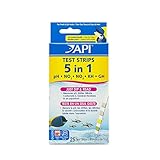
- Contains one (1) API 5-IN-1 TEST STRIPS Freshwater and Saltwater Aquarium Test Strips 25-Count Box
- Monitors levels of pH, nitrite, nitrate carbonate and general water hardness in freshwater and saltwater aquariums
- Dip test strips into aquarium water and check colors for fast and accurate results
- Helps prevent invisible water problems that can be harmful to fish and cause fish loss
- Use for weekly monitoring and when water or fish problems appear
Keep a reproducible record
For each case, retain the request timing, key relationship, payload relationship, both responses, and the final observable effect. These details make it possible to distinguish an after-completion retry from a true overlap and to compare the result with the API’s documented behavior. The IETF Datatracker lists draft-ietf-httpapi-idempotency-key-header-07 as published on 2025-10-15, expired on 2026-04-18, and archived; its status and wording may not match a particular API’s current contract.
Quick Recap
Product prices and availability are accurate as of the date/time indicated and are subject to change. Any price and availability information displayed on Amazon at the time of purchase will apply.

