
iTechGuides is reader-supported. When you buy through links on our site, we may earn an affiliate commission. As an Amazon Associate I earn from qualifying purchases. Learn more
Small businesses can show a profit and still run short of cash if customers pay late, inventory is bought before it sells, or bills come due before receipts arrive. The fix is not simply watching the bank balance: forecast when money is expected to enter and leave, then compare the forecast with what actually happened.
Why profit and cash are not the same
A profit-and-loss statement records revenue and expenses under the business’s accounting method; it does not necessarily show when cash moves. A sale on credit may count as revenue while the payment remains in accounts receivable. Conversely, buying inventory, repaying loan principal, or purchasing an asset can use cash without appearing as an expense in the same way or at the same time on the income statement. The SBA explains these distinctions in its guidance on budget and forecast mistakes.


Consider the sequence rather than assuming a particular dollar outcome: a business completes a credit sale, pays for materials or inventory, and later receives the customer’s payment. The sale can improve reported revenue before the cash arrives, while the related outflow has already reduced the available balance. A profitable period therefore does not guarantee that cash will be on hand for payroll, rent, or a loan payment when due.
Build a forecast instead of relying on the bank balance
The bank balance tells you how much cash is there now. A cash-flow statement summarizes past cash movement; a cash-flow forecast estimates future receipts and payments so you can spot a timing gap early. SCORE’s cash-flow management guidance recommends using payment patterns, sales projections, inventory plans, and expected expenditures to inform the forecast.
#1 Best Overall

- Daily Cash Flow Log Book 110 Pages Large Format:Daily Cash Flow Log Book with 110 pages in large 8.5 x 11 Inch format provides ample space for daily income expense tracking supporting long term financial record keeping
- Financial Record Keeping Notebook for Daily Accounting:Helps track cash in cash out balances and transactions making it ideal as a petty cash ledger book for small business store office and home accounting
- Structured Inner Page Accounting Fields:Daily Cash Flow Log Book pages include sheet number month year date from to starting balance date description cash in cash out balance total end date closing balance approved by and signature sections
- Petty Cash Large Ledger Book Spiral Bound:Petty Cash Large Ledger Book with spiral binding allows pages to lay flat for easy writing and efficient daily bookkeeping and cash management tasks
- Professional Cash Flow Ledger with Premium Paper:Daily Cash Flow Log Book uses 80 gsm double sided black and white printed pages with a laminated 300 gsm cover ensuring durability for long term financial tracking
Include the inputs that change cash timing
- Expected customer receipts, using actual payment behavior where possible—not just invoice dates.
- Sales projections and the timing of sales, including relevant channel margins and likely delays.
- Inventory purchases, supplies, and other costs paid before a sale is collected.
- Payroll, rent, loan payments, taxes, and other meaningful operating outflows.
- Expected asset purchases or other significant payments that may not be obvious from the profit-and-loss statement.
Use a weekly or monthly view at a horizon you can estimate credibly. Start with the opening cash balance, list expected inflows and outflows by the period they are likely to occur, and calculate the projected closing balance. Update the forecast as new information arrives. Forecasting is inherently uncertain; Tim Berry, an SBA blog contributor, put it this way: “Forecasting is guessing; but make educated guesses.”
Common cash-flow mistakes and how to correct them
1. Treating today’s balance as a forecast
A balance is a snapshot, not a warning system. A looming shortfall may not be visible until a payment is due. Estimate when cash will actually arrive and when it must leave, then revise the forecast as customer payments and expenses become clearer.
2. Assuming a profitable sale means cash is available
Separate sales recorded from customer payments received. Track receivables and expected collection dates alongside cash expenses, debt payments, and asset purchases. This makes it easier to see whether the business can meet obligations during the gap between selling and collecting.
Free tools Windows power users keep installed
One-click scans. No signup required.
3. Sending invoices late or making payment confusing
Every avoidable delay between finishing work, issuing an invoice, and receiving payment can tighten cash availability. SCORE recommends invoicing promptly, using milestone or periodic billing when appropriate, and stating agreed terms and payment instructions clearly. Its collections guidance also advises making invoices detailed and simple, with the amount, due date, and payment method easy to find.
Rank #3
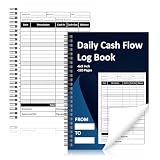
- 1.Daily Cash Flow Log Book 120 Pages Large Format:Daily Cash Flow Log Book with 120 pages in large 6 x 9 Inch format provides ample space for daily income expense tracking supporting long term financial record keeping
- 2.Financial Record Keeping Notebook for Daily Accounting:Helps track cash in cash out balances and transactions making it ideal as a petty cash ledger book for small business store office and home accounting
- 3.Structured Inner Page Accounting Fields:Daily Cash Flow Log Book pages include sheet number month year date from to starting balance date description cash in cash out balance total end date closing balance approved by and signature sections
- 4.Petty Cash Large Ledger Book Spiral Bound:Petty Cash Large Ledger Book with spiral binding allows pages to lay flat for easy writing and efficient daily bookkeeping and cash management tasks
- 5.Professional Cash Flow Ledger with Premium Paper:Daily Cash Flow Log Book uses 80 gsm double sided black and white printed pages with a laminated 300 gsm cover ensuring durability for long term financial tracking
Review the handoff from completed work to payment: send the invoice as soon as the agreed work or milestone is complete, make the due date explicit, and offer clear instructions for paying. Convenient billing processes can remove friction, but they do not guarantee prompt payment.
4. Building the forecast around hoped-for sales
Use historical sales and collection patterns as a baseline. If you expect a change—such as a new channel, different margins, or a longer sales cycle—make the assumption visible and adjust the timing accordingly. Do not spend against a hoped-for receipt as though it were already in the bank. Compare projections with actual results to identify assumptions that routinely miss.
5. Leaving inventory and other outflows out
Inventory can consume cash before it is sold and collected. A forecast that lists expected sales but omits inventory purchases, supplies, payroll, rent, loan payments, or other operating costs can look healthier than the cash position will be. Include the payments when they are expected, not merely when the related goods or services are used.
Do these 3 things before closing this tab:
1Clear out junk files and repair common Windows errors2Fix the driver behind crashes, sound loss and screen glitches3Repair Windows errors before they cause bigger problems6. Skipping updates and reliable bookkeeping
A forecast becomes less useful when it is not checked against actual cash activity. Keep its categories aligned with the business’s accounting reports, record receipts and payments consistently, and compare forecast with actuals on a regular cadence. The SBA’s financial management guidance describes options such as a CPA, bookkeeper, or online bookkeeping service for owners who need help maintaining records.
Independent reader supportYour contribution helps us test, update, and keep practical guides available for everyone.Choose a forecasting method you will keep current
The right method is the one that fits the business’s bookkeeping and can be updated with real payment and expense information. SCORE notes that accounting software commonly includes cash-flow reports and forecasts; a template can also organize expected receipts and payments, while an accountant or bookkeeper can help maintain and interpret records.
- Accounting reports or software: Useful when records are current and the report reflects the timing of customer receipts and cash outflows.
- A forecast template: A practical starting point if you can reliably enter expected cash dates and update actuals.
- Bookkeeping or accounting support: Helpful when records are inconsistent, the forecast is difficult to maintain, or the owner needs assistance interpreting cash timing.
Whichever approach you use, check that it includes customer-payment patterns, realistic sales timing, inventory and other outflows, and a way to compare projections with actual cash. A tool can organize information; it cannot compensate for incomplete records or unrealistic assumptions.
How often should you review cash flow?
Set a cadence that matches how quickly the business’s cash position can change and how far ahead sales and expenses can be estimated credibly. A weekly view can help when receipts or payments shift frequently; a monthly view may suit steadier activity. At each review, update expected receipts and payments, compare them with actuals, and note any projected period in which available cash may not cover obligations. Treat the forecast as a working document, not a one-time budget.
What the available statistics do—and do not—show
A September 25, 2021 SCORE article reported that 60% of small-business owners had experienced a cash-flow issue at some point, attributing the figure to a 2019 QuickBooks survey. That is a historical, secondary report, not a current estimate of prevalence. It does not establish that a particular cash-flow mistake caused a business failure, so it should not be read as a failure rate or causal ranking.
The guidance here draws on U.S.-oriented SBA and SCORE materials. Payment terms, tax treatment, and accounting obligations can vary by jurisdiction and business circumstances; use a qualified adviser for decisions specific to your situation.
Quick Recap
Product prices and availability are accurate as of the date/time indicated and are subject to change. Any price and availability information displayed on Amazon at the time of purchase will apply.

