
Quick wins for a faster PC:
Clear out junk files and repair common Windows errorsFree Scan →Scan for outdated or missing drivers - takes under a minuteDriver Scan →Repair Windows errors before they cause bigger problemsFix Now →iTechGuides is reader-supported. When you buy through links on our site, we may earn an affiliate commission. As an Amazon Associate I earn from qualifying purchases. Learn more
Spiral microfluidic chips can enrich circulating tumor cells (CTCs) by steering cells of different sizes into different paths through a curved channel. The separation is driven by fluid forces—not by cancer cells actively spiraling or by a cancer-specific label. The result is an enriched sample for further analysis, not a diagnosis by itself.
Why enrich circulating tumor cells?
CTCs are cells shed into the bloodstream from primary or metastatic tumors. They are rare among blood cells, which makes them difficult to collect and study directly. Enrichment reduces the background of other cells so researchers can characterize the CTC-containing fraction afterward.


The phrase “spiral towards separation” comes from a 23 July 2013 Royal Society of Chemistry Lab on a Chip blog post. It is a metaphor for how cells move in the device, not a description of cells choosing or actively following a spiral.
How does a spiral chip separate cells?
Blood flows through a curved, spiral-shaped microchannel. As the fluid moves around the curve, Dean drag and inertial lift influence cells’ lateral positions. The forces affect cells according to physical properties such as size, so different cell populations can migrate toward different positions and be directed to separate outlets.
#1 Best Overall
This is a label-free physical enrichment step: the initial separation does not depend on binding a particular cancer-specific surface marker. That can be useful when the target cells vary, but size-based separation is not proof that every CTC will be recovered or that every collected cell is cancerous. The method enriches a fraction; researchers must characterize its cells downstream.
What performance has been reported?
Reported figures describe particular devices and experimental workflows. They are not interchangeable measures of clinical sensitivity or guaranteed performance on every patient sample.
Rank #2

- Neubaur-Improved (NI) Grid Pattern Version
- Microfluidic Chambers: Two chambers per slide with depths and volumes of 0.10 mm & 10 µL. Eliminates the need for coverslips and prevents sample carry over. Designed for convenience and cleanliness.
- High-Light Transmittance: For improved sample visibility and clarity.
- Uniform Sample Distribution: Microfluidic Air-walls and hydrophillic treatments of the chambers allow for the even distribution of sample cells and the prevention of air bubbles.
- Compatibility: Compatible with phase contrast microscopes and most available Automated Cell Counters.
| Study and device | Reported result | What the figure applies to |
|---|---|---|
| Warkiani and colleagues, slanted spiral protocol; Nature Protocols, published 17 December 2015, issue dated January 2016 | At least 85% recovery of spiked cells and 99.99% depletion of white blood cells | Protocol experiments across tested cancer cell lines and whole blood. The operating example processed 7.5 mL in 12.5 minutes using lysed blood, a three-layer multiplexed chip, and two syringe pumps. |
| Sarioglu and colleagues, slanted spiral device; 2017 melanoma study | 83% average recovery; 2-log white-cell reduction after one pass and 3-log after two passes | The average recovery was measured in spiked healthy-donor blood experiments. The study also examined samples from patients with metastatic melanoma; 83% is not a universal patient-level diagnostic accuracy. |
| Omrani and colleagues, distinct spiral microchannel design; Scientific Reports, 2023 | Up to 92% CTC separation at approximately 1.7 mL/min | A different device configuration, not the original slanted spiral chip. Its result should not be combined with the other studies’ figures. |
What label-free enrichment can—and cannot—tell you
Marker-based capture can miss cells whose surface markers differ from those selected for capture. The 2017 melanoma study discusses this concern in the context of heterogeneous melanoma CTCs. A label-free approach avoids relying on one such marker for initial enrichment, but it does not establish that all relevant tumor cells share a size or migration behavior that the chip can capture.
Recovery, white-cell depletion, throughput, cell viability, and suitability for downstream molecular analysis are distinct measures. A meaningful comparison between isolation methods needs the same sample type and should report these outcomes separately. The figures above come from different studies and workflows, so they do not constitute a head-to-head comparison.
Rank #3
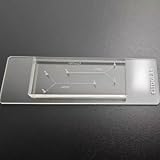
- VERSATILE STANDARD CHIP: Dual-width channels (50µm & 100µm) in a simple layout — perfect for proof-of-concept experiments and protocol development.
- ENTRY-LEVEL & AFFORDABLE: The most cost-effective way to start microfluidics — ideal for students, teaching labs and teams testing new protocols.
- STARTER KIT INCLUDED: Comes complete with PTFE tubing and a syringe, giving students and researchers everything needed to begin microfluidics experiments right out of the box.
- QUALITY PDMS/GLASS BUILD: RTV615 PDMS plasma-bonded to borosilicate glass; optical clarity for fluorescence and brightfield imaging.
- PRACTICAL FORM FACTOR: Compact 45x20mm size with multiple inlet/outlet ports for flexible fluid routing.
Is a spiral chip a cancer test?
No. The cited work describes a research technique for enriching cells before characterization. It does not establish the chip as a stand-alone diagnostic test, a replacement for standard cancer diagnosis, or a proven substitute for repeated biopsies. The 2013 RSC post framed blood-based monitoring as a possible future use; that was a prospective possibility, not demonstrated clinical utility.
Quick Recap
Best Value
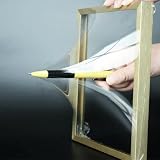
- 【Microfluidic Chip Packaging Film】 Full transparency, low temperature flexibility, good air permeability, thermal and chemical stability
- 【Microfluidic Chip Packaging Film】 Shore Hardness (A): 50, tensile strength (MPa): 4, tear strength (KN/m): 7
- 【Microfluidic Chip Packaging Film】 Elongation at break (%): 100, Elastic modulus: 1.7, Refractive index: 1.41, Transmittance (%): >95(2mm)
- 【Microfluidic Chip Packaging Film】 Using temperature range (C): -40 to 200, Dielectric strength (kV/mm): 12, Dielectric constant (1MHz): 2.7
- 【Microfluidic Chip Packaging Film】 1 Pcs/package
Rank #4
Product prices and availability are accurate as of the date/time indicated and are subject to change. Any price and availability information displayed on Amazon at the time of purchase will apply.

