
iTechGuides is reader-supported. When you buy through links on our site, we may earn an affiliate commission. As an Amazon Associate I earn from qualifying purchases. Learn more
A University of Manchester research team reported a way to capture copper from spent lees, a whisky-production waste stream, and reuse the recovered metal as a catalyst. The method uses magnetite nanoparticles to bind copper and a magnet to separate the particles from the liquid. It is a research approach, not an established distillery treatment, and the published reporting does not give a copper-recovery rate or demonstrate commercial-scale use.
Why copper is present in whisky-production waste
Copper stills are used in whisky distillation, and copper can leach into the spirit during production. Manufacturers remove copper before the whisky is aged and bottled. The recovery method described in 2019 targets copper in spent lees, a waste stream; it does not claim to change the finished whisky. RSC Education’s account and Chemistry World’s report describe this process context.
How the reported copper-recovery method works
- Contact spent lees with magnetite nanoparticles. Copper ions adsorb onto the particles, according to Chemistry World’s 17 July 2019 report on the University of Manchester team led by Richard Kimber.
- Separate the particles from the liquid. A magnet draws out the copper-loaded magnetite nanoparticles.
- Reuse the recovered copper. The team used the recovered metal as a catalyst for azide–alkyne click reactions, a class of reactions used to make products ranging from polymers to pharmaceuticals, as reported by RSC Education.
What makes the nanoparticle preparation route different
The reporting says the team used bacteria to produce magnetite nanoparticles, with bacteria converting waste iron oxides into magnetite. This biological preparation avoids the chemical reducing agents and high temperatures associated in the reports with conventional chemical preparation. That is a proposed advantage of the nanoparticle-making route, not proof of a lower overall environmental impact: the reports provide no lifecycle assessment or quantified environmental comparison.
What the evidence does—and does not—show
The 2019 accounts describe the approach and its intended reuse of copper, but do not state a recovery rate, yield, cost saving, emissions reduction, or operating scale. Chemistry World quoted Louise Horsfall, a biotechnology expert at the University of Edinburgh, identifying an important evidence gap: “Analytical data for the treated spent lees is not presented, so we do not know if any metal exchange took place, if there is any metal selectivity or if the treatment would work with other metals.” Those uncertainties mean the reports do not establish how selective the capture is, whether the treatment works with other waste streams, or whether it is ready for routine use at distilleries.
#1 Best Overall
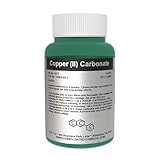
- CAS Number: 12069-69-1
- Chemical Formula: CuCO₃
- High Purity: 99% minimum purity ensures maximum effectiveness and consistency.
- Versatile Uses: Suitable for use in pigments, chemical reactions, and research experiments.
- Industrial Grade: Ideal for industrial processes, including catalysis, ceramics, and pigment formulation.
Related whisky-waste research is a separate line of work
A 2022 study examined the soluble fraction of pot ale and spent wash from 22 Scottish distilleries, assessing possible recovery of proteins, organic acids, and nutrients such as magnesium and phosphate. It provides broader context for resource recovery from whisky production, but it is not evidence that the magnetite nanoparticle copper-capture method was adopted. Read the 2022 study.
Quick Recap
Best Value

- High Purity Porous Copper Foam Material – Premium copper foam sheet made from high purity copper, ideal as copper foam electrode, copper foam catalyst support, conductive porous copper material for battery research, electrolysis and electrochemical testing.
- 3D Open-Cell Structure & Large Surface Area – Uniform 3D porous copper structure with very high specific surface area, perfect for battery electrode material, supercapacitor electrode, hydrogen evolution electrode, fuel cell components, catalyst carrier and advanced filtration projects.
- Excellent Thermal & Electrical Conductivity – This copper foam combines high electrical conductivity with excellent heat dissipation, suitable for EMI shielding, heat sink and cooling applications, power electronics, LED cooling, and other thermal management projects requiring copper foam material.
- Easy to Cut, Shape and Process – Flexible, machinable copper foam sheet that can be easily cut, trimmed, bent and shaped with simple tools, convenient for custom copper foam electrodes, filter pads, heat dissipation blocks, EMI shielding gaskets and DIY copper foam parts.
- Wide Application in Lab, Industry & DIY – Versatile copper foam filter and electrode material widely used in electrolysis, electroplating, hydrogen production, fuel cells, catalyst support, gas and liquid filtration, materials science research, school experiments and hobby electronics projects.
Rank #4

- Chemical Formula: CuCl₂·2H₂O
- CAS Number: 10125-13-0
- Weight: 170.48 g/mol
- High Purity: Our Copper (II) Chloride Dihydrate is ≥99% pure, making it suitable for critical laboratory and industrial applications.
- Versatile Applications: Perfect for use in chemical synthesis, electroplating, etching, and as a catalyst in various chemical reactions.
Rank #3
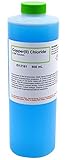
- 500mL bottle of copper (II) chloride
- Chemical for general purpose lab and educational use
- Used as a catalyst
- Perfect for use in any chemistry lab or classroom
- Includes directions for safe storage and SDS is available on product page and by request
Rank #2

- Still Spirits Copper Saddles
- 100g of Copper Saddles
- Copper is required as a catalyst to remove sulphur odours during distillation
- Does not contain alcohol
Product prices and availability are accurate as of the date/time indicated and are subject to change. Any price and availability information displayed on Amazon at the time of purchase will apply.

