
Quick wins for a faster PC:
Fix the driver behind crashes, sound loss and screen glitchesFind Drivers →Repair Windows errors before they cause bigger problemsFix Now →iTechGuides is reader-supported. When you buy through links on our site, we may earn an affiliate commission. As an Amazon Associate I earn from qualifying purchases. Learn more
Oil supply disruptions can raise fuel prices by reducing or delaying the crude oil and refined products available to buyers. When inventories shrink, shipments take longer or cost more, and buyers compete for replacement cargoes, crude benchmarks and fuel prices can rise. The size and timing of the effect depend on what is disrupted, how long it lasts, which fuels are scarce, and how much inventory, spare transport capacity and alternative supply are available. Energy security is the ability to keep fuel reaching users under stress—not a guarantee of low prices or complete self-sufficiency.
How a disruption reaches fuel prices
The chain runs from a physical interruption to tighter supply, then through trade, refining and local distribution. A production outage removes oil from the market. A shipping disruption may leave production intact but delay delivery, force vessels onto longer routes, or increase freight costs. Either can make replacement barrels harder or more expensive to obtain.
- Available supply tightens. Buyers draw on inventories or compete for cargoes from other producers and regions. A delay can matter even if the oil is eventually delivered, because timing and location affect whether it can meet near-term needs.
- Expectations affect prices. Traders price not only barrels already lost but also the expected duration of the disruption, the pace of recovery, and future inventory levels. Prices can move before physical flows change, and can fall when traders expect flows to resume even while stocks are still being drawn down.
- Crude and fuel markets transmit the shock differently. Crude is a refinery input, not a direct measure of every pump price. Refinery capacity and configuration, product inventories, trade, exports and local distribution all affect how a crude-market shock reaches gasoline, diesel or jet fuel.
- Regional trade spreads pressure. Buyers in a short-supply region seek cargoes elsewhere. That can raise prices in the destination market and tighten supply in the exporting market, linking prices across regions.
- Retail prices reflect local conditions too. Global benchmarks and product-market prices influence local fuel costs, but they do not establish the exact price change at a particular station. The local effect depends on regional supply, distribution and market conditions.
For example, during the 2022 Russia-related disruption, European diesel buyers sought more distant alternatives. Increased U.S. exports tightened U.S. supply and raised prices, illustrating how a shortage in one region can affect another through product trade. The U.S. Energy Information Administration (EIA) describes this trade effect.
What’s actually slowing this PC down?
Pick the symptom - the matching free tool is one click away.
Why a distant conflict can affect gasoline or diesel
Oil is traded internationally, so the location of a disruption does not have to match the location of the price increase. If a conflict interrupts production or a shipping route, buyers may turn to cargoes that would otherwise have gone to other markets. Longer voyages can increase freight costs and delay delivery. EIA notes that disruption at a major chokepoint can cause substantial delays and higher shipping costs, which can raise petroleum and product prices. Its overview of world oil transit chokepoints explains the exposure.
#1 Best Overall

- Real-time monitoring: Gain peace of mind with the ability to monitor the liquid propane (LP) fuel levels in your tank in real-time. Stay informed about your fuel consumption and plan for deliveries accordingly, ensuring you never run out unexpectedly
- Convenient alerts: Receive convenient text and email notifications when the fuel level in your propane tank drops below a certain threshold. Stay on top of your fuel supply and eliminate the risk of running out during critical times
- Easy installation: The propane tank fuel level monitor is designed for easy installation on any LP tank equipped with a remote-ready (R3D) dial. A simple setup process completed from your phone or computer, monitor your tank level within minutes
- Mobile control: Take control with our integrated app from any Android/iOS device or computer. View your tank's fuel level, receive alerts, and keep track of your consumption. The device requires an annual subscription fee on the Mobile Link Gen App
- Reliable connectivity: The propane tank fuel level monitor features a reliable 4G LTE multi-carrier cellular connection. With automatic network switching capabilities, you can count on consistent and accurate tank level readings
The impact is not necessarily equal across fuels. A market can have enough crude but insufficient refinery capacity, the right refinery configuration, or enough inventories of a specific product. In its September 9, 2026 outlook, EIA said global distillate tightness was contributing to high U.S. diesel prices and forecast U.S. distillate inventories would fall below 100 million barrels in September and remain below the 2021–2025 five-year low through much of 2027. Those were forecasts in that outlook, not observed outcomes. EIA’s Short-Term Energy Outlook covers crude, inventories and refined fuels.
What the Strait of Hormuz shows about energy security
The Strait of Hormuz illustrates why a narrow shipping route can matter to global energy markets. EIA estimated that about 20 million barrels per day passed through the strait in 2024, equivalent to around 20% of global petroleum liquids consumption. In 2024, about 84% of the crude oil and condensate and 83% of the liquefied natural gas (LNG) transiting Hormuz went to Asian markets; China, India, Japan and South Korea were major crude destinations. These figures describe route exposure, not a forecast of current retail prices in those countries. EIA’s Hormuz analysis provides the estimates.
Rank #2

- The Beckett Rocket is a wireless ultrasonic fuel level monitor complete kit which includes Receiver, Transmitter, 2inch NPT adapter, 2 mounting screws, and instructions.
- Provides visual and audible warning when oil is low
- Multiple receivers can be set up to receive from one transmitter
- The omni-directional transmitter allows the receiver(s) to be located anywhere within 150 ft of the transmitter.
Quarterly flow figures also show how sharply conditions can change. EIA’s chokepoint data page reports total oil flows through Hormuz of 20.9 million barrels per day in the first quarter of 2025 and 4.9 million barrels per day in the second quarter of 2026. These are quarterly estimates derived from multiple sources, using the latest available data through June 2026; they are not a continuous measure of flow on every day in those periods. The EIA data page identifies its periods and estimates.
Why prices can be volatile even before a disruption ends
Uncertainty over duration can amplify price swings. In the second quarter of 2026, EIA reported that the front-month Brent futures price ranged from $118 per barrel on April 29 to $72 per barrel on June 26. EIA also reported average daily Brent price swings of $4 in April and May, compared with $1 in the same months of 2025. These are futures-market figures, not local pump prices. They show volatility in the benchmark as expectations about Hormuz flows and supply changed; they do not mean that every fuel or region moved by the same amount. EIA’s account of the 2026 price movements discusses the interaction of expectations and flows.
Rank #3

- NO RECURRING FEES, ALL CELLULAR SERVICE INCLUDED - Enjoy hassle-free fuel and diesel tank monitoring with no monthly fees or contracts. The CentriConnect Fuel and Diesel Tank Monitor comes with all cellular services pre-installed and works with major US & Canada cellular service providers. No annual fees! Cellular coverage is included for the life of the product (10 years).
- NO WIFI OR BLUETOOTH REQUIRED - Monitor your fuel and diesel tank levels from anywhere in the US & Canada. The CentriConnect Tank Monitor connects to the cellular network and leverages all main cellular service providers in both US & Canada to provide consistent and accurate tank levels at all times. Eliminate the hassle of connectivity entirely with the CentriConnect Fuel and Diesel tank monitor.
- CONFIGURABLE ALERTS & NOTIFICATIONS - Receive immediate email alerts and push notifications when your tank reaches preset levels. Easily configure these settings through the CentriConnect mobile app.
- SOLAR CHARGING, NO BATTERIES REQUIRED - Eliminate the need for battery replacements. The CentriConnect Tank Monitor includes solar charging and features energy reserves that can last over 12 months in complete darkness. The CentriConnect Tank Monitor charges automatically in fully shaded areas, partially sunlit areas, and under 12 inches of snow cover.
- EASY & QUICK INSTALLATION - The CentriConnect Fuel and Diesel Tank Monitor installs in 3 minutes or less. Benefit from cellular connectivity, allowing for swift connection to the cellular network and immediate pairing capabilities with the CentriConnect App.
In its September 9, 2026 Short-Term Energy Outlook, EIA said it expected Middle Eastern production to rise as Hormuz flows gradually increased and alternative routes were used, while some export constraints persisted through year end and production stayed below pre-conflict averages until the second quarter of 2027. It forecast Brent crude at about $90 per barrel on average in the second half of 2026 and $74 per barrel in 2027. These were forecasts based on assumptions finalized September 3, not observed future prices; the outlook did not account for events after that date. The next release was scheduled for October 6, 2026. EIA Administrator Tristan Abbey said on May 12, 2026: “The timing of resumed oil flows through the Strait of Hormuz and the subsequent rate at which Middle Eastern producers restore output are key factors influencing EIA’s price forecast through year end.” The outlook and its release materials set out the forecast context.
Independent reader supportYour contribution helps us test, update, and keep practical guides available for everyone.How reserves and alternate routes cushion a shock
Energy security depends on whether supply can keep reaching users during a disruption. Governments and companies can draw on inventories, source oil from alternative suppliers, reroute vessels, use pipelines that bypass a chokepoint, adjust refining and respond to higher prices by reducing demand. These measures can bridge some interruptions or redirect some flows; none guarantees stable prices or fully replaces disrupted supply.
Rank #4

- GM-recommended replacement part for your GM vehicle’s original factory component
- Offering the quality, reliability, and durability of GM OE
- Manufactured to GM OE specification for fit, form, and function
- International products have separate terms, are sold from abroad and may differ from local products, including fit, age ratings, and language of product, labeling or instructions
Inventories
Stocks can cover some near-term shortfall, but their usefulness depends on where they are, what type of oil or product they contain, how quickly they can be released and how soon they can reach consumers. EIA’s August 2026 estimates list 321 million barrels of strategic oil inventories for the United States in the second quarter of 2026 and 187 million for Japan. These are compiled estimates of strategic inventories across selected countries, not a uniform measure of government-controlled emergency stocks or a claim that every barrel is immediately deployable. EIA’s international petroleum data provides the inventory estimates and source notes.
Pipelines and rerouted shipping
Alternative routes help only to the extent that they have usable capacity and can move oil to the right buyers. EIA describes Saudi Arabia’s East-West pipeline and the UAE route to Fujairah as options for bypassing Hormuz. It estimated that about 2.6 million barrels per day of Saudi and UAE pipeline capacity could have been available for that purpose—far below the roughly 20 million barrels per day that transited Hormuz in 2024. The available capacity is not a guaranteed one-for-one replacement: pipelines may not operate at full capacity, and routine use can reduce spare capacity. EIA details these route constraints.
Best Value
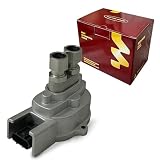
- SELECT FLEX-FUEL APPLICATIONS: Ford Explorer 2001 4.0L V6; Ranger 1999-2003 3.0L V6; Taurus 1996-2003 3.0L V6; Mazda B3000 2000 3.0L V6; Mercury Mountaineer 2001 4.0L V6 or 5.0L V8; Sable 2001-2004 3.0L V6. For vehicles equipped with the matching flex-fuel sensor.
- OE / INTERCHANGE NUMBERS: YL5A9C044AA, YL5Z9C044BA, F6DF9C044AA, F6DZ9C044AA and F9DA9C044AA. Replacement references for the matching original fuel composition sensor.
- SPECIFICATIONS: Sensor type: flex fuel composition; color: silver; connector quantity: 1; connector shape: oblong; terminal quantity: 3; terminal type: blade; fuel ports: 2; mounting: ears.
- FUEL COMPOSITION MONITORING: Detects ethanol content in the fuel and sends electrical signal data to the ECM, supporting fuel-mixture and ignition adjustments on a compatible flex-fuel system.
- DIRECT-FIT DESIGN: The 3-pin connector, two fuel-line ports and mounting ears match the layout of the original sensor for straightforward replacement. Match the OE number, plug key and fuel-line connections before ordering.
Demand adjustment
When fuel becomes more expensive or harder to obtain, consumers and businesses may reduce use or change behavior. That can help balance the market, but it also reflects a real cost to households and economic activity; it is not the same as restoring the missing supply.
What the evidence means for consumers
A disruption can raise crude prices, increase the cost of delivering oil, or create a shortage of a particular fuel. Those effects can reinforce one another, but they do not guarantee that every fuel price rises immediately or by the same amount. Inventory levels, refinery conditions, trade flows, alternative routes, demand and expectations shape the result. A global Brent price or a flow estimate is useful context, not a precise forecast of what a local driver will pay.
To assess a reported disruption, check whether it affects production or transit, which crude grades or refined products are exposed, how long the interruption may last, what inventories can actually reach the affected market, and whether alternate routes have spare capacity. Also distinguish observed prices from futures prices and forecasts. EIA estimated global oil inventories had fallen by 400 million barrels in 2026 through the September forecast and expected further declines through year end; it attributed elevated prices in August 2026 in part to falling inventories. Brent averaged $91 per barrel that month, $7 above July. That was an EIA-reported global crude benchmark average, not a prediction of a particular local pump price. EIA’s September 2026 outlook gives the inventory estimate and price context.
Quick Recap
Product prices and availability are accurate as of the date/time indicated and are subject to change. Any price and availability information displayed on Amazon at the time of purchase will apply.

