
Quick wins for a faster PC:
Fix the driver behind crashes, sound loss and screen glitchesFind Drivers →Clear out junk files and repair common Windows errorsFree Scan →iTechGuides is reader-supported. When you buy through links on our site, we may earn an affiliate commission. As an Amazon Associate I earn from qualifying purchases. Learn more
Ocean acidification threatens UK cold-water coral reefs by changing seawater chemistry in ways that can make it harder for reef-building corals to build and maintain their calcium-carbonate skeletons. A 2025 UK evidence update projects that around 85% of known UK deep-sea cold-water coral reefs could be exposed to corrosive waters by 2060. That is a projection of chemical exposure—not a forecast that 85% of the reefs will die or collapse.
Which UK coral reefs are at risk?
The concern is about deep-sea, cold-water coral habitats, not the tropical reefs found in shallow, warm seas. The UK Government’s 2017 review identifies the framework-building coral Lophelia pertusa—also known in recent taxonomy as Desmophyllum pertusum—in Scottish waters and the Celtic Sea. Reefs and reef-topped mounds occur around Mingulay in western Scotland and offshore on Rockall and Hatton Bank, according to Lophelia.org’s UK habitat overview.


These reefs are structures built by corals, and they support diverse communities of animals living on or near the seabed. Damage to the framework can therefore affect more than the individual coral. The Government Office for Science’s 2017 review provides UK context; its account of seven marine protected areas designated for cold-water coral protection is a historical figure, not a current count.
How does ocean acidification affect cold-water corals?
As the ocean absorbs additional carbon dioxide, seawater carbonate chemistry changes. In particular, carbonate-ion availability falls and the aragonite saturation state changes. Corals use calcium carbonate to build their skeletons; altered chemistry can make skeleton formation and maintenance more difficult. Where conditions are corrosive to the mineral, exposed skeleton may dissolve, potentially weakening the structure that forms the reef.
#1 Best Overall

- Complete 35-Piece Ocean Reef Decor Set Transform your aquarium with this 35-piece ocean-style decoration set, featuring artificial coral, flowing aquarium plants, seashell accents, anemone-style ornaments, and a starfish detail. The variety of shapes and colors helps create a rich underwater scene with a full coral reef look.
- Ocean Style for Freshwater, Tropical, and Saltwater Tanks Designed with a coral reef theme, this aquarium decor set is ideal for freshwater aquariums, tropical fish tanks, and saltwater displays. It brings an eye-catching marine-inspired look to different tank setups while helping you create a more colorful and layered aquascape.
- Creates Depth, Height, and Visual Impact With tall background plants, a large statement coral centerpiece, and small accent pieces for the foreground, this fish tank decorations set makes it easy to build a balanced layout. Use it to add height, texture, and dimension to small and medium aquarium displays.
- Easy to Arrange for Custom Tank Layouts This aquarium decorations set includes multiple sizes and shapes, making it easy to arrange around gravel, substrate, and other tank accessories. Whether you want a reef-inspired centerpiece or a full ocean-themed display, the pieces can be positioned to fit your preferred layout.
- A Fast and Low-Maintenance Tank Upgrade Refresh the look of your aquarium without the hassle of sourcing separate decorative pieces. This coral reef aquarium decor kit offers a convenient way to build a vibrant underwater display and is a great choice for anyone looking to upgrade fish tank decor with a coordinated ocean theme.
The aragonite saturation horizon (ASH) is the depth below which seawater is undersaturated with respect to aragonite. If that horizon moves upward, corrosive conditions can reach depths where deep-water coral framework occurs. The risk is not limited to whether a coral can grow: the strength and stability of existing skeletal material also matter. A British Oceanographic Data Centre catalogue record describes physical and visual analyses of L. pertusa skeleton samples, including samples from the Mingulay Reef Complex exposed to long-term experimental conditions projected for the future, with skeletal dissolution and structural stability among the concerns: BODC data record.
What does the 85% projection mean?
The Marine Climate Change Impacts Partnership (MCCIP) reported in its February 2025 update that around 85% of known UK deep-sea cold-water coral reefs could be exposed to corrosive waters by 2060. MCCIP attributes the projection to Jackson et al. (2014). OSPAR’s 2023 regional assessment also reports the UK projection.
Rank #2
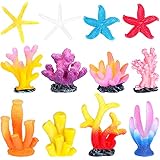
- You will get: the package contains 12 pieces of imitation coral decorations, including corals and starfishes in a variety of shapes, sufficient quantity can meet your decorative needs
- Quality material: made of quality polyresin material, the coral reef decor is reliable and safe to use, friendly to your fish and shrimp, not easy to fade or fray
- Suitable size: various sizes of simulated coral plants decorations with different vibrant colors are suitable for decorating your fish tank or aquarium
- Practical and eye-catching: the fish tank coral decor will show and maintain the realistic effect of the landscape in underwater environments, not easy to get rot, eye-catching and attractive
- Beautiful gifts: the artificial starfish and coral decorations can create a colorful and charming atmosphere in your aquarium, nice gifts for your families and friends who want to decorate their fish tanks
The percentage describes projected exposure to a chemical condition. It is not a measured rate of reef loss, nor a prediction that 85% of reefs will die, stop functioning or collapse by 2060. MCCIP cautions that projected expansion of undersaturated waters “does not imply the collapse of all calcifying species”: a chemical threshold is not necessarily a biological threshold. Exposure signals risk, but does not establish the timing or extent of damage at each reef.
Sources: MCCIP, Ocean Acidification, February 2025; OSPAR, Ocean Acidification, Quality Status Report 2023.
Will ocean acidification destroy Scottish cold-water coral reefs?
The available projection establishes a substantial potential exposure, not inevitable destruction. A reef’s biological response depends on how organisms and reef structures respond to changing conditions; the 85% figure alone cannot say which reefs will be damaged, how quickly effects will develop, or whether a particular reef will collapse. It is therefore accurate to say that acidification is a growing threat to UK cold-water coral reefs, but not that the projection proves their destruction.
Acidification is also one pressure among several. Bottom fishing is identified as a major damaging pressure in the specialist UK habitat overview. That pressure should be distinguished from acidification rather than attributed to changing carbonate chemistry.
Independent reader supportYour contribution helps us test, update, and keep practical guides available for everyone.Why the distinction matters
There are several steps between a change in seawater chemistry and ecosystem-wide consequences: exposure to corrosive water, effects on coral skeletons, changes to reef framework, and potential impacts on the communities the framework supports. The evidence makes the chemical exposure risk clear, while the projection does not quantify the biological outcome for every reef. Professor Helen Findlay of Plymouth Marine Laboratory described the wider concern in the organization’s February 2025 account: “The accelerating rates of acidification in UK waters demand urgent attention and action as they pose a growing threat to many of the marine species and ecosystems we depend on.” Plymouth Marine Laboratory, 28 February 2025.
Quick Recap
Best Value

- FORMULATED SPECIFICALLY FOR REEF AQUARIUMS: Contains essential ocean reef elements in concentrations greater than those found in natural sea water
- EXTRA CALCIUM: Encourages stony coral and coralline algae growth.
- EXTRA TRACE ELEMENTS: Provides vital nutrients.
- EXTRA VITAMINS: Helps promote growth and survival of corals, anemones and other invertebrates in a captive environment.
- DETOXIFIES METALS: Neutralizes traces of heavy metals found in tap water.
Product prices and availability are accurate as of the date/time indicated and are subject to change. Any price and availability information displayed on Amazon at the time of purchase will apply.

