
What’s actually slowing this PC down?
Pick the symptom - the matching free tool is one click away.
iTechGuides is reader-supported. When you buy through links on our site, we may earn an affiliate commission. As an Amazon Associate I earn from qualifying purchases. Learn more
In a 2011 materials-science study, researchers pressed a tiny indenter into aspirin crystals and measured how the crystals responded. The technique—nanoindentation, the “sharp stick” in the title—revealed distinct mechanical signatures for aspirin’s two known crystal forms, or polymorphs. This is a study of crystal structure and mechanical behavior, not advice about taking aspirin.
What does “poking aspirin with a sharp stick” mean?
It refers to nanoindentation: pressing a very small, hard indenter into a material while measuring its response. The resulting measurements can characterize mechanical properties such as hardness and elastic modulus. In the aspirin study, the researchers used the method to examine crystals of polymorphs I and II.
| # | Preview | Product | Price | |
|---|---|---|---|---|
| 1 |
|
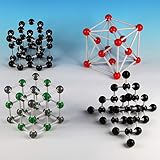
Crystal Model Diamond Graphite Sodium Chloride Copper Atom Model Organic Chemistry Molecular Model... | $79.00 | Buy on Amazon |
| 2 |

|
Innovating Science Properties of Aspirin Kit | $98.11 | Buy on Amazon |
A polymorph is one of multiple crystal forms of the same compound. The molecules are the same, but their arrangement in the solid differs. Because those arrangements affect how a crystal responds to force, measuring mechanical behavior can help distinguish forms that look structurally similar.
How did nanoindentation distinguish aspirin polymorphs?
The research team reported that aspirin forms I and II produced different nanoindentation responses, including different hardness and elastic modulus values. They related those mechanical differences to the forms’ crystal structures. The paper describes the method as producing “signature” responses for the two polymorphs despite their very similar crystal structures. Read the original Chemical Science paper.
#1 Best Overall
Chemistry World’s account of the work reports that crystals that appeared pure by X-ray crystallography in the study’s samples were found to contain a mixture of polymorph types. The account presents nanoindentation as a sensitive way to identify polymorphic composition and domains in those samples. That finding does not establish that nanoindentation generally replaces or outperforms X-ray crystallography; the techniques probe materials in different ways. Read the Chemistry World account.
What happens when aspirin form II is mechanically milled?
The researchers report that mechanical milling can rapidly transform metastable form II into the more stable form I through a slip mechanism. In other words, applied mechanical stress can promote movement within the crystal and trigger a change in its arrangement. This is a materials behavior observed and analyzed by the study, not a claim about how aspirin behaves in the body.
Rank #2
- Kit for studying properties of aspirin
- Builds understanding of history of acetylsalicylic acid (aspirin), and includes performance tests for several different types of aspirin
- Activities for examining solubility of aspirin in varying gastrointestinal environments, and comparing active ingredients and differences between aspirin types
- Materials for 15 groups of students for hands-on learning
- Teacher’s manual and student study guide copymasters for instructional use
What the 2011 study establishes—and what it does not
- It establishes: the authors used nanoindentation to compare aspirin polymorphs I and II, reported distinct mechanical responses, and connected the differences to crystal structure.
- It reports: mechanical milling can drive a slip-related conversion from metastable form II to stable form I, and the Chemistry World account describes mixed polymorph content in samples that appeared pure by X-ray crystallography.
- It does not establish: that one polymorph is clinically better, safer, or more effective, or that nanoindentation universally replaces another method of crystal analysis.
The paper by Sunil Varughese, M. S. R. N. Kiran, Katarzyna A. Solanko, Andrew D. Bond, U. Ramamurty, and Gautam R. Desiraju appeared in Chemical Science, volume 2, pages 2236–2242. It was submitted on 6 July 2011, accepted on 5 August 2011, and first published on 25 August 2011.
Recommended Free Tools
Quick Recap
Product prices and availability are accurate as of the date/time indicated and are subject to change. Any price and availability information displayed on Amazon at the time of purchase will apply.

