
Quick wins for a faster PC:
Clear out junk files and repair common Windows errorsFree Scan →Scan for outdated or missing drivers - takes under a minuteDriver Scan →Repair Windows errors before they cause bigger problemsFix Now →iTechGuides is reader-supported. When you buy through links on our site, we may earn an affiliate commission. As an Amazon Associate I earn from qualifying purchases. Learn more
Most cooked meal-prepped food keeps for 3 to 4 days in a refrigerator at or below 40°F (4°C). If you will not eat a portion within that window, freeze it promptly. Frozen leftovers remain safe indefinitely when continuously held at 0°F (-18°C) or below, but their flavor and texture gradually decline; the recommended freezer times are quality guidelines, not safety deadlines.
Refrigerator and freezer limits at a glance
Use the refrigerator window to decide what to eat soon and the freezer window to plan longer storage. The day count assumes food was chilled promptly and the appliance stayed at the recommended temperature. A storage period is not a guarantee that every recipe will taste good through its final day.
| Food or guidance | Refrigerator | Freezer | What the freezer time means |
|---|---|---|---|
| General cooked leftovers | 3 to 4 days | 3 to 4 months | USDA FSIS recommends this range for best quality; continuously frozen food remains safe indefinitely. (USDA FSIS, leftovers guidance updated September 5, 2025.) |
| Cooked meat or poultry leftovers | 3 to 4 days | 2 to 6 months | FoodSafety.gov’s chart gives this food-specific quality range. (Chart last reviewed September 19, 2023.) |
| Soups and stews | 3 to 4 days | 2 to 3 months | The chart’s freezer duration is for quality, not a point when continuously frozen food automatically becomes unsafe. (FoodSafety.gov, chart last reviewed September 19, 2023.) |
| Pizza | Not stated in the cited chart entry | 1 to 2 months | FoodSafety.gov lists a quality period for frozen pizza; its cited entry does not establish a refrigerator period. (Chart last reviewed September 19, 2023.) |
| Egg, chicken, ham, tuna, and macaroni salads | 3 to 4 days | Not stated in the cited chart entry | Some mayonnaise-based salads do not freeze well, so freezing is not a reliable way to preserve their texture. (FoodSafety.gov, chart last reviewed September 19, 2023.) |
The chart’s freezer periods are quality recommendations. Food held continuously at 0°F (-18°C) or below is considered safe indefinitely, although it may lose moisture or flavor over time. USDA FSIS’s broader 3-to-4-month guidance and FoodSafety.gov’s food-specific ranges are not contradictory: one is a general leftover guideline, while the chart separates out particular foods.
In practice, compare four things before choosing a storage plan: whether you need a safety limit or a best-quality target, what kind of food you cooked, whether your refrigerator or freezer meets its temperature target, and how quickly the food was cooled and stored. A freezer time cannot make up for food that was left out too long before freezing, and a refrigerator day count assumes the food stayed cold enough throughout.
#1 Best Overall

- #1 Brand Pick for Meal Prep Containers: Bentgo is the top pick for meal prep containers!* This lightweight, portable 20-piece set includes tennmnnmake portioning easy to support balanced, healthy meal plans. Clear, stackable lids help keep food fresh and organized in your fridge or pantry.
- Perfect for Portion-Control: Each container’s 4-cup capacity and embossed measurements make portioning easy to support balanced, healthy meal plans. Clear, stackable lids help keep food fresh and organized in your fridge or pantry.
- Durable & Reusable: Made from tough, PFAS- and BPA-free materials, these meal prep containers are built to last through repeated use. Say goodbye to single-use plastics with these reusable containers you can take to work, school, or the gym.
- Microwave, Freezer & Dishwasher Safe: Easy to heat, store, and clean! Safely reheat food from fridge or freezer—microwave trays only. Top-shelf dishwasher safe for hassle-free cleanup; hand-wash lids for best results.
- What You Get: 10 one-compartment trays, 10 custom-fit lids, and caring customer support.
How to use the 3-to-4-day refrigerator window
Count the refrigerator period from when the cooked food is stored, not from when you happen to open the container or remember it. Labeling each portion with its storage date makes the order clear, especially when several batches are in the fridge. The 3-to-4-day recommendation applies to cooked leftovers kept at 40°F (4°C) or colder after prompt cooling; it is not a way to rescue food left out too long or stored in a warmer refrigerator.
Think of 3 to 4 days as the standard planning limit, rather than a promise that every dish will remain at its best for that entire time. USDA FSIS and FoodSafety.gov give this range for leftovers when handled and chilled properly. If a meal is meant to cover more days than that, decide on freezing while planning the batch, rather than relying on smell or appearance to extend the refrigerator window.
Cooked chicken and other batch-cooked proteins
For cooked chicken, use the cooked meat-or-poultry leftover guidance: 3 to 4 days refrigerated. That means a batch intended to cover more than four days should not all remain in the refrigerator until needed. Keep the portions you expect to eat within the refrigerated window cold, and freeze the portions intended for later use promptly after cooking and cooling.
Free tools Windows power users keep installed
One-click scans. No signup required.
Soups, stews, and mixed dishes
Soups and stews also have a 3-to-4-day refrigerator period in the FoodSafety.gov chart. Their listed freezer quality window is shorter than the chart’s range for cooked meat or poultry leftovers, so use the specific category that best describes the food rather than assuming every cooked meal has the same freezer life. If a prepared dish is not clearly covered by a chart entry, treat the general cooked-leftover recommendation as the baseline and check any product-specific storage directions when applicable.
Rank #2

- 🍱SINGLE 1 COMPARTMENT MEAL PREP CONTAINERS, LEAK PROOF, STRONG DURABLE CONSTRUCTION – Advance meal prep containers, diet portion control, healthy nutritious meals and to-go meals are super convenient to prepare in these durable FOOD STORAGE CONTAINERS for meal prepping. The hard-plastic construction will ensure no cracks or breaking along the way. The leak proof lids will tightly seal the food containers for meal prepping, preventing any annoying leaks or spills in your bag or freezer.
- 🍱 FREEZER SAFE FOOD STORAGE BOX - Prepare and package up your meals ahead of time. These safe to freeze food containers ensure that your prepared cooked meals retain their flavor, color, and texture. These plastic boxes with lids will prevent freezer burn and any absorbing of other odors from the freezer.
- 🍱 MICROWAVE SAFE FOR WARMING FOOD – Enjoy the ease and efficiency of using a microwave safe meal prep container. Whether you are in a rush at home, or warming up food in the microwave at the office or in your college dorm room, make your life simple by preparing, packaging and warming up your food all in the same dish. From the freezer to your hungry belly all in one serving container.
- 🍱 SAFE MATERIAL - REUSABLE - RECYCLABLE - BPA-Free and Food-Grade Safe PP material. You can reuse these durable to go containers as many times as you like. Clean these portion control boxes easily by placing on the top rack of the dishwasher. If you don’t want to reuse them you can simply throw these containers into a recycling bin or trash.
- 🍱 PACK OF 50 TAKE-OUT BENTO BOXES BULK PACK, ONE COMPARTMENT MEAL PREP FOOD CONTAINERS, GREAT FOR CATERING SERVICES – These stackable serving containers are perfect for packaging food at your deli, kiosk, food truck, catering service or restaurant for to-go meals. they stack neatly on top of each other allowing for completely mess free transportation and making all your customers happy as well.
For example, the chart gives soups and stews 2 to 3 months in the freezer for quality, compared with 2 to 6 months for cooked meat or poultry leftovers. The difference is a reason to consult the closest food category when planning flavor and texture, not a claim that a soup becomes unsafe as soon as its recommended quality period ends if it has stayed continuously frozen.
Salads and foods that do not freeze well
FoodSafety.gov lists egg, chicken, ham, tuna, and macaroni salads at 3 to 4 refrigerated days. Some mayonnaise-based salads do not freeze well. A freezer may preserve safety while the food remains continuously frozen, but that does not mean the salad will thaw with its original texture or quality. For these foods, plan portions around the refrigerator window rather than expecting freezing to preserve the finished dish successfully.
When to refrigerate or freeze a meal-prep batch
USDA advises refrigerating or freezing cooked food within 2 hours, or within 1 hour when the air temperature is above 90°F. These are limits for time at room temperature, not suggested cooling targets. If the batch will not be eaten within the refrigerator period, freezing it promptly is a better plan than waiting until the last day to decide.
- Divide the batch. Put food into shallow containers so it cools more quickly. Large or deep containers are less suited to rapid cooling.
- Chill without waiting for food to reach room temperature. Hot food may go directly into the refrigerator. Alternatively, cool it rapidly in an ice or cold-water bath before refrigerating or freezing.
- Cover and seal. Cover, wrap, or seal the portions in airtight packaging, then place them in the refrigerator or freezer.
- Keep appliances within range. Maintain the refrigerator at or below 40°F (4°C) and the freezer at or below 0°F (-18°C). USDA recommends checking temperatures with a thermometer.
Shallow, airtight meal-prep containers serve two practical purposes: shallow portions cool faster, while sealed packaging helps keep bacteria out and retain moisture. The container does not extend the recommended storage window. A refrigerator thermometer can help confirm the appliance is cold enough, rather than relying on its dial setting alone.
Rank #3
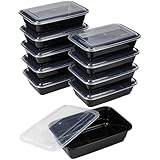
- REUSABLE MEAL PREP CONTAINER SET: Includes 10 pre-portioned containers and 10 lids, perfect for lunches and snacks
- LABELED COMPARTMENT: Features a versatile single compartment embossed with 4 cup volume measurements to make portion control a breeze
- VERSATILE: Durable, Dishwasher, Freezer and Microwave Safe so you can store, reheat, and serve all-in-one, and they are stackable for convenient storage in the refrigerator or freezer
- COORDINATING LIDS: Help keep food fresh so you can prepare snacks in advance, and their domed shape does not compress food during storage
- NON-TOXIC: Made without BPA and Guaranteed Unconditionally plastic construction is dishwasher-safe to make clean up quick and easy
When packing a large batch, divide it into meal-size portions instead of storing it all in one deep container. This follows USDA’s shallow-container guidance and makes it easier to take out only the portion you plan to use. Cover or seal the food, and make sure the storage choice is made within the 2-hour limit—or within 1 hour if the air is above 90°F. Do not wait for a large pot to reach room temperature on the counter before putting it away: hot food may go directly into the refrigerator, or be cooled rapidly in an ice or cold-water bath first.
How to plan a week of meal prep
A weekly batch does not have to fit entirely into the refrigerator. Decide which portions you will eat during the first 3 to 4 days and freeze the remaining portions promptly. This keeps the refrigerator plan aligned with the recommended leftover period without treating the freezer quality range as a guarantee of peak flavor.
- Set the eating order. Put refrigerated portions intended for the next few days in the fridge, and mark their storage date.
- Freeze later portions early. Once food has been cooled and packed, freeze portions that will be needed beyond the refrigerator window instead of letting them sit in the fridge first.
- Use food-specific guidance. Apply the chart’s entry for cooked meat or poultry, soups and stews, pizza, or listed salads when it fits. For other cooked leftovers, use USDA FSIS’s general recommendation.
- Choose a freezer quality target. Use the relevant food-specific range where available, or the general 3-to-4-month recommendation for cooked leftovers. Date labels help you use older portions first.
- Thaw only what you need. Choose a safe thawing method, then reheat the portion to the required temperature before eating.
For a meal plan that spans an entire week, the key distinction is timing: the refrigerator is for portions planned within the 3-to-4-day leftover window, while the freezer is for later portions. The freezer ranges help you manage quality; they do not mean that every recipe has the same best-quality period. Cooked meat and poultry leftovers have a chart range of 2 to 6 months, soups and stews 2 to 3 months, and pizza 1 to 2 months. For a food without a listed chart entry, use the general USDA FSIS leftover guidance rather than assigning it a made-up food-specific duration.
What’s actually slowing this PC down?
Pick the symptom - the matching free tool is one click away.
Safe thawing and reheating
USDA lists three safe methods for thawing leftovers: in the refrigerator, in cold water, or in a microwave. Refrigerator thawing takes longer but keeps food safe while it thaws. Select the method that suits the time available and the food, rather than leaving a frozen portion out at room temperature to thaw.
Rank #4
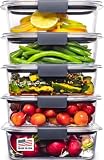
- 100% Leak-proof: Guaranteed no-spill seal and secure latches
- Crystal-clear Tritan Built: Stain-resistant and odor-resistant material for a clear view of contents
- Lightweight & Sturdy: Easy to carry, yet durable for everyday use
- Built-in Vents: Convenient microwave heating without removing the lid
- Space-saving: Stackable design for organized fridge or pantry
Reheat leftovers to an internal temperature of 165°F. USDA’s handling guidance, updated January 5, 2024, gives this reheating temperature along with the refrigerator and freezer temperature limits. A food thermometer is the way to check a temperature-based safety target; appearance alone does not establish that the food reached 165°F.
Independent reader supportYour contribution helps us test, update, and keep practical guides available for everyone.What the dates do—and do not—tell you
- Three to four refrigerated days is a recommended storage period, not a sensory test. Food can lose quality before the last day, and a normal smell or appearance does not override unsafe handling or temperature history.
- Freezer months are mainly about quality. At a constant 0°F (-18°C) or below, frozen food remains safe indefinitely, but extended storage can reduce moisture and flavor.
- Prompt cooling is part of the recommendation. If food exceeded the 2-hour room-temperature limit—or the 1-hour limit above 90°F—the usual refrigerated planning window no longer applies.
- Appliance temperature matters. The refrigerator guidance assumes 40°F (4°C) or below, and the freezer safety statement assumes continuous storage at 0°F (-18°C) or below.
- Commercially prepared foods may have their own directions. Follow product-label storage instructions where they apply; general cooked-leftover ranges do not replace food-specific directions.
The dates also answer different questions. The refrigerator recommendation tells you how long to plan on keeping cooked leftovers chilled. Freezer recommendations tell you when quality is expected to be best; they are not a cutoff that makes food unsafe automatically. The conditions matter alongside the number: prompt storage, a refrigerator at or below 40°F, and—if frozen—continuous storage at or below 0°F. If those conditions were not met, simply counting days or months does not restore the original safety assumptions.
A simple decision rule
If a cooked portion will be eaten within 3 to 4 days and has been cooled promptly, refrigerate it at 40°F (4°C) or below. If it is meant for later, cool and pack it safely, then freeze it at 0°F (-18°C) or below. Use a food-specific freezer quality range when one is listed, thaw by refrigerator, cold-water, or microwave method, and reheat to 165°F.
Do these 3 things before closing this tab:
1Repair Windows errors before they cause bigger problems2Scan for outdated or missing drivers - takes under a minute3Clear out junk files and repair common Windows errorsFrequently Asked Questions
How long does meal prep last in the fridge?
Most cooked meal-prepped leftovers last 3 to 4 days in a refrigerator at or below 40°F (4°C), assuming they were refrigerated or frozen promptly. Food should be put away within 2 hours, or within 1 hour when the air temperature is above 90°F.
Best Value

- 【Sturdy & Reusable】Made of premium thick plastic and strong construction, Dealusy meal prep containers with lids ensure no cracks for your take out meals. They can also be easily cleaned for reuse with hand wash or on the top rack of the dishwasher.
- 【Leakproof & Stackable】: These food prep containers come with tight sealed lids, you can easily stack them and won’t worry that the food would leaks or spills.
- 【Microware Safe & Freezer Safe】: Made of premium food grade plastic, these BPA-free disposable food containers can withstand a temperature from -4℉to 248℉, totally Microware Safe & Freezer Safe.
- 【Convenient Use】: With the pre-set volume of these disposable food containers, you can easily pack your healthy meals, vegetables and fruits without measuring your portions. Great for taking your meals out for school, work, gym or a camping trip.
- 【50 Value Package】: This value package includes 50 pack (100-Piece) 24 oz meal prep containers with lids. They are the perfect choice for your daily meal preparation.
How long is cooked chicken good for in the fridge?
Cooked chicken follows the cooked meat-or-poultry leftover guidance: 3 to 4 days refrigerated at or below 40°F (4°C). If you are preparing portions for later than that, freeze them promptly after cooking and cooling.
How long can I freeze meal prep?
For general cooked leftovers, USDA FSIS recommends 3 to 4 months in the freezer for best quality. FoodSafety.gov lists 2 to 6 months for cooked meat or poultry leftovers and 2 to 3 months for soups and stews. These are quality periods; food kept continuously frozen at 0°F (-18°C) or below remains safe indefinitely, although quality can decline.
Can I freeze mayonnaise-based meal-prep salads?
Some mayonnaise-based salads do not freeze well. FoodSafety.gov lists egg, chicken, ham, tuna, and macaroni salads for 3 to 4 days refrigerated; plan to use them within that window rather than expecting freezing to preserve their texture.
What is the safest way to thaw and reheat frozen leftovers?
Thaw leftovers in the refrigerator, in cold water, or in a microwave. Reheat them to an internal temperature of 165°F, checking with a food thermometer.
The Bottom Line
Bottom line: Keep most cooked meal prep in the refrigerator for no more than 3 to 4 days at or below 40°F (4°C). Refrigerate or freeze promptly, use food-specific freezer quality ranges where available, and remember that continuously frozen food is safe indefinitely only while it stays at or below 0°F (-18°C). Thaw safely and reheat leftovers to 165°F.
Quick Recap
Product prices and availability are accurate as of the date/time indicated and are subject to change. Any price and availability information displayed on Amazon at the time of purchase will apply.

