
Outdated Drivers Are Slowing You Down
One free scan finds every outdated or missing driver and matches the right update for your exact hardware.Free scan · exact hardware matchPC Slower Than It Used to Be?
A free scan shows the junk files, broken settings and background clutter dragging Windows down - then fixes them in one click.Free scan · Windows 10 & 11iTechGuides is reader-supported. When you buy through links on our site, we may earn an affiliate commission. As an Amazon Associate I earn from qualifying purchases. Learn more
A 16GB microSD card can hold about 90 minutes to nearly three hours of conventional camera footage in the examples published by Sony and Garmin. In a supported surveillance-camera setup, TP-Link estimates 12 to 48 hours, depending on resolution and frame rate. There is no universal recording time: the camera’s bitrate, settings, usable card space and recording limits determine the actual result.
How long does 16GB last in real camera examples?
These manufacturer estimates illustrate why the camera and its settings matter more than the card capacity alone. They apply to the specified devices and modes, not every camera using a 16GB card.
| Source and device context | Setting | Estimated recording time on 16GB |
|---|---|---|
| Sony DSC-HX400/HX400V, formatted card | 24 Mbps; listed for several FX/PS formats | 1 hour 30 minutes |
| Sony DSC-HX400/HX400V, formatted card | 17 Mbps | 2 hours |
| Sony DSC-HX400/HX400V, formatted card | 12 Mbps at 1440×1080 | 2 hours 45 minutes |
| Garmin Dash Cam Mini | 1080p at 30 fps, 20 Mbps | 1.5 hours |
| TP-Link supported Tapo/Kasa camera context, estimated 24-hour recording table | 8MP (3840×2160) at 15 fps | 12 hours |
| TP-Link supported Tapo/Kasa camera context, estimated 24-hour recording table | 4MP (2556×1440) at 15 fps | 24 hours |
| TP-Link supported Tapo/Kasa camera context, estimated 24-hour recording table | 2MP (1920×1080) at 15 fps | 48 hours |
Sony and Garmin’s examples suggest roughly one to three hours for the listed conventional camera settings. The much longer TP-Link estimates are for specific surveillance modes at 15 fps and should not be applied to other cameras. TP-Link’s page was published two months before the research crawl; dates are not stated on the Sony and Garmin help pages.
What’s actually slowing this PC down?
Pick the symptom - the matching free tool is one click away.
What determines recording time?
Bitrate and quality
Bitrate is the amount of video data written each second. Higher bitrates consume card space faster: Sony’s listed 24 Mbps mode records for less time than its 17 and 12 Mbps examples, while Garmin lists 1.5 hours for 1080p30 at 20 Mbps. If your camera offers quality or bitrate settings, a lower setting generally extends recording time at the cost of image detail.
#1 Best Overall

- Brand: Sandisk
Resolution, frame rate and compression
Resolution and frame rate can affect how much data a camera produces, but a resolution label by itself cannot predict duration. TP-Link’s figures are based on its own supported-camera context and 15 fps estimates. A 4K mode at a low frame rate or bitrate can use space differently from a high-bitrate mode at another setting.
Motion and scene complexity
Some cameras use variable bitrate (VBR), adjusting data use to the scene. Sony explains in its DSC-HX400/HX400V Help Guide that recording time varies because the camera uses VBR to adjust image quality to the shooting scene; it also notes that fast-moving subjects need more memory. TP-Link likewise cautions that motion and scene complexity affect actual duration. A busy scene may therefore fill the card sooner than a relatively still one.
Rank #2

- Save time with card offload speeds of up to 200MB/s powered by SanDisk QuickFlow Technology (Up to 200MB/s read speeds, engineered with proprietary technology to reach speeds beyond UHS-I 104MB/s, require compatible devices capable of reaching such speeds. Based on internal testing; performance may be lower depending upon host device, interface, usage conditions and other factors. 1MB=1,000,000 bytes. X = 150KB/sec. SanDisk QuickFlow Technology is only available for 64GB, 128GB, 256GB, 512GB and 1TB capacities. 1GB=1,000,000,000 bytes. 1TB=1,000,000,000,000 bytes. Actual user storage less.)
- Pair with the SanDisk Professional PRO-READER SD and microSD to achieve maximum speeds (sold separately)
- Shot speeds up to 90MB/s (Write speed up to 90MB/s. Based on internal testing; performance may be lower depending upon host device. 1MB=1,000,000 bytes. X = 150KB/sec.)
- Perfect for shooting 4K UHD video and sequential burst mode photography (Full HD (1920x1080) and 4K UHD (3840 x 2160) video support may vary based upon host device, file attributes and other factors. See HD page on SanDisk site.)
- UHS Speed Class 3 (U3) and Video Speed Class 30 (V30) (UHS Speed Class 3 designates a performance option designed to support 4K UHD video recording with enabled UHS host devices. UHS Video Speed Class 30 (V30), sustained video capture rate of 30MB/s, designates a performance option designed to support real-time video recording with UHS enabled host devices. See the SD Association’s official website.)
Usable space and clip limits
A nominal 16GB card does not necessarily offer all 16GB for new video. Formatting, files already on the card and space reserved by the device can reduce what is available. Also distinguish total recording capacity from the length of one uninterrupted clip: Sony notes continuous-shooting limits of 29 minutes for some modes and about 15 minutes for a particular MP4 mode with a 2GB file-size limit. A clip can stop even when the card still has free space.
Estimate duration from bitrate
For a nominal 16GB card, use this rough planning shortcut:
Rank #3
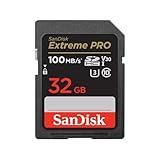
- Shot speeds up to 90MB/s, transfer speeds up to 100MB/s (Up to 100MB/s read speed. Write speed up to 90MB/s. Based on internal testing; performance may be lower depending upon host device. 1MB=1,000,000 bytes. X = 150KB/sec.)
- Perfect for shooting 4K UHD video and sequential burst mode photography (Full HD (1920x1080) and 4K UHD (3840 x 2160) video support may vary based upon host device, file attributes and other factors. See HD page on SanDisk site.)
- UHS Speed Class 3 (U3) and Video Speed Class 30 (V30) (UHS Speed Class 3 designates a performance option designed to support 4K UHD video recording with enabled UHS host devices. UHS Video Speed Class 30 (V30), sustained video capture rate of 30MB/s, designates a performance option designed to support real-time video recording with UHS enabled host devices. See the SD Association’s official website.)
- Built for and tested in harsh conditions: Temperature-proof, waterproof, shockproof, and X-ray-proof (Card only. See product packaging or official SanDisk website for more information regarding proof.)
Recording minutes ≈ 2,133 ÷ bitrate in Mbps
The estimate comes from 16 billion bytes × 8 bits per byte, divided by bitrate and converted to minutes. At 24 Mbps, it gives about 89 minutes, close to Sony’s 90-minute estimate for its specified camera and mode.
This is a theoretical estimate using decimal capacity. It does not account for formatting or filesystem overhead, existing files, variable bitrate or a device’s recording limits. Use your camera’s own remaining-time display or its manufacturer’s recording-time table for a more relevant estimate.
Rank #4
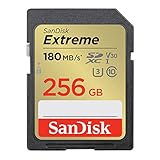
- Save time with card offload speeds of up to 180MB/s powered by SanDisk QuickFlow Technology (Up to 180MB/s read speed. Engineered with proprietary technology to reach speeds beyond UHS-I 104MB/s, require compatible devices capable of reaching such speeds. Based on internal testing; performance may be lower depending on host device, interface, usage conditions and other factors. 1MB=1,000,000 bytes. SanDisk QuickFlow Technology is only available for 64GB, 128GB, 256GB, and 512GB capacities. 1GB=1,000,000,000 bytes. Actual user storage less.)
- Pair with the SanDisk Professional PRO-READER SD and microSD to achieve maximum speeds (sold separately)
- Write speeds up to 130MB/s (Engineered with proprietary technology to reach speeds beyond UHS-I 104MB/s, require compatible devices capable of reaching such speeds. Based on internal testing; performance may be lower depending on host device, interface, usage conditions and other factors. 1MB=1,000,000 bytes.)
- Perfect for shooting 4K UHD video and sequential burst mode photography (Full HD (1920x1080) and 4K UHD (3840 x 2160) video support may vary based upon host device, file attributes and other factors. See HD page on SanDisk site.)
- Capture uninterrupted video with UHS Speed Class 3 (U3) and Video Speed Class 30 (V30) (UHS Speed Class 3 designates a performance option designed to support 4K UHD video recording with enabled UHS host devices. UHS Video Speed Class 30 (V30), sustained video capture rate of 30MB/s, designates a performance option designed to support real-time video recording with UHS enabled host devices. See the SD Association’s official website.)
Check compatibility before recording
Capacity and speed answer different questions. Capacity affects how much footage the card can store; write speed matters because the card must keep up with the camera’s recording stream.
Free tools Windows power users keep installed
One-click scans. No signup required.
- Check the camera manual for supported card type and maximum capacity. A 16GB card falls within the SD Association’s SDHC range: more than 2GB through 32GB.
- Check the recommended speed class for the recording mode. The SD Association defines video speed classes as minimum sequential write-performance categories; do not assume that every camera supports every interface or class.
- Format the card in the device when its manufacturer recommends doing so, and check the camera’s displayed recording time afterward.
- For repeated dashcam or security-camera recording, consider whether the card is intended for frequent writing and overwriting, and confirm the camera’s compatible-card guidance.
See the SD Association speed-class guidance for the meaning of speed classes. Kingston’s datasheet documents a 16GB microSDHC UHS-I U3 action-camera card, but that example does not establish current availability or compatibility with a particular camera; check the device maker’s requirements before choosing a card.
How long will a 16GB card last in a security camera?
For TP-Link’s supported Tapo/Kasa camera context, its estimated 16GB recording times at 15 fps range from 12 hours at 8MP to 48 hours at 2MP. These are vendor-specific estimates, not a general promise for all security cameras. The actual duration depends on the supported camera, selected mode and the footage being recorded.
If the camera uses loop recording, storage duration is a rolling retention window rather than a permanent archive. TP-Link says its loop recording overwrites the oldest footage when the card is full. Save important clips elsewhere before they are overwritten.
Quick Recap
Find the best estimate for your camera
- Look up the camera’s recording-time table or manual for your exact resolution, frame rate and quality setting.
- Check whether the estimate assumes a formatted, otherwise empty card and whether the camera records continuously or only under certain conditions.
- Confirm the card type, supported capacity and required speed class for that mode.
- Insert the card and use the camera’s remaining-time display as the practical estimate for its current settings.
Product prices and availability are accurate as of the date/time indicated and are subject to change. Any price and availability information displayed on Amazon at the time of purchase will apply.

