
The Tool Desk
Outbyte PC Repair FREEClear out junk files and repair common Windows errorsFree Scan →Outbyte Driver Updater FREEFix the driver behind crashes, sound loss and screen glitchesFind Drivers →iTechGuides is reader-supported. When you buy through links on our site, we may earn an affiliate commission. As an Amazon Associate I earn from qualifying purchases. Learn more
A 2014 Samsung Galaxy Note 4 can host a small, continuously running marine-information project using Android and Termux. In a September 2026 account, Kerem Kalyoncu reported that his phone drew about 1.2 watts at the wall while running Maritime Watch, a decision aid for small boats along Turkey’s coast. That is an author-reported measurement, not an independently reproduced benchmark—and the service is not an official marine warning or rescue service.
What the Note 4 was actually running
The build described by Kalyoncu used a Galaxy Note 4, Termux, Python 3.12, OpenSSH and tmux. The project repository separately documents deployment on Android 6 with Termux and Python 3.8, so the article-era software versions and the repository’s current deployment description should not be treated as one fixed installation specification.
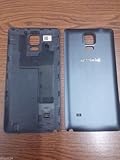
Calling it a “Linux server” is shorthand for Linux tools running inside Android, not evidence that the handset was wiped and flashed with a standalone Linux distribution. Termux describes itself as an Android terminal emulator and Linux environment that works without rooting; its environment provides packages such as Python and OpenSSH. Termux’s official description explains that distinction.
Maritime Watch’s repository describes a deterministic, rule-based Python project that ingests weather information, AIS data and official notices. It produces JSON outputs, a map and notifications, with scheduled deployment documented. Its practical question is whether a small boat should go out and, if so, for how long—not whether a vessel is legally cleared or guaranteed safe.
#1 Best Overall

- Compatible Models: Specifically designed for Galaxy Note 4 SM-N910 series. Please confirm your phone model to ensure compatibility before purchase.
- Long-Lasting Power: Support over 1000 charge cycles, this battery minimizes the need for frequent recharging, offering extended standby and usage times at an exceptional value.
- Perfect Fit Design: Unlike many aftermarket batteries, this replacement matches the original dimensions, ensuring a seamless fit into your phone’s motherboard without any installation issues.
- Reliable and Safe Performance: Built with premium-grade lithium-ion cells and certified by UL, CE, and RoHS standards, this battery delivers dependable power without compromising your device’s hardware.
- Advanced Protection Technology: Equipped with an upgraded smart IC chip to safeguard against overheating, overcharging, over-discharging, and short circuits, ensuring stable and worry-free use.
What the 1.2-watt figure means
Kalyoncu reported measuring roughly 1.2 W at the wall with a digital power meter while the Note 4 served the project. The article does not specify the meter model, adapter, measurement duration, network conditions or battery state, and the figure has not been independently reproduced in the sources available. Treat it as a result from this author’s setup, not a general power rating for Note 4 phones or a verified comparison with other server hardware.
The author also reported that changing a Telegram listener from polling every 1.5 seconds to Telegram getUpdates long polling with a 20-second timeout reduced measured current from about 118 mA to about 45 mA—described in the article as a 62% reduction. The account attributes the change to fewer repeated TLS handshakes for that bot workload. It is a useful optimization example, not a promise that long polling will produce the same reduction in another application.
For anyone reproducing the measurement, a plug-in electricity usage meter is the relevant instrument. Record the workload, adapter, network state, battery condition and measurement period alongside the reading; without those conditions, a wattage number is difficult to compare meaningfully.
Recommended Free Tools
How Maritime Watch handles boat-safety information
The repository frames the tool for small boats up to 8 metres along Turkish coastal waters. Its configured rules treat gusts of 22 knots and waves of 1.25 metres as thresholds for a “not suitable” result. These are project rules, not universal seaworthiness limits, a named maritime standard or a substitute for local forecasts and a skipper’s judgment. The project also considers other conditions, so those two figures alone do not describe every decision the software makes.
Rank #2

- HIGH CAPACITY --- This replacement battery for Samsung Galaxy Note 4 is 5150mAh high capacity, with more power than original battery.You can use your phone for a longer time!
- COMPATIBLE MODELS --- Compatible for Samsung Galaxy Note 4 (model:N910, N910U 4G LTE, N910V(Verizon), N910T(T-Mobile), N910A(AT&T), N910P(Sprint)), Not for other models. Please check the model number on the back of your phone. Please kindly check your phone model on the back of your phone before purchasing.
- SAFETY TESTED BATTERY --- Each battery is manufactured and tested under strict quality control standards. Build-in smart IC microchip to prevent over-charging, over-discharging, short-circuit and over-heating for safe and prolonged use.
- EASY INSTALLATION --- If you want to know more details on how to replace the battery, please search for the corresponding battery model on YOUTUBE , where there will be more detailed video steps for reference.Please remember that its full performance and longevity is only achieved after 3 to 5 complete charge and discharge cycles.
- STRONG AFTER-SALES SERVICE --- If there is any defective battery, please let us know in time,we will find the best solution upon your requirements.
Source failure is a safety issue, not just a software inconvenience. The project says it should report “no data” when a source fails rather than publish sample or test values as if they were live observations. It also documents that AIS coverage does not include the Bosphorus and Dardanelles themselves; absent coverage must not be represented as zero vessels. A map with no reported traffic in those areas cannot establish that the water is empty.
Weather feeds, AIS reception, official notices, internet access and scheduled updates can all be delayed or unavailable. A decision aid can only reflect the data it receives, and its coverage limits matter more than its low energy draw when conditions are changing.
Safety boundary: this is not an official warning or rescue service
The Maritime Watch repository states: “Not an official warning service: in an emergency call 158 or use VHF Channel 16.” It also says the system is not an official warning or rescue service and that the decision remains with the person on the boat. Do not use the project as a replacement for official Turkish Coast Guard information, marine communications, local forecasts or emergency procedures. If there is immediate danger, use the emergency channels identified by the project and applicable local authorities.
Android plus Termux is different from flashing Linux
This project’s host is described as Termux running on Android. An alternative is installing a mobile Linux port, but support is specific to the handset variant and may be incomplete. The postmarketOS device page for an Exynos Note 4 documents working flashing, USB networking, battery reporting and USB OTG, but lists Wi-Fi and Bluetooth as broken in its documented status. It distinguishes Snapdragon variants, so its notes should not be generalized to every Note 4 model—or mistaken for the software used by Maritime Watch. The postmarketOS Note 4 device page provides that model-specific context.
Independent reader supportYour contribution helps us test, update, and keep practical guides available for everyone.When repurposing an old phone makes sense
A spare phone can be an appealing host if it already works, has usable connectivity and can remain powered safely. In Kalyoncu’s case, the existing handset avoided buying another device, and its built-in battery offered backup during a power interruption. Those advantages are specific to that handset and its condition; the reported wattage does not establish how long it would operate on battery or whether an aged battery will remain reliable.
Before choosing any small always-on host, compare the conditions that determine whether it will serve your actual workload:
- Wall power: measure each candidate with the same meter, adapter, network conditions and workload rather than comparing unlike published figures.
- Network access: check that it can maintain the required connection where it will be installed, and identify what the application does when access drops.
- Battery condition: an old phone’s battery may provide short-term backup, but its health and runtime need to be assessed rather than assumed.
- Software support: confirm that the OS, packages and security updates needed by the service remain available.
- Ports and peripherals: account for charging, USB networking, storage and other connections the deployment requires.
- Continuous-operation reliability: consider heat, restarts, storage wear and unattended recovery, not just whether the software starts once.
The Note 4 account is a resourceful reuse example, not evidence that a retired phone is inherently more efficient, more dependable or safer than a single-board computer. The right choice depends on measured behavior and the consequences of downtime.
What’s actually slowing this PC down?
Pick the symptom - the matching free tool is one click away.
Quick Recap
Product prices and availability are accurate as of the date/time indicated and are subject to change. Any price and availability information displayed on Amazon at the time of purchase will apply.

