
iTechGuides is reader-supported. When you buy through links on our site, we may earn an affiliate commission. As an Amazon Associate I earn from qualifying purchases. Learn more
Frost Sheridan brought a Kodak MegaPlus 4.2i back into use by building a portable, Teensy 4.1-powered frame-grabber to control the camera and capture its images. The camera’s SCSI-like connector carries proprietary signals rather than ordinary SCSI, so the project required a custom interface—not simply a cable to a modern computer.
Why the MegaPlus 4.2i needed a custom frame-grabber
The MegaPlus 4.2i is a camera head, not a self-contained point-and-shoot camera. It has no onboard controls, indicators, display, or storage; it needs compatible external hardware to operate and capture images. Project coverage describes the MegaPlus series as beginning in 1986 and intended for scientific and industrial users. The same coverage reports historical prices as high as $40,000; those are figures cited by the project reporting, not independently verified Kodak catalog specifications. (Hackster.io; PJRC)
The camera has a 68-pin D-sub connector that resembles a SCSI connection, but it does not use ordinary SCSI signaling. Sheridan and the camera’s owner lacked the original compatible frame-grabber. An old capture card would also have meant operating the camera from a tethered computer. Sheridan instead designed a portable system around the camera’s proprietary control and image signals. (PJRC)
What’s actually slowing this PC down?
Pick the symptom - the matching free tool is one click away.
How the Teensy 4.1 handles image capture
The project’s central challenge was moving the camera’s parallel image data fast enough while providing memory to hold a full image. In Hackster’s project report, Sheridan describes the transfer-rate arithmetic as 10 MHz × 10 bits per pixel, or 100 Mbps. The same report puts an image at 4 MB, compared with 1 MB of onboard Teensy RAM. The build adds 8 MB of PSRAM to buffer images; PJRC also reports the 100 Mbps transfer figure and the memory expansion. These are figures reported in the project coverage, not independently checked manufacturer specifications. (Hackster.io; PJRC)
#1 Best Overall
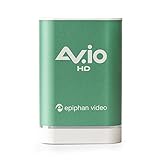
- VGA, DVI, HDMI (with audio) graphics and video capture up to 1080p at 60 fps
- Rugged and portable, plug and play with windows, mac osx and linux
- Aspect ratio support of 4:3 TV, 16:9 Widescreen, 16:10 And 5:4 Monitor
- USB3.0 superspeed for uncompressed and lossless capture with optional up or down scaling
- Compatible with consumer and commercial video encoder software
Why the build keeps eight bits
The camera outputs 10-bit image data. Sheridan’s capture path uses the upper eight bits and discards the two lower bits, making each captured value byte-aligned and simpler to process. That choice gives up some potential dynamic range; the project reports do not quantify the resulting image-quality difference. Hackaday’s account likewise describes retaining the eight most-significant bits. (Hackster.io; Hackaday)
What makes the frame-grabber portable
The Teensy and PSRAM are part of a larger capture system. Project coverage documents the following components and functions:
Rank #2

- Capture from DVI, HDMI, or VGA video display or camera sources. HDMI audio is supported. Does not support HDCP.
- Capture at resolutions up to 1920x1200 at 60 frames per second, including custom VGA resolutions
- Video capture data transmitted over USB 3.0 or USB 2.0 data uplink
- True 24-bit colour and consistent frame rate performance regardless of video content
- Interfaces to multiple 3rd party applications compatible with DirectShow on Windows and V4L (Video4Linux) on Linux.
- Teensy 4.1 and 8 MB PSRAM: control and image buffering.
- RS-232 transceiver: serial communication with the camera.
- 128 × 160-pixel LCD: a small viewfinder.
- MicroSD storage: saving captured images.
- 5 V regulator and 24 V supply: power regulation, with the report describing a 24 V supply shared by camera and frame-grabber.
- Adapted cable and protoboard: wiring adapted from a SCSI cable and hand-wired electronics.
- Battery, buttons, and 3D-printed enclosure: packaging the controls and electronics into a portable unit, with the battery mounted behind it.
The sources document this particular build; they do not provide a complete pinout, original camera manual, or component-level compatibility guidance for reproducing it with other Kodak models. The SCSI-like connector alone is not enough to establish compatibility.
Do these 3 things before closing this tab:
1Clear out junk files and repair common Windows errors2Fix the driver behind crashes, sound loss and screen glitches3Repair Windows errors before they cause bigger problemsOriginal capture hardware or a custom build?
The project describes two routes to operating the camera. The practical choice depends on whether compatible legacy hardware is available and whether the goal is a portable setup.
Rank #3

- Captures any VGA signal
- Up to 2048 x 2048 resolution
- USB-powered device, no power source needed
- Up to 30 frames per second, depending on resolution
- Compatible with Windows, Mac, and Linux
| Route | Access to hardware | Portability | Signal work |
|---|---|---|---|
| Original compatible frame-grabber and computer | Requires access to the camera’s compatible legacy capture hardware. | The project coverage describes an old capture-card setup as tethered to a computer. | Uses the compatible capture hardware; the project does not detail its setup. |
| Custom Teensy-based frame-grabber | Can be built when the original capture hardware is unavailable, but requires additional components. | Sheridan’s design adds a display, storage, battery, and enclosure for portable use. | Requires understanding and implementing the camera’s proprietary control and image signals. |
Sheridan chose the second route because the original frame-grabber was unavailable to him and the camera’s owner. The project is a specific restoration and engineering account, not a turnkey adapter design for other Kodak cameras. (Hackster.io; PJRC)
Independent reader supportYour contribution helps us test, update, and keep practical guides available for everyone.What the project establishes—and what it leaves open
Hackster’s project report and PJRC’s feature describe the custom interface, key components, and capture trade-offs; Hackaday’s February 25, 2025 account also notes the eight-bit capture choice. These accounts support understanding the design approach, but they do not supply an original Kodak manual, full connector pinout, original datasheet, or compatibility list. Anyone attempting a similar build would need reliable camera-specific electrical and signaling information rather than treating the connector as standard SCSI. (Hackaday)
Quick Recap
Best Value
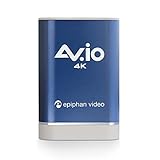
- DVI-D and HDMI video audio capture - UHD 4K at 30 fps and HD 1080p at 60fps
- Rugged and portable plug and play video capture for Windows, Mac OSX and Linux
- Supports aspect ratios for 4:3 TV, 16:9 Widescreen, 16:10 and 5:4 monitor
- USB 3.0 SuperSpeed for uncompressed and high quality video capture with optional scaling
- Capture live game play from PS4 Pro and Xbox One S in 4K resolution
Rank #4

- Deliver one-touch printing solutions (with our VGA Printer)
- Record demos, training videos, quality tests, and more (with our VGA Recorder)
- Enhance remote meetings, web-based training, technical support, and demos (with our VGA2WEB solution or any collaboration software)
Product prices and availability are accurate as of the date/time indicated and are subject to change. Any price and availability information displayed on Amazon at the time of purchase will apply.
Free tools Windows power users keep installed
One-click scans. No signup required.

