
There is no single route into fighting-game battle planning. In a 2015 round table, developers associated with Arc System Works, Atlus, and French-Bread describe several paths into the work—and a shared lesson: game knowledge matters, but so does the ability to explain a problem and propose a practical solution. Their discussion also shows how character identity, movement, balance, and a game’s visual world shape one another.
What battle planners do, according to the developers
The participants describe battle planning as collaborative design: shaping combat systems, characters, skills, and balance while communicating decisions to colleagues. It is not simply a matter of being good at a fighting game. A planner has to understand how a mechanic works, how it affects a character’s identity, and how to make a proposal clear enough for a team to evaluate and implement.
The discussion is a historical snapshot, not a survey of the whole industry or a guide to the participants’ current jobs. 4Gamer published it on November 21, 2015, with writer Hameko and photographer Syuji Sasaki. Its contributors included Arc System Works’ Kazuto Sekine (“Pachi”) and Ryohei Endo; French-Bread’s Kamone Serizawa (“Kamone”); an unnamed Arc System Works battle planner known in the article as Masked Man No. 1; and an unnamed Atlus director known as Masked Man No. 2. Read the 4Gamer round table.
Different backgrounds behind the same kind of work
The participants came to battle design through varied roles. Sekine said he began on BlazBlue: Calamity Trigger, working on Unlimited characters, and later handled battle design for the Guilty Gear Xrd series. Endo said he joined as a programmer and planner on Guilty Gear 2 Overture and later became director of BlazBlue: Chronophantasma. Kamone described himself as director, battle planner, and battle programmer on Under Night In-Birth and Dengeki Bunko: Fighting Climax.
Recommended Free Tools
#1 Best Overall

- In the raw world of Siegestorm, there is only one thing that really matters – VICTORY! The best fighters gather to knock glory out of the hands of their opponents during the Great Tournament. You may think of yourself as the most sneaky, mighty fighter with the dirtiest tricks. But now is the time to prove it.
- Knock your opponents down in the Arena using your fighting skills, traps, and combination of strikes. Defend yourself and attack the enemy until you win by the spectacular K.O!
- Knockdown is one of a kind dynamic competitive game inspired by fighting video games, where you become one of those powerful warriors you have always been in your dreams and you have to make the best use of all of your skills to force your opponent to perform a K.O.
- During the game, you will find enjoyment in discovering what your fighter can and cannot do, how to play them efficiently, and how to use their strengths against their opponent’s weaknesses.
- There’s nothing to stop you from playing Knockdown like the serious, expanded full format board game – a strategic fight between you and your opponent.
The article identifies Masked Man No. 1 as an Arc System Works battle planner and director for the Persona 4 Arena series, with earlier work on Guilty Gear XX/-Slash- and BlazBlue: Calamity Trigger. Masked Man No. 2 said Atlus directed Persona 4 The Ultimax Ultra Suplex Hold, with Atlus handling conceptual direction and fan requests while Arc System Works handled the fighting-game portion. The interview does not reveal either masked participant’s name. It also describes Kyohei Kato as the BlazBlue series’ main planner at that time; that is a dated description, not a current title.
How the participants entered battle planning
The question that led the discussion was, “How can I become a battle planner?” The answers offer examples rather than a universal career formula. One participant described ordinary hiring; others entered through professional relationships, community analysis, and opportunities to give advanced-player feedback.
Rank #2
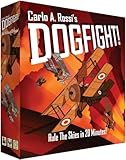
- A 2-player fight for supremacy, set to the backdrop of WW1
- Plays over three rounds in just 20 minutes. Easy to get to the table
- Expanding the mechanics of Blitzkreig. Take your battles to the skies!
- Asymmetric plane abilities make every game an exciting tactical back-and-forth
- Show your aerial dominance with nine different planes, and numerous scenarios
| Path described | What happened |
|---|---|
| Applying to a game company | Endo said applying was the usual route. In his own case, Guilty Gear director Daisuke Ishiwatari approached him. |
| Publishing analysis and proposals | Kamone wrote about strategies, bugs, and possible balance changes for Melty Blood Re Act on his website. Exchanges with Sekine eventually led him into French-Bread development work. |
| Building professional connections | Sekine said he was a game writer who regularly visited Arc System Works before being invited to help. |
| Giving player feedback | Endo said developers sought input from advanced players and could hire people they came to know through that process. |
What these routes have in common is useful communication, not a guaranteed credential. Sekine emphasized anticipating how colleagues will understand what a planner says. Criticism is more useful when it identifies a problem and pairs it with a concrete improvement. He put the communication point this way in 4Gamer’s published English translation: “As a planner it’s important to be cognizant of what you communicate to people, and how it is perceived.”
Turn player knowledge into an actionable proposal
For someone hoping to do this work, Kamone’s example points toward a practical habit: document a mechanic, bug, matchup issue, or balance concern precisely, then explain what change might address it and what that change could cost. Sekine said writing strategy guides helped him dissect games; he also learned from debug versions. Masked Man No. 1 said that after becoming a developer, he paid more attention to technical issues such as dropped frames and bugs. Together, these examples show why a planner’s perspective can extend beyond whether a tactic feels strong: implementation and technical behavior matter too.
Free tools Windows power users keep installed
One-click scans. No signup required.
Rank #3

- Package Weight: 1.76 lbs
- Product Type: Toys And Games
- Package Quantity: 1
- Country Of Origin: China
- 2 to 6 players
How character identity shapes mechanics and balance
The developers did not describe balance as making every character play alike. Kamone recalled that his fan proposals aimed to preserve each fighter’s unique trait. Sekine said the goal was to retain distinct play feel and create character-specific moments of impact, rather than simply dulling whatever seemed powerful. Masked Man No. 1 connected balance and bug fixes with a game’s ability to remain playable over time, while also stressing player enjoyment. These are the participants’ design values, not measured claims about results.
In their examples, character and combat design could influence each other in either direction:
Rank #4

- Fast-paced party game: Experience the chaos of Pathfinder Goblin Firework Fight, a quick 30minute party game where 2-4 players compete as mischievous goblins stealing fireworks from the town of Sandpoint
- Strategic theft & mayhem: Pillage loot from the town or steal from fellow goblins in this exciting game of strategy and luck - but watch out, other players are just as likely to steal from you!
- World-famous Pathfinder universe: Features the beloved and iconic Pathfinder goblins in an all-new standalone game that captures their mischievous spirit and chaotic nature
- Perfect for game nights: Ideal for family game nights, parties, and gatherings with easy-to-learn rules and engaging gameplay that keeps everyone entertained from start to finish
- Quality Paizo Games production: From the makers of Pathfinder RPG, this high-quality board game includes everything needed to play right out of the box - no additional purchases required
| Starting point | Design implication described in the interview |
|---|---|
| Character-first | A character’s look or established identity suggests a combat concept. The participants discussed practical links such as height affecting reach, weapon length, matchup needs, and how a character fits into the roster. |
| Mechanic-first | A battle concept can come before the character. Sekine cited Ramlethal’s dual swords and Azrael in BlazBlue: Chronophantasma as examples of this direction. |
This is not a universal design taxonomy. It is a useful way to read the developers’ examples: mechanics can express a character, while the needs of the combat system can also shape who that character becomes.
Adapting characters from established series
When a fighting game draws on an existing property, the participants described balancing the expectations of its audience with the needs of the game format. The Atlus representative recalled close discussion with Arc System Works while adding Rise to Persona 4 Arena Ultimax. Kamone said French-Bread surveyed fans of the original works while designing characters for Dengeki Bunko: Fighting Climax. These are examples from particular projects, not a rule that every licensed-game team follows.
Do these 3 things before closing this tab:
1Fix the driver behind crashes, sound loss and screen glitches2Repair Windows errors before they cause bigger problems3Scan for outdated or missing drivers - takes under a minuteBest Value

- HOW TO PLAY: In this competitive fighting board game, select a hero and battle opponents using asymmetric decks, tactical movement, and unique abilities. Play attacks and defenses, bluff rivals, and reduce enemy health to zero to claim victory.
- TWO LEGENDARY HEROES: Command Houdini, the master escape artist with sleight-of-hand trickery, or the Genie, wielding mystical powers of the lamp. Each hero includes a sculpted miniature, health dial, and 30-card deck.
- MIX & MATCH EXPANDABILITY: Combine Houdini vs The Genie with other Unmatched game sets for epic crossover battles and matchups like Houdini vs. Holmes or the Genie vs. Medusa. Every mix adds new tactics, deck interactions, and endless replayability.
- MAGICAL BATTLEFIELD: Duel on a new thematic gameboard designed to highlight Houdini’s illusions and the Genie’s mysticism, adding variety and replay value with every match.
- ALL-IN-ONE SET: This Unmatched board game works as a complete game for 2 to 4 players ages nine and up, with everything included out of the box. Perfect as a standalone experience or a powerful addition to any Unmatched collection.
Why some anime-style fighters use air dashes
The round table distinguishes “anime game” from “air dasher,” even though some players use the terms interchangeably. In the discussion, an air dasher is a fighting game with features such as mid-air dashes, high jumps, and long combos. The Japanese participants said they more often grouped games by maker.
The developers’ explanation centers on visual and thematic fit, rather than a definitive history of the genre. Masked Man No. 1 said an early BlazBlue: Calamity Trigger prototype without air dashes or high jumps was not fun. Kamone recalled a ground-focused Under Night In-Birth prototype whose restrained movement did not suit the characters’ visuals. Their reasoning was that fantastical characters can feel out of place in an overly restrained system, while air dashes may seem incongruous on a character conceived as grounded.
A different fit in Battle Fantasia
The interview contrasts those games with Battle Fantasia, which the participants described as more classical. Masked Man No. 1 said the team tried chain combos while adapting 2D fighting to 3D graphics, but moved toward a more restrained system after the cancelled motions looked poor. Its fantasy setting and parry-like “gachi button” were part of that design. The example reinforces the round table’s broader point: movement rules are choices that should suit the game’s characters, presentation, and combat goals.
Are downloadable fighting-game characters made overpowered?
The participants rejected the idea that DLC characters are automatically designed to be strong. Kamone said an established roster has had time to develop, so a new character may be designed to feel approachable. Sekine said developers want additions to attract players and be enjoyable, which can make them seem powerful. That is their explanation of the design trade-off, not evidence about every studio or DLC release.
Quick wins for a faster PC:
Scan for outdated or missing drivers - takes under a minuteDriver Scan →Clear out junk files and repair common Windows errorsFree Scan →Fix the driver behind crashes, sound loss and screen glitchesFind Drivers →What the round table can—and cannot—tell you
The interview is most useful as a set of concrete practitioner perspectives: there is more than one route into battle planning; communicating a specific, constructive proposal is central; and the participants connect mechanics to character identity, world style, and long-term play. It does not establish a single hiring path, a universal theory of air-dashing games, or a statistical claim about the fighting-game industry. Its examples and roles describe the people and projects as discussed in 2015.
Quick Recap
Product prices and availability are accurate as of the date/time indicated and are subject to change. Any price and availability information displayed on Amazon at the time of purchase will apply.

