
Edge AI runs artificial-intelligence functions near the industrial equipment and sensors that generate data. In an Industrial Internet of Things (IIoT) system, an edge computer might analyze a machine-vision camera’s images on the factory floor and flag a suspected defect without first sending every image to a remote service.
That arrangement can support timely decisions and reduce the need to transmit raw data, but it does not guarantee lower end-to-end latency, improved productivity, privacy, or sustainability. To judge whether a deployment supports Industry 5.0, assess not just where its model runs but also how it affects workers, resilience, resource use, safety, and the plant’s existing systems.
What edge AI means in an IIoT system
IIoT connects industrial equipment, sensors, control systems, and software so they can exchange and use operational data. Edge AI places some AI computation close to those data sources or to the equipment that will use the result. The edge node may be an industrial computer or another device suited to the operating environment.
The common starting point is local inference: a model trained elsewhere is deployed to the edge node, which uses it to classify or analyze incoming data. Edge learning is different. In that design, a node also learns from local data or participates in updating a model. Learning at the edge brings additional demands, including limited compute resources, variation in data between sites, communications requirements, privacy considerations, and security exposure. NIST’s overview of Edge AI discusses these distinctions and constraints.
Quick wins for a faster PC:
Scan for outdated or missing drivers - takes under a minuteDriver Scan →Clear out junk files and repair common Windows errorsFree Scan →Fix the driver behind crashes, sound loss and screen glitchesFind Drivers →#1 Best Overall

- Multiple Internet access methods is offered: Global frequency LTE 4G/3G & Ethernet port & ADSL.
- Router fucntion is supported: Routing, VPN and firewall.
- Support graphical programming (Node-RED) to quickly develop edge computing functions to meet unique functional requirements.
- Suitable for a variety of industrial IoT scenarios, supporting Modbus RTU/TCP protocol conversion and other popular PLC common protocols.
- Modular design, uses can expand different types of IO modules: DI, DO, AI, AO, IO. Easily slide to achieve quick access to the IO expansion machine, to meet the needs of more scenarios.
Local processing need not mean a plant is disconnected from central systems. A factory can analyze time-sensitive data on site while using cloud or central infrastructure for fleet-level analysis, model management, or longer-term data work.
Where edge, cloud, and hybrid designs fit
The right location for inference depends on the decision deadline, the consequence of a delayed or incorrect result, the available network, and the computing resources at the site. An advisory alert and a safety-critical control action do not have the same requirements. The table describes common architectural trade-offs, not guaranteed performance.
Rank #2
- Multiple Internet access methods is offered: Global frequency LTE 4G/3G & Ethernet port & ADSL.
- Router fucntion is supported: Routing, VPN and firewall.
- Super Powerful Edge Computing Capabilities
- Support graphical programming (Node-RED) to quickly develop edge computing functions to meet unique functional requirements.
- Suitable for a variety of industrial IoT scenarios, supporting Modbus RTU/TCP protocol conversion and other popular PLC common protocols.
| Architecture | How it works | Potential fit | Key trade-off |
|---|---|---|---|
| Edge-centered | Inference runs on or near the factory floor. | Use when local analysis or a response near the equipment is important, or when routinely sending raw streams elsewhere is undesirable. | The device must have enough compute and power for the workload, and the local system still needs secure integration, monitoring, and maintenance. |
| Cloud- or central-centered | Data is sent to a remote or centralized system for analysis. | Use when the application can tolerate the communications and processing path, or benefits from centralized resources and data. | Connectivity, congestion, and the full round trip may affect response time; the design also needs to address what happens when the connection is unavailable. |
| Hybrid | Selected inference or decisions stay local while central systems handle other analysis, management, or longer-term work. | Use when a plant needs local responsiveness but also wants centralized coordination or analysis across sites. | Splitting work adds integration and lifecycle complexity: teams must manage where data, models, and decisions reside. |
“Low latency” should be treated as an end-to-end requirement, not a property conferred by putting a model on an edge device. The result depends on data acquisition, networking, model execution, actuation, and safety controls. NIST’s factory wireless work highlights the need to engineer reliable, high-performance communications with attention to latency, scalability, power, and coexistence among networks.
Industrial use cases—and what they do not prove
Inspection, equipment monitoring, anomaly detection, and process optimization are plausible manufacturing applications. Siemens describes industrial-edge capabilities for bringing together shop-floor data, IT/OT systems, analytics, and AI models. NIST’s 2026 smart-manufacturing roadmap also covers areas such as sensing, robotics, digital twins, logistics, and sustainable manufacturing. These sources describe capabilities and research directions; they do not establish that a given plant will achieve a particular operational result.
The Tool Desk
Outbyte PC Repair FREERepair Windows errors before they cause bigger problemsFix Now →Outbyte Driver Updater FREEFix the driver behind crashes, sound loss and screen glitchesFind Drivers →Rank #3
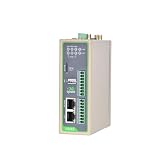
- Reliable North America LTE Cat 1: Specifically designed for North American carriers (Verizon, AT&T, T-Mobile). LTE Cat 1 provides a cost-effective and highly stable connection for IoT applications, featuring Band 2/4/5/12/13/25/26 for extensive coverage and carrier-grade reliability.
- Edge Computing & Python Programmable: Powered by a high-performance ARM Cortex-A8 processor. Supports Python secondary development, allowing you to perform data pre-processing, filtering, and local logic control at the edge, reducing cloud bandwidth costs and latency.
- Rich Industrial I/O & Interfaces: Equipped with 1x RS232 and 1x RS485 serial ports, plus 4x Digital Inputs (DI) and 4x Digital Outputs (DO). It offers a versatile solution to bridge the gap between legacy serial equipment and modern sensors for comprehensive data acquisition.
- Extensive Protocols & Cloud Ready: Supports industrial protocols including Modbus RTU/TCP, MQTT, OPC UA, and HTTP. Seamlessly integrates with major cloud platforms like AWS IoT Core and Azure IoT Hub, as well as InHand’s DeviceManager for centralized remote management.
- Industrial-Grade Durability & Security: Built with a rugged metal housing and designed for harsh environments with a wide operating temperature range (-20°C to 70°C). Features multi-level security with IPsec/OpenVPN and hardware watchdog for 24/7 unattended operation.
Visual inspection
A machine-vision camera can supply images to a nearby edge node, where a deployed model identifies patterns for an inspection workflow. Whether the result is useful depends on the specific defect, camera and lighting setup, production conditions, model performance, and how workers or control systems handle flagged items. A model’s output should not be treated as an assured defect finding without validation for the intended task.
Condition monitoring and anomaly detection
Sensor readings, such as vibration data, can be analyzed near equipment to identify patterns that warrant investigation. A flag can help direct attention, but it is not itself proof of a failure or a guarantee of predictive maintenance benefits. The plant needs a defined response process and a way to assess whether the system’s alerts are useful under its operating conditions.
Rank #4
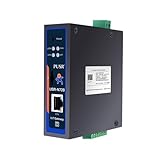
- Powerful Edge Computing Capabilities: 1000 points+data acquisition+analysis
- Multiple Interface: Ethernet+2*RS485
- Protocol Conversion: Modbus to MQTT+Json, DL645 to MQTT+Json
- Rich Communication Protocol: MQTT/TCP
- Data Encryption: TCP+SSL, MQTT+SSL SD Card for Data Storage:To ensure data integrity
Production-process optimization
AI analysis may inform adjustments to a production process or help operators interpret changing conditions. The appropriate role could be advisory rather than automatic control. Any path from a model output to a machine action needs to fit the plant’s control design and safety requirements; edge placement alone does not establish that the action is safe or beneficial.
What to evaluate before deployment
Industrial AI must work across equipment and systems that may differ in age, interfaces, and operating conditions. NIST identifies integration with heterogeneous sensing and control equipment as a manufacturing AI challenge. Siemens describes centralized management and OT/IT connectivity as functions of its Industrial Edge platform; those are vendor-described capabilities, not independent evidence of achieved performance.
Outdated Drivers Are Slowing You Down
One free scan finds every outdated or missing driver and matches the right update for your exact hardware.Free scan · exact hardware matchPC Slower Than It Used to Be?
A free scan shows the junk files, broken settings and background clutter dragging Windows down - then fixes them in one click.Free scan · Windows 10 & 11Best Value
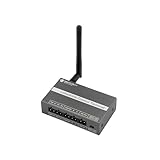
- [ALL-IN-ONE ACQUISITION & CONTROL]: Unlike standard sensors that only read data, this hybrid terminal integrates 1x RS485 (Modbus RTU), 1x Analog Input (0-10V), and 1x Relay Output (3A). It allows users to monitor industrial sensors (like soil moisture, flow meters) and control actuators (pumps, valves, fans) simultaneously with a single, cost-effective device.
- [FAIL-SAFE EDGE LOGIC (OFFLINE OPERATION)]: Critical for agriculture and safety systems. The device supports programmable local logic rules (e.g., "If Soil Moisture < 20%, Turn ON Relay"). It executes these commands locally, ensuring the automation continues to run reliably even if the LoRaWAN network connection is lost or unstable.
- [DEEP PENETRATION 915MHz CONNECTIVITY]: Operating on the standard US 915MHz LoRaWAN frequency, this node provides robust signal penetration through walls and reliable coverage up to 4km (2.5 miles) in open environments. Ideal for sprawling farms, greenhouses, and factory campuses where Wi-Fi cannot reach. Compatible with Helium, TTN, and private gateways.
- [SEAMLESS INDUSTRIAL RETROFIT]: Designed to upgrade legacy systems to the cloud without replacing expensive machinery. The RS485 interface acts as a Modbus Master to read data from energy meters, PLC systems, or weather stations. Housed in a compact DIN-Rail mountable case with 12-24V wide voltage input for easy installation in control cabinets.
- [VERSATILE I/O FOR SYSTEM INTEGRATORS]: Beyond Modbus, it features optocoupler-isolated digital inputs and analog interfaces. Perfect for diverse IIoT applications such as HVAC monitoring, automated irrigation, tank level management, and building automation. Supports OTAA/ABP Class A/C modes for flexible power management.
- Decision deadline and failure mode: Specify how quickly the output is needed and what happens if it is late, unavailable, or wrong. Separate advisory analysis from safety-critical control.
- Connectivity and degraded operation: Map behavior during network loss, congestion, or poor coverage. Establish which functions continue locally and which depend on central systems. Wireless reliability and coexistence require explicit engineering.
- Compute, power, and environment: Check that the edge device can run the model at the required throughput within its power, thermal, and physical operating limits. Account for maintenance and support over the equipment’s lifecycle.
- Data governance and security: Identify sensitive data, who can access it, how long it is retained, how models and software are updated, and how the deployment is segmented and monitored. Keeping data local is not, by itself, a privacy or security control; connected edge nodes also add systems that need protection.
- Interfaces and integration: Confirm compatibility with the relevant sensors, cameras, PLCs, machines, MES/SCADA, and IT systems. Define how model outputs enter existing workflows and who is responsible when systems disagree.
- Model lifecycle: Plan deployment, performance monitoring, updates, rollback, and review when data or production conditions change. For edge learning, also determine how local updates are governed and communicated.
- Evidence for the use case: Define the operating conditions and measures that will determine whether the application works for this line. Do not assume that a result in one plant transfers to different equipment, products, or shifts.
How Industry 5.0 changes the success criteria
The European Commission describes Industry 5.0 as complementing and extending Industry 4.0, not as a simple replacement or chronological successor. Industry 4.0 is commonly associated with connected, digitalized industry; the Commission’s Industry 5.0 framing directs attention to sustainable, human-centric, and resilient industry. It also places worker wellbeing at the center, broadens value beyond shareholders, and asks industry to respect planetary boundaries. The Commission’s 2021 report establishes this as a policy and research vision, not as evidence that edge AI produces particular outcomes.
Human-centricity: design around workers
Consider whether the system helps workers understand conditions, make informed decisions, and carry out tasks safely—or instead creates opaque alerts, extra monitoring, or new pressure without useful control. The European Commission says human-centered technologies can support and empower workers rather than replace them. In practice, that calls for worker participation, appropriate training, clear accountability, and a defined role for human oversight. Automation is an organizational and human-machine design choice, not an inevitable consequence of using AI.
Resilience: design for disruption
Assess how the process behaves when a network, edge node, central service, or model is unavailable or degraded. A local model may allow some analysis to continue during a communications interruption, but only if the required equipment, data, power, and fallback process are available. Decide what the plant should do when an inference result cannot be trusted or obtained, and test that behavior as part of the deployment.
Sustainability: include the full resource picture
Local processing may change data-transfer needs, but it is not automatically more sustainable. Evaluate the energy used by edge devices and supporting infrastructure alongside any changes in network traffic. Consider hardware materials, replacement cycles, cooling or other operating needs, and the lifecycle of devices and equipment. The relevant question is whether the full deployment supports the plant’s environmental goals, not whether computation happens locally.
A practical decision sequence
- Define the decision: State what data the application uses, what output it produces, who or what acts on it, and the required response time.
- Choose the placement: Compare local, central, and hybrid processing against the deadline, connectivity conditions, data-governance needs, and available resources.
- Map the system: Trace data from sensor or camera through the edge node and networks to the operator, control system, or central platform. Identify interfaces and failure points.
- Set human and safety controls: Determine whether the output is advisory or can trigger action, how workers can interpret or challenge it, and what safe fallback applies.
- Evaluate outcomes in context: Define measures and operating conditions relevant to the specific line, and examine worker, resilience, energy, and lifecycle effects as well as technical performance.
- Plan operations: Assign responsibility for security, updates, monitoring, support, and rollback before expanding beyond the initial use case.
An industrial edge AI computer, machine-vision camera, vibration sensor, or industrial edge computing platform may be part of an architecture, but a product category alone does not establish fit. Selection depends on the application, environmental ratings, interfaces, supported software, and the vendor’s support horizon.
Quick Recap
Product prices and availability are accurate as of the date/time indicated and are subject to change. Any price and availability information displayed on Amazon at the time of purchase will apply.

