
What’s actually slowing this PC down?
Pick the symptom - the matching free tool is one click away.
iTechGuides is reader-supported. When you buy through links on our site, we may earn an affiliate commission. As an Amazon Associate I earn from qualifying purchases. Learn more
Cancer and parasitic infections are detected through different diagnostic pathways, even though both may involve examining cells or organisms under a microscope. The right test depends on the suspected condition, symptoms, medical and travel history, and the specimen available. There is no single test that detects every cancer or every parasite.
Screening, diagnosis, and confirmation are different steps
Screening looks for a possible problem, generally before symptoms appear. Diagnostic testing investigates a suspected condition, often because of symptoms or an abnormal screening result. Confirmation means establishing what the finding represents; it may require a different test or another sample.
The National Cancer Institute (NCI) explains that screening tests are not meant to diagnose cancer. An abnormal screening result is a reason for follow-up evaluation, not proof that a person has cancer. Likewise, a test that detects a parasite or parasite-related marker may need additional testing to identify the organism or determine what the result means.
Free tools Windows power users keep installed
One-click scans. No signup required.
How are cancer cells detected?
There is no single test that diagnoses all cancers. The evaluation may combine medical history, physical examination, laboratory tests, imaging, and procedures that collect cells or tissue. NCI notes that lab results can be abnormal in people who do not have cancer and normal in people who do; a lab result on its own may not settle the question.
#1 Best Overall

- Early Detection: Colon Cancer Screening Test Kit is designed to detect bowel cancer in its early stages through a simple stool sample (feces) test. The test is easy to perform and provides accurate results within minutes, allowing for quick detection and treatment.
- Preferred Screening Method - Colon test kit for cancer is a FIT test, the preferred annual stool screening method for colon cancer according to the Colorectal Cancer Alliance and Cleveland Clinic.
- No Preparation Required: Unlike other testing methods, FOB test Kit requires no special preparation or diet changes, making it a convenient and hassle-free option for at-home testing.
- Fast and Easy-to-Use: Colon cancer Test at home and get results in just 10 minutes, with no mail-in lab testing required.
- High Accuracy - The colorectal cancer screening test is over 99% accurate.
Biopsy and pathology
A biopsy removes a sample of abnormal tissue or cells. A pathologist examines the sample under a microscope and may perform additional tests. The pathology report describes the findings and can help guide treatment decisions. The way a sample is collected depends on the body site and the suspected cancer. NCI says a biopsy is often the only way to know for sure whether cancer is present.
Blood tests, liquid biopsy, and tumor markers
A routine blood test is not a universal cancer detector. Some blood findings can provide clues, but they do not diagnose every cancer. A liquid biopsy is a specific kind of test that examines blood or another body fluid for cancer cells or tumor-derived material, such as DNA. Depending on the particular test and clinical situation, it may help with treatment planning, assessing response, or monitoring for recurrence; it does not replace tissue biopsy in every setting.
Rank #2

- Mail-in kits for home use
- Test in just 5 minutes
- Lab results in 2-5 days
- 100% pain free
Tumor-marker tests measure substances made by cancer cells or by other cells in response to cancer. NCI says these tests generally have not worked well for screening people without symptoms: some miss cancers, while others can indicate cancer when none is present. A particular marker may still have a role in supporting diagnosis, selecting treatment, or monitoring response or recurrence for certain cancers.
How do doctors test for parasites?
Parasite testing is chosen to fit the suspected organism and the body site involved. Symptoms, other medical conditions, and travel history can affect the choice, and more than one test may be needed. The Centers for Disease Control and Prevention (CDC) emphasizes that there is no blood test that looks for all parasitic infections.
Rank #3
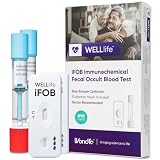
- At-Home iFOB Test , No Lab Needed -- An easy-to-use, over-the-counter (OTC) test kit to check for hidden (occult) blood in your stool - a possible early sign of colorectal issues. Test privately at home, anytime, and gain peace of mind about your health.
- Early Detection Made Simple — Blood in the stool may be associated with digestive tract conditions such as polyps, ulcers, or other gastrointestinal concerns. iFOB is a trusted screening tool designed to help identify potential issues early.
- Quick 3-Step Process -- No special tools needed. Just collect your sample, test it using the included materials (including collection paper), and get your results in 10 minutes. Easy instructions make it simple for anyone to use.
- Clear, Easy-to-Read Results -- If both the Control (C) and Test (T) lines appear - even faintly - the result is positive. A single C-line means negative. The display is clear and easy to interpret at a glance.
- Take Charge of Your Health -- Annual fecal occult blood screening is recommended starting at age 50 - or earlier if you’re at risk. The WELLlife iFOB Test offers a safe, convenient way to monitor your digestive health from home.
| Test approach | Specimen or method | What it can help investigate | Important qualification |
|---|---|---|---|
| Stool ova-and-parasite examination | Stool examined for parasite eggs or organisms | Parasites associated with diarrhea and other abdominal illness | CDC recommends at least three stool samples collected on separate days because parasites may be difficult to detect in a single specimen. |
| Endoscopy or colonoscopy | Visual examination of parts of the digestive tract | Possible intestinal parasites or other causes of illness | May be considered when stool examinations have not identified the cause. |
| Serology or antigen testing | Blood tested for antibodies or parasite antigens | Selected infections, depending on the organism and test | These tests are not interchangeable and do not cover all parasites. |
| Blood-smear microscopy | Blood examined under a microscope | Parasites that circulate in blood, including those that cause malaria, filariasis, or babesiosis | The usefulness of a smear depends on the suspected infection and laboratory examination. |
| Molecular testing, such as PCR | Testing for parasite genetic material in an appropriate specimen | Identification or confirmation of selected parasites | For malaria, molecular results may take too long to guide initial urgent care. |
| Imaging | X-ray, MRI, or CT | Lesions in organs associated with certain parasitic diseases | Imaging is used for selected clinical questions, not as a universal parasite test. |
The CDC’s general parasite-testing guidance, reviewed April 9, 2024, describes these approaches and their differing uses. Which one is appropriate depends on the suspected infection; a negative result from one method does not automatically rule out every parasite.
Independent reader supportYour contribution helps us test, update, and keep practical guides available for everyone.How is malaria detected in blood?
Possible malaria is time-sensitive and requires prompt professional assessment and laboratory testing, particularly after travel to an area where malaria occurs. CDC guidance dated August 17, 2026 describes blood-smear microscopy, malaria antigen rapid diagnostic tests, and nucleic-acid amplification tests as diagnostic options.
Rank #4

- At-Home Test Kit Format: This product is designed as a home test kit for personal use. The kit format supports convenient handling and step-by-step preparation in a home setting.
- Compact Storage Packaging: The packaging is compact for organized storage in bathroom drawers, cabinets, or personal care areas. Its enclosed format helps keep the test components together between uses.
- Personal Screening Supply: The test kit is suitable for routine home monitoring needs. The single-kit configuration provides a practical option for personal supply planning or replacement use.
- Organized Kit Components: The enclosed contents are arranged for straightforward access during the testing process. This format supports simple setup and storage before and after handling.
- Single Kit Configuration: This listing includes one home test kit for direct purchase and household use. The individual unit format works well for personal storage or occasional use needs.
What each malaria test contributes
- Thick and thin blood smears: Microscopy is needed to confirm infection, identify the malaria species, estimate the proportion of red blood cells infected (parasitemia), and monitor response to treatment.
- Rapid antigen tests: These can provide a quicker result, but do not provide all the information available from microscopy.
- Nucleic-acid tests: These can help confirm species and identify mixed infections; CDC notes they can be more sensitive and specific than microscopy. They may, however, be too slow to guide initial case management.
If an initial malaria smear is negative but clinical suspicion remains, CDC advises repeating smears every 12–24 hours until three total sets have been examined before ruling out malaria. This repeat-testing advice applies to suspected malaria and should not be generalized to other parasite tests.
Recommended Free Tools
Why a test result needs clinical interpretation
A test answers a particular question, not every question about a disease. Depending on the method, the question may be whether a finding is present, which species or subtype is involved, how much of an organism is detectable, or whether a marker could guide treatment. Clinicians also consider specimen type, timing, test limitations, and the possibility that another method or sample is needed.
Microscopy does not make cancer and parasite testing the same process: a pathologist assessing a tissue biopsy and a laboratory examining a blood smear are looking for different findings and applying different diagnostic criteria. Test results should be interpreted by qualified clinicians and laboratory professionals, not by trying to diagnose from a home microscope or an online image.
Sources: NCI, “Tests and Procedures Used to Diagnose Cancer,” “Cancer Screening Overview,” and “Tumor Markers” (pages accessed October 7, 2026); CDC, “Diagnosis of Parasitic Diseases” (reviewed April 9, 2024), “Malaria Diagnostic Tests” (dated April 24, 2024), and “Evaluation and Diagnosis of Malaria” (dated August 17, 2026).
Quick Recap
Product prices and availability are accurate as of the date/time indicated and are subject to change. Any price and availability information displayed on Amazon at the time of purchase will apply.

