
iTechGuides is reader-supported. When you buy through links on our site, we may earn an affiliate commission. As an Amazon Associate I earn from qualifying purchases. Learn more
A CRM can help your organization retain customers by giving teams a reliable, shared view of customer history and making relevant service and follow-up easier. It is not an automatic retention engine: results depend on accurate data, useful processes, staff adoption, and a product or service customers want to keep using.
How can CRM help improve customer retention?
Customer information often sits across sales, marketing, service, billing, and commerce systems. A customer relationship management (CRM) platform can consolidate those records and interactions so teams work from a shared history instead of disconnected fragments. Salesforce’s overview of CRM describes the role of CRM in managing customer relationships, while its guide to a 360-degree customer view explains how connected data can inform customer interactions.


A useful customer view may bring together identity and contact details, purchases or renewals, support cases, past interactions, preferences, consent choices, and relevant behavior. The value is practical: a support agent can see an open issue and prior contact; a sales or account team can understand a renewal history; and marketing can avoid sending a message that conflicts with a customer’s preferences.
Use shared history to make service more coherent
When authorized teams can see relevant customer history, customers are less likely to be asked to repeat context, and staff can coordinate follow-up on unresolved issues. Salesforce says a unified view can support personalized cross-channel campaigns, proactive support, and identification of customers who may be at risk. These are capabilities, not guarantees that a customer will stay.
#1 Best Overall
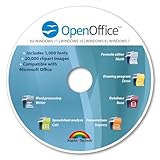
- THE ALTERNATIVE: The Office Suite Package is the perfect alternative to MS Office. It offers you word processing as well as spreadsheet analysis and the creation of presentations.
- LOTS OF EXTRAS:✓ 1,000 different fonts available to individually style your text documents and ✓ 20,000 clipart images
- EASY TO USE: The highly user-friendly interface will guarantee that you get off to a great start | Simply insert the included CD into your CD/DVD drive and install the Office program.
- ONE PROGRAM FOR EVERYTHING: Office Suite is the perfect computer accessory, offering a wide range of uses for university, work and school. ✓ Drawing program ✓ Database ✓ Formula editor ✓ Spreadsheet analysis ✓ Presentations
- FULL COMPATIBILITY: ✓ Compatible with Microsoft Office Word, Excel and PowerPoint ✓ Suitable for Windows 11, 10, 8, 7, Vista and XP (32 and 64-bit versions) ✓ Fast and easy installation ✓ Easy to navigate
Make outreach relevant, not merely frequent
CRM data can help teams tailor communication to a customer’s actual relationship with the organization—for example, a renewal reminder based on a contract date or a follow-up after a support case. Preferences and consent choices should guide whether and how a customer is contacted. More messages are not inherently better; inaccurate, irrelevant, or unwanted outreach can damage the experience.
Spot possible problems and act on them
Changes such as reduced purchase frequency, an unresolved service issue, or a missed renewal may signal disengagement. A CRM can make these signals easier to see and can route a follow-up task to the right team. Treat them as prompts to investigate, not proof of why a customer may leave.
Rank #2
What CRM cannot fix by itself
Software does not resolve confusing onboarding, a weak product, slow support, or an unsuitable price. Nor does a dashboard improve retention if records are inaccurate, teams do not use the system, or no one owns follow-up. CRM supports the work; the organization still has to deliver value and respond to what customers need.
What’s actually slowing this PC down?
Pick the symptom - the matching free tool is one click away.
The evidence for specific retention gains should also be read carefully. HubSpot’s ResellerRatings customer story reports a 76% decrease in churn and a renewal-rate increase from 80% to 92%—a rise of 12 percentage points—after the company replaced Salesforce with HubSpot’s CRM platform. This is one vendor-published customer case. It does not isolate CRM as the sole cause or establish a typical result for other organizations. HubSpot also attributes a figure of 79% of its customers saying its platform helped centralize data to its 2024 ROI Report on its CRM case-studies page; that is a vendor-reported data-centralization figure, not an independent measure of retention.
Rank #3
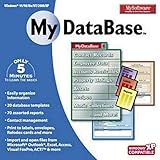
- Pre-designed templates for both business and personal use
- 10,000 clipart images and 100 fonts
- Notes table for history and to-do items
- Sort, filter and index
- Calculation & totaling
How do you calculate customer retention rate?
Choose a defined period, such as a month or quarter, and use a consistent definition of “customer.” A commonly used customer-count formula, published by Salesforce, is:
Customer retention rate = ((customers at period end − new customers acquired during the period) ÷ customers at period start) × 100
For example, if a business starts a quarter with 500 customers, ends with 520, and acquired 80 new customers during the quarter, the calculation is ((520 − 80) ÷ 500) × 100 = 88%. State the period and what counts as a customer whenever you report the result. The formula is customer-count based; for a subscription business, distinguish customer or “logo” retention from revenue retention, which answers a different question.
Free tools Windows power users keep installed
One-click scans. No signup required.
Salesforce’s retention-rate guidance, published September 18, 2025, provides this basic formula. A retention rate is more informative when reviewed alongside measures that help explain the result, such as churn, renewal behavior, purchase frequency, support outcomes, or customer feedback. If retention falls, use those records to investigate where the experience may be failing rather than assuming a single metric identifies the cause.
Independent reader supportYour contribution helps us test, update, and keep practical guides available for everyone.How to implement CRM with retention in mind
Start with a retention outcome you can measure, then build the data and working habits needed to act on it. Salesforce’s single-customer-view implementation guide and its guidance on unified customer views emphasize integrating information and making it useful across teams.
- Set a measurable goal. Define the customer group, retention measure, and reporting period—for example, quarterly customer-count retention for a specific service.
- Locate the customer information. Identify which systems hold sales, service, marketing, billing, commerce, and renewal records, and determine which teams need access to each kind of information.
- Connect and clean the data. Integrate relevant sources, match records to the correct customer, resolve duplicates, and correct outdated or inconsistent fields. A consolidated but unreliable record can lead to poor decisions.
- Preserve preferences and consent. Make contact preferences and consent choices available to the people and workflows that use customer data, so follow-up respects them.
- Design useful workflows. Decide what should happen when an issue remains open, a renewal approaches, or a customer shows a possible disengagement signal. Assign ownership and a clear next step.
- Train users and review outcomes. Show staff how the CRM fits their work, then review adoption and retention-related measures over the defined period. Improve the process when the records or follow-up are not producing useful action.
How to judge whether a CRM fits your organization
There is no universally best CRM for retention. Evaluate platforms against the work your teams need to do and the systems you already use, rather than treating a vendor’s feature list or customer story as proof of likely results.
- Connected records: Can it bring together the customer information held in your sales, service, marketing, billing, and commerce systems?
- Data quality and identity matching: Can teams reliably connect interactions to the right customer and manage duplicates or conflicting records?
- Service and preference visibility: Can the people handling a customer relationship see relevant case history, preferences, and consent choices?
- Workflow and reporting fit: Can it support the follow-up processes you intend to use and report the retention measure you have defined?
- Privacy and access: Can you manage who sees customer information and ensure preferences inform communication?
- Adoption and implementation effort: What training, integrations, data cleanup, and ongoing process ownership will be required?
Before choosing a platform, map one retention-related workflow from customer signal to staff action, then confirm the system can support it with your real data and team responsibilities. A CRM that fits the workflow and is used consistently is more useful than a larger feature set that your organization cannot maintain.
Quick Recap
Product prices and availability are accurate as of the date/time indicated and are subject to change. Any price and availability information displayed on Amazon at the time of purchase will apply.

