
Crashes, No Sound, or Screen Glitches?
Random freezes, missing sound and display glitches usually trace back to one bad driver. Find and replace yours safely.Free scan · under a minutePC Slower Than It Used to Be?
A free scan shows the junk files, broken settings and background clutter dragging Windows down - then fixes them in one click.Free scan · Windows 10 & 11iTechGuides is reader-supported. When you buy through links on our site, we may earn an affiliate commission. As an Amazon Associate I earn from qualifying purchases. Learn more
Coastal erosion is the wearing away or movement of shoreline rock, soil, and sand. Waves and currents do the immediate work of shifting material; storms can accelerate it sharply. Warmer ocean water can add to the risk indirectly: it expands as it warms, raising sea level so high water, flooding, and waves can reach farther inland.
How coastal erosion works
Breaking waves can suspend sand or dislodge rock. Currents then carry that material along the coast or offshore. On rocky shores, sand and beach cobbles repeatedly striking exposed rock can grind it down; ice, chemical weathering, and other forms of mechanical abrasion also contribute in some settings. The USGS describes these processes in its coastal land-loss overview.
A beach is part of a moving sediment system, not a fixed stockpile. Storm waves can carry sand seaward to form offshore bars, and some of it may migrate back toward shore in calmer conditions. But a severe storm can remove broad stretches of beach and dune in a single event.
How much land a storm affects depends on more than its strength. Surge height, wave characteristics, the storm’s direction, speed and duration, and the tide all matter. When a storm arrives at high tide, surge raises water on top of an already elevated level, giving waves and flooding more reach.
#1 Best Overall

- FIBC Flood Bag Barrier - 3ft x 3ft x 40in (Ships flat for easy transport to protection site)
- Fill with sand, gravel, cement or other applicable fill material - Each compartment replaces 150 sandbags, 4,500lbs (Safe Working Load) per chamber
- 5.6oz, coated (impermeable) polypropylene fabric on 1 side and an uncoated 5.0 oz (water permeable) fabric on the other sides (allowing slow water drainage)
- Divert water away from sensitive infrastructure - Keep water contained and block significant flow - Seal sewer drains to prevent back flow or back up
- Combat coastal erosion without extensive site prep - Reinforce and heighten levees
How warmer water can increase erosion risk
The main pathway is warming ocean water → thermal expansion → higher sea level → greater exposure to water and waves. NOAA identifies thermal expansion and the melting of land-based ice as the two major causes of global sea-level rise. As seawater warms, it expands; higher sea levels can let storm surges push farther inland and expose more shoreline to waves and flooding. See NOAA’s explanation of sea-level rise and its coastal erosion guidance.
Warm water does not, by itself, mechanically sweep away every shore. Expansion raises water levels; waves, currents, and flooding then move or remove sediment and wear down rock. The effect on any particular stretch of coast depends on its shape, materials, sediment supply, and local water-level changes.
Rank #2
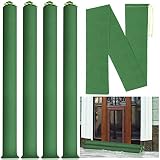
- Thickened Canvas Adopted: the sand bag for flooding is made of thickened canvas with a thickness of about 0.48 mm, strong and sturdy, with high toughness, resistant to tear and wear, waterproof and not easy to fade, and can meet the needs of long term use
- Long Size and Large Caliber: canvas sand bags measure about 6' x 6" when not filled with gravel; Longer size and larger caliber can hold more gravel for better water and flood protection
- Elastic Band: the opening of tube sandbag adopts the design of binding band, which is convenient and flexible, after sand filling, you only need to tighten the elastic band to keep sand away from leakage, which is practical and convenient
- Where to Use: flooding barrier can be applied in many places that need flood control, such as doors, windows, parking lots, gardens, fences, gates, sewer entrances and exits, elevator entrances and exits, garage entrances and exits, basement, which can become an effective barrier against rain, flood control and hurricane
- What You Get: you will get 4 pieces of flood control barriers in green color, adequate quantity to meet your using needs, the nice waterproof effect allows them to be applied to water, flood and hurricane protection
Warm-water pulses can also affect regional sea level temporarily. An Associated Press report dated October 3, 2026, described Kelvin waves carrying warm water and temporarily raising sea levels along the West Coast. That short-term example is distinct from the longer-term global contribution of thermal expansion.
Recommended Free Tools
Why erosion and sea-level change vary by coast
There is no single erosion rate or sea-level trend that applies everywhere. NOAA identifies sediment supply, geology, sea-level change, waves, currents, tides, and wind as factors that vary by location. Human activity can alter them too. Dredging, dams that trap sediment, harbor construction, and shoreline armoring can change how sediment moves and where it accumulates or erodes.
Rank #3
- FIBC Flood Bag Barrier - 3ft x 3ft x 40in (Ships flat for easy transport to protection site)
- Fill with sand, gravel, cement or other applicable fill material - Each compartment replaces 150 sandbags, 4,500lbs (Safe Working Load) per chamber
- 5.6oz, coated (impermeable) polypropylene fabric on 1 side and an uncoated 5.0 oz (water permeable) fabric on the other sides (allowing slow water drainage)
- Divert water away from sensitive infrastructure - Keep water contained and block significant flow - Seal sewer drains to prevent back flow or back up
- Combat coastal erosion without extensive site prep - Reinforce and heighten levees
Local relative sea level—the water level measured against the nearby land—can differ from the global average. Subsidence makes the water appear to rise faster relative to the shore; uplift can reduce relative rise. Regional currents and post-Ice-Age land rebound also affect local trends, as NOAA and USGS explain in their sea-level overview and USGS discussion of physical climate forces.
Some erosion mechanisms are especially specific to a region. In northern Alaska, for example, USGS identifies loss of sea ice and thawing permafrost as contributors to increased erosion and flooding. Those factors should not be assumed to explain erosion on other coasts.
Rank #4
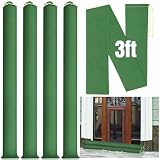
- Thickened Canvas Adopted: the sand bag for flooding is made of thickened canvas with a thickness of about 0.48 mm, strong and sturdy, with high toughness, resistant to tear and wear, waterproof and not easy to fade, and can meet the needs of long term use
- Long Size and Large Caliber: canvas sand bags measure about 3'× 6'' when not filled with gravel; Longer size and larger caliber can hold more gravel for better water and flood protection
- Elastic Band: the opening of tube sandbag adopts the design of binding band, which is convenient and flexible, after sand filling, you only need to tighten the elastic band to keep sand away from leakage, which is practical and convenient
- Where to Use: flooding barrier can be applied in many places that need flood control, such as doors, windows, parking lots, gardens, fences, gates, sewer entrances and exits, elevator entrances and exits, garage entrances and exits, basement, which can become an effective barrier against rain, flood control and hurricane
- What You Get: you will get 4 pieces of flood control barriers in green color, adequate quantity to meet your using needs, the nice waterproof effect allows them to be applied to water, flood and hurricane protection
What can be done—and what each approach trades off
Shoreline responses should match the local hazard, sediment budget, land use, laws, costs, and what is being protected. NOAA’s coastal erosion guidance and shoreline armoring overview describe approaches with different effects:
- Beach nourishment: adds sand to buffer a shore or widen a recreational beach. It can be costly, affect natural resources, and lose sand in later storms; it does not guarantee a lasting beach.
- Shoreline armoring: seawalls, breakwaters, and riprap can protect land and infrastructure, but may restrict sediment movement and limit the ability of beaches or wetlands to migrate inland as sea level rises.
- Nature-based measures: dune stabilization with fences or native vegetation, and wetland protection or restoration, can absorb or dissipate storm energy while interfering less with natural coastal processes.
- Restoration or relocation: removing structures and restoring undeveloped land can, in some places, buffer storm surge and support habitat. Protection measures still leave residual risk.
NOAA’s toolkit page gives estimates of roughly $500 million in annual U.S. coastal property losses from erosion and an average of $150 million per year in federal spending on beach nourishment and other shoreline erosion controls. The page does not state the estimate year, so these figures should not be treated as current-year totals.
Best Value
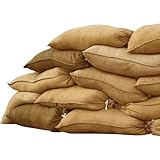
- NATURAL JUTE & BIODEGRADABLE – Made from 100% burlap (jute fiber), these eco-friendly sandbags break down naturally without plastic waste.
- TOUGH 50-LB CAPACITY – Reinforced bottom and coarse weave handle sand, gravel or soil reliably for flood barriers, erosion walls or jobsite use.
- VERSATILE MULTI-USE APPLICATIONS – Ideal for flood control, shoreline protection, landscaping, tent ballast, or DIY garden use.
- QUICK-FILL WIDE OPENING – 14″×26″ size offers easy filling; use the built-in tie string to close and secure contents fast.
- TRUSTED BY PROFESSIONALS – Chosen by government agencies, nonprofits and homeowners alike for reliable performance when it matters most.
How to interpret sea-level figures
Historical rates need their time frame attached. A 2012 USGS chapter reported global sea-level rise of 1.7 millimeters per year during the 20th century and more than 3 millimeters per year over the 20 years covered by that chapter. These are historical figures, not a statement of the current rate. The IPCC’s Sixth Assessment Report, Chapter 3, also concludes that sea-level rise increases the risk of coastal erosion and submergence.
Quick Recap
Product prices and availability are accurate as of the date/time indicated and are subject to change. Any price and availability information displayed on Amazon at the time of purchase will apply.

