
Do these 3 things before closing this tab:
1Clear out junk files and repair common Windows errors2Scan for outdated or missing drivers - takes under a minute3Repair Windows errors before they cause bigger problemsiTechGuides is reader-supported. When you buy through links on our site, we may earn an affiliate commission. As an Amazon Associate I earn from qualifying purchases. Learn more
Countries cooperate on human-centered AI through several connected mechanisms, not a single global regulator: shared OECD principles, the Global Partnership on AI (GPAI), UN governance dialogue, and practical policy guidance such as the OECD/UNESCO G7 public-sector toolkit. Together, these mechanisms support common expectations and knowledge-sharing, but they do not establish one binding worldwide AI rulebook or prove that implementation is complete.
Why does AI governance require international cooperation?
AI systems, their developers, data, and effects can cross national borders, while legal authority and public oversight remain distributed among countries and institutions. The OECD frames this as a challenge involving both cross-border opportunities and risks. Cooperation can help governments share knowledge, develop compatible approaches, and learn from one another without requiring every country to adopt identical laws.
That distinction matters: common principles can guide policy while countries retain different legal systems, priorities, and enforcement arrangements. International coordination can reduce fragmentation, but it does not automatically settle disagreements over rights, safety, accountability, or who is responsible when an AI system causes harm.
Quick wins for a faster PC:
Scan for outdated or missing drivers - takes under a minuteDriver Scan →Clear out junk files and repair common Windows errorsFree Scan →Fix the driver behind crashes, sound loss and screen glitchesFind Drivers →What do the OECD AI Principles establish?
The OECD AI Principles are an intergovernmental baseline for innovative and trustworthy AI that respects human rights and democratic values. Adopted in 2019 and updated in 2024, they are organized into five values-based principles and five recommendations. The OECD Council revised its Recommendation on Artificial Intelligence on 3 May 2024 to reflect technological and policy developments, including generative AI.
#1 Best Overall

- AI-Powered Raspberry Pi Robot Dog — PiDog: Powered by Raspberry Pi (5/4B/3B+/3B/Zero 2W), OpenClaw, and multi-LLMs like ChatGPT, Gemini, Grok, DeepSeek, Qwen & Ollama. With 12 servos, camera, gyroscope, hearing & touch sensors, PiDog can see, listen, talk, move, and interact intelligently. Supports OpenCV, MediaPipe, TTS & STT, app control, FPV & Python. A great STEM robotics gift for students, makers & tech enthusiasts—perfect for birthdays and holidays. (Raspberry Pi not included)
- Realistic Dog-like Movements: PiDog's 12 powerful servos enable 32 dog-like actions, including walking, sitting, standing, shaking its head, wagging its tail, and performing playful tricks, closely mimicking a real dog and providing an engaging experience. This is an AI development robot product designed for engineers, suitable for ages 15 and above
- Rich Sensor Suite for Interactive Experiences: PiDog features ultrasonic, touch, gyroscope, sound, camera, speaker and microphone. These provide it with advanced hearing, vision, and touch, enabling it to see, detect obstacles, respond to touch, and recognize sounds, making interactions highly engaging
- AI-Powered Interactions with OpenClaw & Multi-LLMs. PiDog combines voice, vision, and gesture recognition for immersive AI experiences. Powered by OpenClaw and multi-LLMs like ChatGPT, Gemini, Grok, DeepSeek, Qwen, Doubao, and Ollama (local LLMs), it can understand questions, respond naturally through TTS & STT, recognize math problems, interpret hand gestures, and hold smart conversations. OpenClaw also enables customizable AI behaviors and personalized robotics development, helping users create their own intelligent robotic companion
- Comprehensive Learning Resources and Support: PiDog offers detailed online documentation, video tutorials, prompt technical support, and an active forum community, ensuring beginners can easily complete all projects and enjoy a great experience
The OECD describes the principles as the first intergovernmental standard on AI. That makes them a significant point of reference for cooperation, but an intergovernmental recommendation is not the same thing as a treaty or a globally binding law. Countries still need to translate shared guidance into their own laws, institutions, and public-sector practices.
What does international cooperation mean in practice?
The OECD recommendation describes cooperation as more than agreeing on broad values. Its international-cooperation provision calls on governments to work together in the OECD and other global and regional forums. It identifies three practical forms of work:
- Share knowledge: exchange information and experience about AI, as appropriate, through international and regional forums.
- Support open, cross-sector work: encourage international, multi-stakeholder initiatives that involve relevant sectors and are open to participation.
- Improve comparability: develop internationally comparable indicators for AI research, development, and deployment.
These activities can make policy discussion more informed and help governments compare developments. Comparable indicators, for example, are useful only if countries measure sufficiently similar things; the recommendation establishes a direction for cooperation, not proof that a complete, universally adopted measurement system already exists.
Rank #2

- Optimized AI Arm Kit for LeRobot & Hugging Face Projects – The SO-ARM101 is an upgraded low-cost robotic arm servo motor kit designed for AI robotics enthusiasts and developers. Fully compatible with LeRobot and Hugging Face frameworks, it supports imitation learning and reinforcement learning, making it ideal for real-world robotics applications. (3D-printed parts not included.)
- Enhanced Wiring & Performance – Compared to the SO-ARM100, the SO-ARM101 features improved wiring to prevent disconnection at joint 3 and eliminates range-of-motion limitations. The leader arm uses optimized gear ratio motors for smoother performance—no external gearboxes required.
- Real-Time Leader-Follower Functionality – New real-time tracking allows the leader arm to follow the follower arm, enabling human intervention and correction during reinforcement learning (RL) training. Perfect for hands-on AI robotics development and research.
- Open-Source, DIY-Friendly & Nvidia-Compatible – Developed by TheRobotStudio, this open-source AI Arm kit integrates seamlessly with the LeRobot platform, offering PyTorch-based datasets, simulation, training, and deployment tools. Fully compatible with Nvidia Jetson edge devices, including reComputer Mini J4012 Orin NX 16 GB.
- Comprehensive Learning Resources – Includes detailed open-source assembly and calibration guides, testing tutorials, and deployment instructions. From wiring to AI training, get everything you need to start building, teaching, and optimizing your robotic arm for grasping and placing tasks.
How does GPAI connect principles with practical work?
The Global Partnership on Artificial Intelligence is an OECD-integrated partnership that brings OECD members and GPAI countries together to advance implementation of the OECD Recommendation on AI. The OECD presents it as a response to AI’s cross-border opportunities and risks, as well as to governance initiatives that can overlap or diverge.
GPAI is therefore a coordinating partnership, not a world regulator. Its role sits between shared principles and implementation-oriented collaboration: it can bring participating countries and partners together around practical work, but that function should not be confused with the authority to impose a uniform rule on countries that have not adopted it.
What is the UN Global Dialogue on AI Governance meant to do?
The UN High-level Advisory Body’s 2024 report, Governing AI for Humanity, urges the UN to lay the foundations for an inclusive, distributed architecture for AI governance. The report proposes seven recommendations to address gaps in current arrangements. These are proposals for how governance could be strengthened, not evidence that a new global AI authority has already been established.
Rank #3
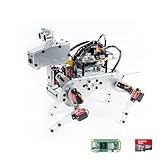
- Raspberry Pi AI Robot: powered by Raspberry Pi (5/4B/3B+/3B/Zero 2W), features 12 servos and sensors for vision, hearing, and touch. Integrated with ChatGPT-4o, it responds to complex queries. With app control and FPV, users can manage and see its view in real-time. It supports Python programming
- Realistic Movements: 12 powerful servos enable 32 actions, including walking, sitting, standing, shaking its head, wagging its tail, and performing playful tricks, closely mimicking a real and providing an engaging experience
- Rich Sensor Suite for Interactive Experiences: features ultrasonic, touch, gyroscope, sound, camera, speaker and microphone. These provide it with advanced hearing, vision, and touch, enabling it to see, detect obstacles, respond to touch, and recognize sounds, making interactions highly engaging
- Engaging Interactions with ChatGPT-4o: with ChatGPT-4o enables voice interactions and visual recognition, making it smarter and more responsive. Users can have natural conversations, solve math problems via the camera, and interpret gestures, creating diverse and fun interactions
- Comprehensive Learning Resources and Support: offers detailed online documentation, video tutorials, prompt technical support, and an active forum community, ensuring beginners can easily complete all projects and enjoy a great experience
The UN Global Dialogue on AI Governance builds on that report and the Global Digital Compact. Its FAQ describes a process that connects work by UN entities, Member States, international organizations, regional bodies, and other organizations. The dialogue’s value is in convening and linking existing efforts; participation in a dialogue does not itself create binding obligations or ensure that countries have equal influence.
Free tools Windows power users keep installed
One-click scans. No signup required.
How do international principles reach public policy?
The OECD/UNESCO G7 Toolkit for Artificial Intelligence in the Public Sector illustrates one route from high-level principles to operational guidance. Published in 2024, it is designed for policymakers and public-sector leaders and translates trustworthy-AI principles into actionable policy. Its material includes public-sector use cases, potential benefits, implementation challenges, and policy responses.
A toolkit can help officials reason through how principles apply to government use, but it is guidance rather than a substitute for legislation, procurement controls, technical assessment, or public accountability. Its practical value depends on how agencies use it and whether they have the expertise and authority to act on what it recommends.
Rank #4
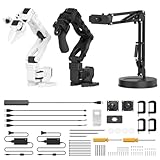
- 【End-to-End Imitation Learning】Hiwonder SO-ARM101 robot arm is an embodied intelligent hardware platform compatible with the Lerobot open-source framework. It provides developers with streamlined access to shared code, templates, and pre-trained models to explore the latest advancements in AI research.
- 【Dual-Camera Vision System】Equipped with both a gripper-mounted camera and an external camera, the system supports both precise manipulation and environmental awareness for accurate imitation learning.
- 【Hiwonder High-Performance Bus Servos】Featuring 12 high-torque bus servo motors with magnetic feedback, the Hiwonder SO-Arm101 robotic arm delivers smooth, stable motion, eliminating issues like power deficiency and jitter.
- 【Professional Control & Debugging】Integrated with the Hiwonder BusLinker V3.0 debugging board, the system supports servo scanning, real-time status monitoring, and trajectory control. The professional PC software simplifies device calibration and debugging, making it accessible for both researchers and hobbyists.
- 【Open-Source Compatibility】The SO-ARM101 robotic arm is designed to be fully compatible with the LeRobot open-source project. We acknowledge the contributions of the open-source community; all trademarks and copyrights belong to their respective owners.
How do the OECD and UN tracks differ?
The OECD and UN mechanisms are complementary rather than competing alternatives. The OECD materials emphasize a shared recommendation and partnership-based implementation; the UN materials emphasize proposals for an inclusive governance architecture and a dialogue connecting existing processes.
| Aspect | OECD principles and GPAI | UN report and Global Dialogue |
|---|---|---|
| Main function | Shared principles and recommendations, with a partnership advancing implementation. | Recommendations for governance architecture and an inclusive dialogue linking existing work. |
| Cooperation method | Knowledge-sharing, open multi-stakeholder initiatives, comparable indicators, and partnership work. | Global convening that builds on the Global Digital Compact and the High-level Advisory Body report. |
| Implementation signal in the cited material | The 2024 OECD/UNESCO toolkit provides public-sector use cases and policy guidance. | The UN FAQ describes the dialogue and its institutional foundations; the cited material does not establish completed implementation outcomes. |
| What the mechanism does not establish | The recommendation and partnership are not a universal regulator or proof of consistent implementation. | The proposed architecture and dialogue are not evidence of a binding global regulator. |
What can policy-initiative counts tell us—and what can’t they?
The OECD’s Digital Economy Outlook 2024, Volume 1 reports that the OECD.AI Policy Observatory documented more than 1,000 AI-related policy initiatives across 70 jurisdictions in 2024. This is evidence of substantial policy activity recorded by the Observatory, not a scorecard of results.
The Tool Desk
Outbyte Driver Updater FREEScan for outdated or missing drivers - takes under a minuteDriver Scan →Outbyte PC Repair FREERepair Windows errors before they cause bigger problemsFix Now →The count does not establish that those initiatives are effective, consistently enforced, inclusive, or representative of every region. Nor does the number alone show that countries have converged on the same rules. Measuring progress requires looking beyond the existence of policies to how they are implemented and what outcomes they produce.
What should readers conclude about global cooperation?
International cooperation on human-centered AI is best understood as a network of mechanisms with different jobs: OECD principles provide a shared baseline; OECD cooperation provisions encourage knowledge exchange, open initiatives, and comparable measurement; GPAI supports implementation-oriented partnership; and the UN track seeks broader dialogue and a more inclusive governance architecture. Practical resources such as the OECD/UNESCO G7 Toolkit help make those principles usable in public-sector settings.
The available official material establishes that these mechanisms exist and describes their intended functions. It does not establish a single global regulator, a completed worldwide governance system, or demonstrated outcomes across all participating jurisdictions. The central test is whether shared principles and dialogue lead to accountable, effective policy in practice.
Quick Recap
Product prices and availability are accurate as of the date/time indicated and are subject to change. Any price and availability information displayed on Amazon at the time of purchase will apply.

