
iTechGuides is reader-supported. When you buy through links on our site, we may earn an affiliate commission. As an Amazon Associate I earn from qualifying purchases. Learn more
An in-house voice AI system can make callers hear a response sooner by routing each turn before retrieval, streaming the language model’s output into text-to-speech, and keeping service connections warm. In a September 11, 2026 DEV Community case study, software engineer Mehar Aziz reports reducing time-to-first-audio from roughly nine seconds to about 1.5 seconds on a typical warm knowledge question. That is one implementation’s account—not an independently validated benchmark—and it measures the start of spoken output, not completion of the answer.
What the 1.5-second result measures
Time-to-first-audio is the interval from a caller’s turn to the moment they hear the first part of the assistant’s reply. It does not mean the whole answer is ready or spoken in 1.5 seconds. Aziz’s reported figure applies to a typical warm knowledge turn: retrieval context is cached or already available, the language model streams its response, and text-to-speech starts after the first complete sentence is ready. The account does not provide a controlled test protocol, sample size, latency percentiles, or independent validation, so treat both the roughly nine-second initial delay and the roughly 1.5-second result as author-reported figures for that system (Mehar Aziz’s DEV Community case study, September 11, 2026).
The result should not be generalized to every caller turn, a cold tool-dependent request, or total answer completion. The author also reports query embedding taking roughly 10–30 milliseconds after moving it on-box; that is one component timing, not a complete latency budget.
Do these 3 things before closing this tab:
1Fix the driver behind crashes, sound loss and screen glitches2Repair Windows errors before they cause bigger problems3Scan for outdated or missing drivers - takes under a minuteHow the in-house voice AI system is assembled
Aziz’s project began with a Vapi integration for automated onboarding calls. Requests for more customization, particularly a more expressive voice, prompted direct integration with Cartesia and eventually a move toward owning more of the platform layer. The case study describes Twilio for telephony, Deepgram for speech-to-text, Cartesia for text-to-speech and voice generation, and an in-house server coordinating the flow with a language model.
#1 Best Overall

- Stay present in every scenario: Every conversation is covered, in person, on calls, and online. 4 MEMS + 1 VPU microphones with AI beamforming capture every voice across the room. Smart Dual-Mode Recording switches automatically between phone calls and in-person. The free Plaud Desktop captures online meetings without a bot
- Walk out of every meeting with notes ready to act on: Plaud Intelligence transcribes in 112 languages with speaker labels and turns each recording into action items, decisions, and follow-ups, structured and ready to use. Choose from 10,000+ customizable templates tailored to your role and industry
- AI summary ready before you reach your desk: Auto Transfer moves each recording to the Plaud app automatically, and AutoFlow transcribes and summarizes so your notes are ready before you are back at your desk. Upgrade anytime to Pro (1,200 min/mo) or Unlimited
- Access your AI workspace anywhere: One connected workspace across Plaud Desktop, Plaud Web, and the Plaud mobile app, so your conversations and finished work follow you everywhere
- Your conversations stay private and yours: Compliant with ISO 27001, ISO 27701, SOC 2, HIPAA, GDPR, and EN 18031, with zero data used to train AI models. Trusted by 2.5M+ professionals, including legal, medical, and business professionals handling sensitive information
On an incoming call, Twilio streams audio in both directions to the voice server over WebSockets. The server forwards caller audio for transcription, routes the resulting text, optionally retrieves company-specific information or calls a backend tool, and supplies relevant context to the language model. Generated speech then travels through Cartesia and Twilio to the caller. For company knowledge, the implementation stores document chunks and embeddings in Postgres with pgvector, associated with an assistant.
Why the original pipeline took longer
The initial flow performed most work in sequence: wait for the final transcript, create a query embedding, search a vector database, wait for the complete language-model response, send that response to text-to-speech, and only then start playback. Each stage could add waiting time before the caller heard anything. Aziz says this sequence produced roughly nine seconds of silence on a typical company-knowledge question in the implementation.
The redesign focused on overlapping independent work and skipping work a turn did not need. Instead of treating every utterance as a document-search request, the server first decides whether it is small talk, a knowledge question, or a tool request. When knowledge retrieval is needed, streaming lets speech generation begin before the language model has finished producing the entire answer.
Rank #2
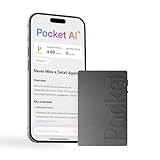
- YOUR AI PERSONAL ASSISTANT FOR EVERYDAY PRODUCTIVITY: More than a voice recorder, Pocket works as your AI personal assistant to capture, transcribe, and summarize meetings, calls, and ideas instantly. Core features are included out of the box, with optional advanced tools available for power users.
- ONE-TAP RECORDING FOR REAL-LIFE MOMENTS: Capture meetings, phone calls, and in-person conversations instantly with a simple tap, no typing, no interruptions, just effortless note-taking anywhere you go.
- SMART AI INSIGHTS & ORGANIZATION: Pocket automatically turns recordings into clear summaries, key action items and structured conversation maps so you can quickly review what matters without digging through audio.
- TURN CONVERSATIONS INTO ACTION WITH “ASK POCKET”: Don’t just record, understand. Instantly ask questions across your meetings, extract key insights and generate next steps in seconds. All grounded in your recordings, so answers stay accurate and reliable.
- MAGSAFE COMPATIBLE FOR SEAMLESS USE: Easily attach Pocket to your iPhone or other MagSafe compatible devices for convenient, hands-free recording on the go. Perfect for capturing meetings, calls, and ideas without needing to hold your device.
Changes that reduced the wait to first audio
Route the turn before searching
A fast router separates greetings and acknowledgements from knowledge questions and backend actions. A greeting does not need a vector search, and an appointment request should follow a tool path rather than automatically querying company documents. Retrieval becomes a conditional branch instead of a default step.
Stream complete sentences into speech
Once the necessary context is available, the language model streams its answer. The server buffers the output until it has a complete sentence, then sends that sentence to Cartesia while the model continues generating. The caller can begin hearing a response without waiting for the entire answer to be composed.
This approach requires care: the first spoken sentence may be incomplete or later need qualification. The case study describes keeping responses short and applying retrieval-confidence thresholds to reduce the chance of speaking weakly supported information.
Rank #3
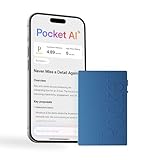
- YOUR AI PERSONAL ASSISTANT FOR EVERYDAY PRODUCTIVITY: More than a voice recorder, Pocket works as your AI personal assistant to capture, transcribe, and summarize meetings, calls, and ideas instantly. Core features are included out of the box, with optional advanced tools available for power users.
- ONE-TAP RECORDING FOR REAL-LIFE MOMENTS: Capture meetings, phone calls, and in-person conversations instantly with a simple tap, no typing, no interruptions, just effortless note-taking anywhere you go.
- SMART AI INSIGHTS & ORGANIZATION: Pocket automatically turns recordings into clear summaries, key action items and structured conversation maps so you can quickly review what matters without digging through audio.
- TURN CONVERSATIONS INTO ACTION WITH “ASK POCKET”: Don’t just record, understand. Instantly ask questions across your meetings, extract key insights and generate next steps in seconds. All grounded in your recordings, so answers stay accurate and reliable.
- MAGSAFE COMPATIBLE FOR SEAMLESS USE: Easily attach Pocket to your iPhone or other MagSafe compatible devices for convenient, hands-free recording on the go. Perfect for capturing meetings, calls, and ideas without needing to hold your device.
Keep service connections ready
The implementation reuses language-model sessions, maintains a persistent Cartesia WebSocket during a call, and keeps warm sockets available. The goal is to avoid paying the full connection setup delay when the caller is waiting for the assistant to begin speaking.
Free tools Windows power users keep installed
One-click scans. No signup required.
Prepare query work before the turn ends
Where possible, partial transcripts are used to create a query embedding speculatively before end-of-turn confirmation. Aziz also describes removing filler words for caching and moving query embedding on-box. Local embeddings must stay aligned with the embeddings used during document ingestion; otherwise, vector search can become unreliable.
Keep retrieval small and relevant
The live answering path uses a similarity threshold and a small amount of retrieved context, with a faster model where appropriate. The author’s stated preference is to acknowledge missing detail or transfer to a person rather than force weak retrieval into a slow or potentially incorrect answer. Query-rewriting heuristics can help, but they need maintenance and may not generalize to every phrasing.
Rank #4
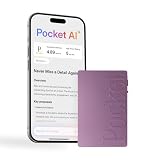
- YOUR AI PERSONAL ASSISTANT FOR EVERYDAY PRODUCTIVITY: More than a voice recorder, Pocket works as your AI personal assistant to capture, transcribe, and summarize meetings, calls, and ideas instantly. Core features are included out of the box, with optional advanced tools available for power users.
- ONE-TAP RECORDING FOR REAL-LIFE MOMENTS: Capture meetings, phone calls, and in-person conversations instantly with a simple tap, no typing, no interruptions, just effortless note-taking anywhere you go.
- SMART AI INSIGHTS & ORGANIZATION: Pocket automatically turns recordings into clear summaries, key action items and structured conversation maps so you can quickly review what matters without digging through audio.
- TURN CONVERSATIONS INTO ACTION WITH “ASK POCKET”: Don’t just record, understand. Instantly ask questions across your meetings, extract key insights and generate next steps in seconds. All grounded in your recordings, so answers stay accurate and reliable.
- MAGSAFE COMPATIBLE FOR SEAMLESS USE: Easily attach Pocket to your iPhone or other MagSafe compatible devices for convenient, hands-free recording on the go. Perfect for capturing meetings, calls, and ideas without needing to hold your device.
Move document preparation out of the call
Parsing documents, splitting them into chunks, generating their embeddings, and storing them happen before a live call. The time-sensitive path then needs only to create or retrieve the query embedding, search the vector store, assemble a concise context block, and stream a response.
Make conversational behavior part of the real-time loop
A production voice system must do more than pass audio through a model. The case study describes end-of-turn detection, eager handling of turns, cancellation when a caller interrupts, distinguishing a backchannel from a true barge-in, tool calls, transfers, and short filler speech while backend work is underway. These behaviors affect whether a fast response feels natural and whether the system can recover when a caller changes direction.
What’s actually slowing this PC down?
Pick the symptom - the matching free tool is one click away.
Why appointment booking can take longer
A warm knowledge question and a cold appointment request are different workloads. Booking may require checking availability, confirming details, calling backend services, and presenting options. The case study does not claim a 1.5-second time-to-first-audio for that path. Even if the assistant can speak a brief acknowledgement quickly, completing the task still depends on the external action and the information the caller must provide.
Best Value

- AI-POWERED TRANSCRIPTION & SUMMARIES: Plaud Note Pro is your professional voice transcriber, delivering high-accuracy transcription in 112 languages with auto speaker labels. Powered by top AI models and thousands of templates, Note Pro instantly creates structured summaries, mind maps, To-Do lists, and proposals tailored to your role and industry
- ENHANCED CONTEXT WITH MULTIMODAL INPUT: Capture audio, type notes, add images, and press to highlight key moments for richer context. During recording, instantly mark key moments with a single button press. Simultaneously enrich your audio by snapping photos of important documents or typing in ideas
- CHAT WITH YOUR RECORDINGS USING "ASK Plaud": Unlock deeper insights with this interactive AI. Ask questions, extract key points, draft emails, and get next-step suggestions—all grounded in your original audio for reliable, ready-to-use answers
- INTELLIGENT RECORDING WITH AI DIRECTIONAL AUDIO: Enjoy seamless, intelligent recording with Plaud Note Pro. Its AI automatically switches between call and meeting modes while recording, while directional audio and real-time spatial awareness minimize noise to capture voices with crystal clarity
- Everything Included: Includes Plaud Note Pro, magnetic case, magnetic ring, charging cable, and a free Starter Plan with 300 transcription minutes per month. Upgrade anytime in the Plaud app to Pro Plan (1,200 min/mo) or Unlimited Plan(Up to 24 hours of transcription per user per day)
What an in-house system makes your team responsible for
Owning the orchestration layer brings control over routing, context, voice behavior, and streaming, but it also shifts operational responsibility to the team. A managed platform may absorb some of the complexity; a custom system must handle the call’s edge cases and failure paths itself.
- Turn detection, interruption cancellation, and backchannel handling.
- Transfers, tool calls, and recovery when a backend service is slow or unavailable.
- Connection reuse and reconnection across telephony, speech recognition, language generation, and speech generation.
- Guardrails, recordings, transcripts, and the policies that govern how call data is handled.
- Retrieval quality, embedding consistency, and decisions about when to answer, ask for clarification, or hand off to a person.
That ownership is the central trade-off: latency and customization may improve, but the team is also responsible for the orchestration loop that makes the call dependable. The case study describes a cost-estimation exercise but gives no prices or totals, so it does not establish that a custom stack is cheaper.
How to evaluate a managed or custom voice AI approach
Compare approaches with the same workload and measurement boundaries. A first-audio result on a warm knowledge question should not be compared with end-to-end completion for a cold appointment booking. Assess:
The Tool Desk
Outbyte Driver Updater FREEFix the driver behind crashes, sound loss and screen glitchesFind Drivers →Outbyte PC Repair FREERepair Windows errors before they cause bigger problemsFix Now →Quick Recap
- Customization control over routing, voice, tools, and conversational behavior.
- Time-to-first-audio for the same caller turn, including warm and cold paths.
- End-to-end answer or task completion time, measured separately from first audio.
- Integration and operating effort, including ownership of call edge cases and guardrails.
- Total cost at the team’s actual traffic and staffing level; the case study provides no cost figures for either approach.
Product prices and availability are accurate as of the date/time indicated and are subject to change. Any price and availability information displayed on Amazon at the time of purchase will apply.

