
What’s actually slowing this PC down?
Pick the symptom - the matching free tool is one click away.
iTechGuides is reader-supported. When you buy through links on our site, we may earn an affiliate commission. As an Amazon Associate I earn from qualifying purchases. Learn more
A molecular artificial enzyme called Apt–Tpy(Fe) was designed to favor crystal violet (CV) over similar substrate molecules. Its design pairs a CV-binding aptamer with a catalytic site, giving the catalyst a recognition component as well as a component that drives a reaction. The 2026 laboratory study reports increased catalytic activity toward CV and suppression of activity toward other substrate analogues—not a commercially available or deployed enzyme.
What is Apt–Tpy(Fe)?
Yanjing Ke, Xindi Li, Wenhui Shi, Yuze Han, Xin Peng, and Mengfan Wang reported Apt–Tpy(Fe), a molecular artificial enzyme made by covalently linking the catalytic site Tpy(Fe) to an aptamer that binds crystal violet. An aptamer is a molecule selected for its ability to bind a target; here, it provides a specific binding site for CV alongside the catalyst’s reaction-driving site. The authors’ paper describes the resulting catalyst as showing enhanced catalytic activity toward CV and pronounced suppression toward other substrate analogues.
“Artificial enzyme” here means an enzyme-like catalyst, not a biological enzyme. The work concerns a laboratory catalyst; the paper does not establish commercial availability or consumer, clinical, or industrial deployment.
Quick wins for a faster PC:
Fix the driver behind crashes, sound loss and screen glitchesFind Drivers →Clear out junk files and repair common Windows errorsFree Scan →Scan for outdated or missing drivers - takes under a minuteDriver Scan →How can it distinguish similar molecules?
The design combines recognition and catalysis: the aptamer binds CV, while Tpy(Fe) supplies the catalytic site. In the authors’ interpretation, two features help determine performance: how strongly the aptamer binds CV and how the catalytic site is oriented relative to the substrate-binding site. They say they investigated this structure–function relationship with computer simulations. This is the paper’s account of Apt–Tpy(Fe), not a universal explanation for every artificial enzyme.
#1 Best Overall
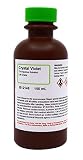
- 100mL bottle of crystal violet solution
- Lab-grade material for lab and research use
- Used as a staining agent
- Perfect for use in any microbiology lab or classroom
- Includes directions for safe storage and SDS is available on product page and by request
The abstract reports a preference for CV over other substrate analogues, but gives no numerical selectivity ratio or focal reaction-performance figure. The reported finding is therefore qualitative in the abstract: stronger catalytic activity toward CV and suppression toward the analogues.
Why selectivity is a challenge for artificial enzymes
Artificial-enzyme mimetics can reproduce aspects of enzyme-like catalysis, but getting them to distinguish between structurally similar substrates remains a challenge. A 2024 review surveys selectivity strategies across several different kinds of systems, including molecularly imprinted polymers, nanozymes, and DNAzymes. These approaches are not interchangeable: they use different materials and recognition designs, and their usefulness depends on the target reaction and application. The review’s PubMed record and journal record provide broader context.
Rank #2

- 1 fl oz (30mL) bottle of crystal violet
- Chemical for general purpose lab and educational use
- Used as a staining agent
- Perfect for use in any microbiology lab or classroom
- Includes directions for safe storage, and SDS is available on product page and by request
Separate molecular-imprinting studies show other ways to target selectivity. One reported a synthetic esterase that hydrolyzed nonactivated aryl esters at pH 7 and distinguished subtle structural changes, including a two-carbon increase in an acyl chain or a one-position shift of a remote methyl group. Another reported selective benzylation of 4-nitrophenol under neutral conditions. These are distinct catalysts and reactions, not evidence about Apt–Tpy(Fe). See the studies on synthetic esterase selectivity and selective benzylation.
The Tool Desk
Outbyte PC Repair FREEClear out junk files and repair common Windows errorsFree Scan →Outbyte Driver Updater FREEScan for outdated or missing drivers - takes under a minuteDriver Scan →What the study does—and does not—show
- It shows: a molecular artificial enzyme was built by linking a CV-binding aptamer to a catalytic site, and the authors report preferential catalytic behavior toward CV compared with other substrate analogues.
- It suggests: aptamer binding affinity and the relative orientation of the binding and catalytic sites matter to this catalyst’s performance, based on the authors’ simulations and interpretation.
- It does not establish: a numerical selectivity advantage, practical readiness, or commercial, clinical, or industrial use. No such performance figure for Apt–Tpy(Fe) is provided in the reviewed abstract.
Numbers from other artificial-enzyme research cannot fill that gap. For example, a separate 2022 protein–polymer catalyst study reported 94% conversion, 95/5 diastereoselectivity, and 98% enantiomeric excess for an aqueous asymmetric aldol reaction. Those results belong to that catalyst and reaction, not to Apt–Tpy(Fe). The ACS paper also reports reuse more than four times without significant loss of reactivity, again for its own system.
Rank #3

- APPLICATIONS || Differential staining techniques used to determine if bacteria are Gram-positive or Gram-negative
- INCLUDED CHEMICALS || 4x25mL 95% Denatured Ethyl Alcohol, 1x30mL Crystal Violet Ammonium Oxalate, 1x30mL Safranin O 1.0% aqueous solution, 1x30mL Potassium Iodide solution
- INSTRUCTIONS || Includes comprehensive instruction manual on Gram staining procedure
- SAFETY & STORAGE || Includes GHS-compliant labels printed with safety and storage information
- MADE IN THE USA || The Curated Chemical Collection by Innovating Science is comprised of high quality chemicals manufactured in the United States
Publication details
The Royal Society of Chemistry record says the Apt–Tpy(Fe) paper was submitted on 10 March 2026, accepted on 2 June 2026, and first published online on 3 June 2026. PubMed lists an article date of 1 July 2026 and the issue citation as Organic & Biomolecular Chemistry 24(25), 5302–5307. These are differently labeled publication and indexing dates. The DOI is 10.1039/D6OB00401F. See the Royal Society of Chemistry record and PubMed record.
Quick Recap
Best Value

- LAB GRADE CRYSTAL VIOLET || Cationic triphenylmethane dye in a 25 g quantity, widely used in microbiology, biological staining, and analytical chemistry.
- GRAM STAINING & BACTERIAL IDENTIFICATION || Binds to peptidoglycan in bacterial cell walls, allowing differentiation between Gram-positive and Gram-negative bacteria.
- HISTOLOGY & CELL MORPHOLOGY STUDIES || Stains nuclei and cellular structures in biological samples, aiding in tissue histology and nucleic acid visualization.
- pH INDICATOR & ANALYTICAL CHEMISTRY || Used in acid-base titrations and solution analysis, displaying color changes based on pH conditions.
- NUCLEIC ACID & CYTOTOXICITY RESEARCH || Applied in DNA staining for agarose gel electrophoresis and cell proliferation assays in drug testing and cancer research.
Rank #4

- Comprehensive Stain Set: Innovating Science's bacteria stain set includes five distinct solutions, providing diverse options for preparing microscope slides. This kit eliminates the need to purchase individual stains, streamlining your laboratory workflow with efficiency and ease
- Safety Documentation Provided: Every stain in this set comes with its own safety data sheet, ensuring that you have all necessary documentation for safe laboratory handling. This allows for precise and informed use of the chemicals included
- Simplified Transport Handling: The kit ships under the DOT small quantity exemption, making it suitable for domestic highway or rail transport. This feature supports straightforward and compliant handling during ground shipping, enhancing logistical convenience
- Transparent Hazard Warnings: This set includes a California Proposition 65 warning, ensuring clear disclosure of potential exposure risks. This upfront transparency helps maintain informed laboratory practices
- Laboratory-Grade Reagents: Each solution is contained in a 30ml bottle, designed specifically for laboratory use, not for medical or household purposes. The set is ideal for research settings, aligning with high standards of scientific rigor
Product prices and availability are accurate as of the date/time indicated and are subject to change. Any price and availability information displayed on Amazon at the time of purchase will apply.

