
iTechGuides is reader-supported. When you buy through links on our site, we may earn an affiliate commission. As an Amazon Associate I earn from qualifying purchases. Learn more
A music memory box pairs familiar songs with photographs or keepsakes to invite reminiscence and conversation. Familiar music can cue autobiographical memories for some people living with dementia, but a song may not prompt a memory every time—and this activity does not treat dementia or reliably restore memory. The aim is to share a comfortable moment, not to test what someone remembers.
What a music memory box is—and what it is not
A music memory box is an informal activity, not an established or standardized dementia treatment. It can be a physical box of photographs and keepsakes used alongside a playlist, or simply a few familiar songs played while looking at meaningful objects. The Alzheimer’s Association describes reminiscence as using prompts such as photos, keepsakes, music, familiar scents, or places to encourage pleasant memories and conversation. Its guidance emphasizes that “the goal is connection, not testing memory.”
| # | Preview | Product | Price | |
|---|---|---|---|---|
| 1 |

|
iGuerburn Simple Music Player for Dementia Seniors | $119.99 | Buy on Amazon |
| 2 |

|
iGuerburn Simple Music Player for Dementia Seniors | $119.99 | Buy on Amazon |
| 3 |

|
VigorKeeper Simple Music Player for Dementia Alzheimer's Seniors | $119.99 | Buy on Amazon |
| 4 |
|
VigorKeeper Simple Music Player for Dementia Alzheimer's Seniors | $119.99 | Buy on Amazon |
| 5 |

|
iGuerburn Simple Music Player | $119.99 | Buy on Amazon |
Structured reminiscence therapy is different: it is a more formal approach that may be led by trained professionals and can include music, storytelling, art, or familiar objects. Cochrane describes reminiscence therapy as discussing memories and past experiences with prompts such as photographs or music, with formats and settings that vary. Alzheimer’s Association reminiscence guidance · Cochrane review of reminiscence therapy
Do these 3 things before closing this tab:
1Scan for outdated or missing drivers - takes under a minute2Repair Windows errors before they cause bigger problems3Fix the driver behind crashes, sound loss and screen glitchesCan familiar music help someone with dementia remember the past?
It can sometimes provide a useful cue, but responses are personal. A 2022 systematic review covering 15 clinical studies found that familiar music was more likely to evoke autobiographical memories. In studies of people with Alzheimer’s disease, music-cued autobiographical memories showed a relative advantage over picture-cued memories. Across the conditions reviewed, music-evoked memories were generally specific and retrieved quickly, and appeared relatively preserved, especially in Alzheimer’s disease.
#1 Best Overall
- Elderly-friendly: The iGuerburn simple music player is designed with large button and hidden volume knob. Elderly can turn the music box on and off easily. Nothing complicated. Listen to music anytime.
- Big size: The easy to use Mp3 player's size is at 9.4 x 4.9 x 4.7 inches, is retro as desktop radio. It's simplicity of operation for seniors with dementia, alzheimer’s, blind, memory loss, low vision, visually impaired, disabilities patients. Recommend as gifts to every grandparent and caregiver.
- Straight out of box: No battery required. Just drag the tracks to the TF card and plug in outlet to play. And the mp3 player for seniors fetures memory playback, it will start from where it was at when it was last turned off. No worry about the song starting over from the beginning.
- Large capacity: This dementia radio speaker has 32GB memory capacity, nearly 5000 songs you can download. 1 minute can upload to hundred songs! Listen to music to relieve the anxiety in their older life.
- Some DRM‑encrypted audio files from paid streaming subscription services are NOT supported. Please use DRM‑free MP3/WMA/FLAC/M4A/WAV audio files.
These findings describe patterns across clinical studies; they do not mean that a particular song will bring back a particular memory, or that a home memory box changes the course of dementia. Someone may enjoy a song without recalling a story, remember something different from what family expects, or not want to hear it at all. Kaiser and Berntsen’s systematic review
What the evidence says about music interventions
Research on therapeutic music programs can help set expectations, but it does not test every informal home activity or prove that a memory box itself has a clinical effect.
Rank #2
- Elderly-friendly: The iGuerburn simple music player is designed with large button and hidden volume knob. Elderly can turn the music box on and off easily. Nothing complicated. Listen to music anytime.
- Big size: The easy to use Mp3 player's size is at 9.4 x 4.9 x 4.7 inches, is retro as desktop radio. It's simplicity of operation for seniors with dementia, alzheimer’s, blind, memory loss, low vision, visually impaired, disabilities patients. Recommend as gifts to every grandparent and caregiver.
- Straight out of box: No battery required. Just drag the tracks to the TF card and plug in outlet to play. And the mp3 player for seniors fetures memory playback, it will start from where it was at when it was last turned off. No worry about the song starting over from the beginning.
- Large capacity: This dementia radio speaker has 32GB memory capacity, nearly 5000 songs or audio books you can download. 1 minute can upload to hundred songs! Listen to music to relieve the anxiety in their older life.
- What's in the box: 1×simple mp3 player; 1×32GB TF card (built in the player); 1×USB card reader; 1×US AC adapter; 1×User manual; If there is any problem of iGuerburn simple mp3 speaker, please feel free to reach us.
| Evidence | What was studied | Reported finding and limits |
|---|---|---|
| Cochrane review, published 7 March 2025 | Music-based therapeutic interventions with at least five sessions, compared with usual care or other activities | Compared with usual care, they probably improved depressive symptoms and may have improved overall behavioral problems at treatment end. Compared with other activities, they may have improved social behavior at treatment end. The review could not reach a conclusion about anxiety because certainty was very low, found no evidence of long-term effects, and noted inconsistent reporting of adverse effects. Cochrane review |
| Randomized trial, published in 2026 | Digital music intervention and conventional music therapy across the dementia care continuum; the intervention groups received 10 weeks of treatment, with two 60-minute sessions each week | Neither intervention significantly affected the trial’s primary general-cognition outcomes in primary or sensitivity analyses. Exploratory secondary results included maintenance of prompted autobiographical memory against decline in standard care for both interventions in the whole sample; the authors call for further research. The study schedule is a research protocol, not a recommended home-use dose. Trial report |
| Systematic review of group music reminiscence, 2024 | Two randomized controlled trials involving 102 participants | The review identified a possible role in symptomatic management, but substantial differences in trial design, dementia severity and subtype, and outcomes limit conclusions and clinical translation. Systematic review |
Together, these findings support offering music as a potentially meaningful activity, not presenting it as a cure or a reliable way to improve lasting cognition.
How to make a music memory box at home
- Choose a few personally meaningful songs. Start with music the person has enjoyed or encountered in their own life. A family member can suggest possibilities, but the person’s response matters more than an assumption that a song from a certain decade will be familiar.
- Pair songs with optional prompts. Add a small number of photographs or keepsakes connected to the person, such as a family picture or an object from a hobby. Music alone is also fine; there is no required box design.
- Make playback easy. Use a familiar player, a simple music player, or a speaker for a playlist, depending on what is easiest for the person and caregiver. Music players are mentioned as optional audio-visual aids in the Alzheimer’s Association’s dementia-care recommendations; no particular device has been shown to work better for this activity. Alzheimer’s Association dementia-care practice recommendations
- Invite rather than quiz. Try an open invitation such as, “Would you like to listen to this?” or “What do you think of this song?” Avoid demanding names, dates, or a correct account of the past.
- Follow the person’s lead. They can talk, sing, look at an object, listen quietly, change the song, or stop. Do not treat silence or a missing recollection as failure.
Notice comfort and change course when needed
Music and reminders can bring different feelings as well as pleasant memories. Watch for signs that the person is uncomfortable or wants the activity to end; pause, switch to something else, or put the box away. Do not insist on a song because it once mattered to them. A familiar item is an invitation, not an obligation.
Rank #3
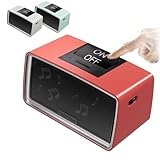
- Simple Design Music Player: Our dementia music player is super easy to use—designed to take the frustration out of complex electronics for seniors. Perfect home gift for parents/grandparents, and works great for elders with dementia, Alzheimer’s, low vision, memory loss, or hand tremors (e.g., Parkinson’s).
- One-Touch Music Player: This music player for dementia patients has an extra-large, easy-to-see ON/OFF button—one press to play music. Great for those with vision loss or shaky hands, and it always resumes playback right where it left off.
- Plug-and-Play: This senior mp3 player takes the hassle out of Bluetooth pairing, dead batteries, and WiFi troubles—just plug in the power cable. No tech skills, no pairing, no frequent charging; even seniors new to electronics can use it right out of the box.
- Loud, Clear, Crisp Sound Quality: Our simple music player for seniors features dual speakers fixing "hard-to-hear" problems for hearing-impaired seniors, delivering up to 120dB distortion-free sound—no leaning in, just easy enjoyment of music.
- Built-in 32GB TF Card: This music box for dementia patients has a built-in 32GB TF card (no extra purchase), holding over 5000 songs—plus a free card reader for easy music downloads (supports only MP3, WMA, FLAC, M4A, WAV). What’s included: 1 music player, 1 power cable, 1 card reader, 1 user manual.
The available sources do not establish an ideal box design, a particular playlist length, or a frequency or duration for an informal home activity. Keep the activity flexible and let the person’s interest and comfort guide whether to continue.
Quick Recap
Best Value
- Elderly-friendly design: The iGuerburn simple music player is designed with large button and hidden volume knob. Elderly can turn the music box on and off easily. Nothing complicated. Listen to music anytime
- Big size for easy handling: The easy to use Mp3 player's size is at 9.4 x 4.9 x 4.7 inches, is retro as desktop radio. It's simplicity of operation for seniors with memory loss, low vision, visually impaired, and disabilities patients. Recommended as gifts to every grandparent and caregiver
- Straight out of box: No battery required. Just drag the tracks to the TF card and plug in outlet to play. The mp3 player for seniors features memory playback, it will start from where it was at when it was last turned off. No worry about the song starting over from the beginning
- Large capacity storage: This radio speaker has 32GB memory capacity, nearly 5000 songs you can download. 1 minute can upload to hundred songs. Listen to music to relieve the anxiety in their older life
- Compatible audio formats: Some DRM-encrypted audio files from paid streaming subscription services are NOT supported. Please use DRM-free MP3/WMA/FLAC/M4A/WAV audio files
Rank #4
- Simple Design Music Player: Our dementia music player is super easy to use—designed to take the frustration out of complex electronics for seniors. Perfect home gift for parents/grandparents, and works great for elders with dementia, Alzheimer’s, low vision, memory loss, or hand tremors (e.g., Parkinson’s).
- One-Touch Music Player: This music player for dementia patients has an extra-large, easy-to-see ON/OFF button—one press to play music. Great for those with vision loss or shaky hands, and it always resumes playback right where it left off.
- Plug-and-Play: This senior mp3 player takes the hassle out of Bluetooth pairing, dead batteries, and WiFi troubles—just plug in the power cable. No tech skills, no pairing, no frequent charging; even seniors new to electronics can use it right out of the box.
- Loud, Clear, Crisp Sound Quality: Our simple music player for seniors features dual speakers fixing "hard-to-hear" problems for hearing-impaired seniors, delivering up to 120dB distortion-free sound—no leaning in, just easy enjoyment of music.
- Built-in 32GB TF Card: This music box for dementia patients has a built-in 32GB TF card (no extra purchase), holding over 5000 songs—plus a free card reader for easy music downloads (supports only MP3, WMA, FLAC, M4A, WAV). What’s included: 1 music player, 1 power cable, 1 card reader, 1 user manual.
Product prices and availability are accurate as of the date/time indicated and are subject to change. Any price and availability information displayed on Amazon at the time of purchase will apply.

