
iTechGuides is reader-supported. When you buy through links on our site, we may earn an affiliate commission. As an Amazon Associate I earn from qualifying purchases. Learn more
A 2015 laboratory study reported a metal-free photocatalyst that used sunlight to produce hydrogen through a two-step reaction involving hydrogen peroxide. The carbon nanodot–carbon nitride material reached 2.0% overall solar energy conversion efficiency in the reported experiment. That result was not a commercial hydrogen-production demonstration, and a frequently cited $2.30-per-kilogram estimate assumed a hypothetical improvement to 5% efficiency.
How the solar-to-hydrogen route works
In conventional photoelectrolysis, a photovoltaic cell supplies voltage to drive water splitting. The approach reported by Juan Liu and colleagues instead used a powdered photocatalyst in water: light absorbed by the material drives the chemistry. Chemistry World described this as potentially simpler, while noting that photocatalyst development had faced challenges including low efficiency, costly materials, and degradation. Those observations describe the context of the 2015 report, not a current comparison of every solar-hydrogen system.
The study combined carbon nitride (C3N4) with carbon nanodots. Its proposed reaction proceeds in two stages:
The Tool Desk
Outbyte Driver Updater FREEScan for outdated or missing drivers - takes under a minuteDriver Scan →Outbyte PC Repair FREERepair Windows errors before they cause bigger problemsFix Now →- Carbon nitride splits water. The first stage produces hydrogen and hydrogen peroxide.
- Carbon nanodots help decompose the peroxide. This produces water and oxygen, completing the overall water-splitting chemistry. The nanodots were also reported to increase light absorption.
The hydrogen-peroxide intermediate is important: this was a proposed tandem pathway, not a one-step reaction in which the catalyst simply releases hydrogen and oxygen together. The authors described their material as a metal-free carbon nanodot–carbon nitride nanocomposite for photocatalytic solar water splitting (Science paper abstract and record; Chemistry World report, February 27, 2015).
#1 Best Overall

- HANDS-ON WATER FILTRATION: Kids can build their own water filtration and distillation plant, providing a practical understanding of how clean water is produced and the science behind water purification.
- SOLAR POWER DISINFECTION: The kit teaches children how to disinfect water using solar power, promoting renewable energy concepts and demonstrating sustainable practices in water resource management.
- COMPREHENSIVE EXPERIMENTATION: Includes a detailed booklet with suggested experiments and activities, allowing for a variety of hands-on learning experiences that reinforce the principles of clean water science.
- ENVIRONMENTAL AWARENESS: Features alarming water facts that educate children about environmental issues and the importance of protecting clean water resources, fostering a sense of responsibility toward the planet.
- PERFECT FOR ALL SETTINGS: The kit includes clear instructions and all necessary materials, making it simple for children to conduct experiments safely and effectively. STEM powered learning.
What the study measured
The paper reported an overall solar energy conversion efficiency and separate quantum-efficiency values at specified light wavelengths. These are distinct metrics: the wavelength-specific values should not be read as the overall efficiency under the full solar spectrum.
| Reported result | Meaning and condition |
|---|---|
| 2.0% overall solar energy conversion efficiency | Reported by Liu and colleagues for the photocatalyst in their 2015 study. |
| 16% quantum efficiency | Measured at 420 ± 20 nm in the 2015 study. |
| 6.29% quantum efficiency | Measured at 580 ± 15 nm in the 2015 study. |
| 4.42% quantum efficiency | Measured at 600 ± 10 nm in the 2015 study. |
The reported stability result was 200 recycling runs across 200 days; the news report characterized the catalyst as showing no degradation after 200 days. This is a laboratory result under the paper’s conditions, not evidence of a commercial system’s operating life or performance outdoors (Science paper, DOI 10.1126/science.aaa3145; Chemistry World report).
Rank #2

- Observe Electrolysis in Action: Decompose water into hydrogen and oxygen using platinum-coated electrodes
- Closed and Compact Design: Reduces chemical exposure risks while requiring only minimal reagent quantities
- Durable Electrodes Included: Features corrosion-resistant platinum-coated titanium electrodes for repeated use
- Hands-On Learning: Ideal for teaching redox reactions, gas ratios, and electrochemical principles in STEM labs
- Complete Demo Kit: Includes 2 white plugs, 1 blue plug, 1 cap, and 1 pair of platinum-coated electrodes
Why the hydrogen cost figures need context
Chemistry World reported two different cost figures, neither of which is a measured production cost for a deployed plant. The researchers’ modeled estimate of $2.30 per kilogram of hydrogen assumed a catalyst optimized to achieve 5% solar conversion efficiency—higher than the study’s reported 2.0%. Separately, co-author Yeshayahu Lifshitz said, “Even at this stage, the number we get is only about $6,” referring to the then-current performance. The 2015 account does not spell out the full assumptions behind that figure, so it should be treated as an attributed historical estimate, not an independently verified or current cost.
Free tools Windows power users keep installed
One-click scans. No signup required.
The gap between the demonstrated efficiency and the assumption behind the lower estimate is consequential. The $2.30 figure describes a modeled future case, not what the reported catalyst was shown to produce at that cost (Chemistry World, February 27, 2015; Science paper excerpt).
Rank #3
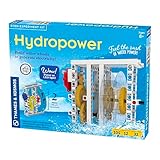
- 12 experiments and building projects
- Harness mechanical energy from water to do physical work
- Generate electricity to light an LED
- Learn the physics of water turnies
- Discover why hydropower is a promising source of energy
What the result does—and does not—establish
The study established a laboratory demonstration of a metal-free photocatalyst and reported encouraging measured efficiencies and stability under its test conditions. It did not establish that the technique became a commercial hydrogen-production process. The available reports also do not provide a current, like-for-like comparison with commercial hydrogen routes or later solar water-splitting systems.
For meaningful comparisons, keep the overall solar conversion efficiency separate from wavelength-specific quantum efficiencies, and compare stability with its test duration and conditions. Catalyst composition and material abundance also matter, as does whether a cost is an observed operating result or a model projection. In 2015, Steve Dunn of Queen Mary University of London called the material “a complete game changer”; that was his attributed opinion, not evidence of a consensus assessment or subsequent commercial adoption.
Quick Recap
Best Value
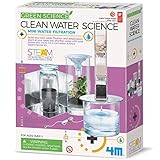
- This personal desalination kit demonstrates the scientific way to extract salt from sea water.
- The kit contains a plastic filter system, active carbon, sand, rock and filter paper.
- Perfect for young science enthusiasts, especially those with an interest in chemistry and the environment.
- Detailed instructions for use and care are included.
- Recommended for ages 8 years and up.
Rank #4

- Clear Design for Visual Observation: Crafted from transparent material, this experiment chamber allows students to directly observe gas formation and separation during the water electrolysis process.
- Dual Latex Tubes for Efficient Gas Guidance: Two separate latex tubes are included to direct hydrogen and oxygen gases with minimal leakage, supporting accurate gas identification and collection in experiments.
- Sealed System with Control Beads: Integrated glass beads help maintain an enclosed environment for gas collection. Gas can be safely released by pinching the attached latex tubing to regulate .
- Educational Tool for Demonstrating Electrolysis: This kit enables hands-on learning of chemical principles, showing how electrical energy can split water molecules into hydrogen and oxygen gases.
- Designed for Classroom Engagement: Ideal for teachers to demonstrate electrolysis procedures and for student group activities, fostering observation, inquiry, and analytical skills in a school science setting.
Product prices and availability are accurate as of the date/time indicated and are subject to change. Any price and availability information displayed on Amazon at the time of purchase will apply.
What’s actually slowing this PC down?
Pick the symptom - the matching free tool is one click away.

