
iTechGuides is reader-supported. When you buy through links on our site, we may earn an affiliate commission. As an Amazon Associate I earn from qualifying purchases. Learn more
Why did the agent avoid scaling replicas? In Garapati Janardhan swamy’s illustrative demo, it recalled that scaling had failed during a similar earlier incident, while the likely cause of the current checkout failures was a misnamed or missing configuration value. The example shows how stored incident outcomes can shape an AI-assisted recommendation—but a historical match is a lead to investigate, not proof that the same fix applies now.
What happened in the checkout example?
Swamy’s September 29, 2026 DEV Community article describes an alert reading checkout-service: requests failing shortly after a release. The agent retrieves a similar past incident, reasons over that experience alongside the current alert, and recommends rolling back and correcting a Helm value rather than increasing the replica count.
In the author’s account, scaling replicas had failed to resolve the earlier similar incident. The likely issue in the new example is a missing or misnamed environment variable introduced through configuration. The recommendation follows that remembered outcome; it does not establish that the current service was independently diagnosed or that the proposed change was executed.
How the example’s memory loop works
The article presents a cycle in which an alert prompts retrieval of prior experience, an LLM uses that context to form an operational recommendation, and the resolved incident’s post-mortem is retained as memory for future investigations.
#1 Best Overall

- Ventilation Fan: Designed to quietly ASUS GT/RT- AC5300 , cool Xboxs, CPU/ GPU, Playtations, Rokus, TVs, receivers, mondems, routers, DVRs, window fans ,network appliances, DIY aquarium cooling and other audio video electronics
- Variable Speed Control: 110V - 220V Fan power supply with speed control function, turn the knob to adjust the speed, 4V - 12V adjustable fan speed,and can turn off the fan . | Input: 100V - 240V 50/60Hz | Output: DC 3-12V 200-2000ma
- DIY Vertical Window Fan: Can both vertical and horizontal, provide efficient cooling and ventilation. Mining rigs rely on the cooling power of fans for optimal operation.Double Metal Protective, the fan is equipped with double metal protective net
- Easy to Install: Draw out air in refrigerators, provide ventilation in greenhouses, prevent amplifier overheating, and vent hot air from living room consoles like PS4. Y cable connects 2 fans, two fans can be 42cm/16.5 in far away from each other
- Dual Ball Bearing: 240mm x 240mm x 25mm / 9.45in(L) x 4.72in(W) x 1in(H) in in total. | Rated Voltage :12V | Rated Current: 0.93A at full speed | Airflow: (82CFM)x4 at 12V | Speed: 2500 RPMx4
- Receive the current alert. The agent starts with the checkout service’s post-release failures.
- Recall related incident history. It retrieves an earlier incident whose symptoms or context are similar.
- Reason over the match. The LLM considers the recalled outcome alongside the new alert rather than treating the past fix as automatically correct.
- Recommend an action. In the example, it advises rollback and correcting a Helm value, not scaling replicas.
- Retain the outcome. A post-mortem can be added so a later investigation has the incident’s resolution and context available.
The important distinction is between a memory and current evidence. A remembered incident can suggest what to inspect, such as the deployed environment variable and Helm configuration, but the on-call engineer still needs to verify the live release and service behavior before making a change.
What Hindsight contributes
The ACL 2026 system-demonstration paper describes Hindsight as a structured long-term memory system with four networks: world, experience, observation, and opinion. The separation is intended to distinguish objective facts from subjective beliefs. The paper also describes three operations: retain ingests information, recall retrieves it, and reflect reasons over memory.
Rank #2
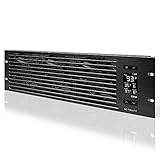
- An intelligent fan system designed for cooling audio video, DJ, server, network, and IT equipment racks.
- Protects rack-mount equipment from overheating, performance issues, and shortened lifespans.
- Programmable thermostat controller with automated speed control, alarm warnings, and backup memory.
- Premium anodized aluminum construction with CNC-machined detailing for a professional appearance.
- Size: 3U Rack Space | Design: Intake | Airflow: 60 to 300 CFM | Noise: 12 to 38 dBA | Bearings: Dual Ball
Its retrieval pipeline combines vector search, keyword matching, graph traversal, and temporal filtering, with PostgreSQL and pgvector as the backing store. This is broader than matching an alert to a text chunk by wording alone: connections, time, and the kind of remembered information can also inform retrieval. The paper describes Hindsight’s design; the DEV example does not establish that every element of that paper’s system was implemented in the prototype.
Quick wins for a faster PC:
Scan for outdated or missing drivers - takes under a minuteDriver Scan →Clear out junk files and repair common Windows errorsFree Scan →Fix the driver behind crashes, sound loss and screen glitchesFind Drivers →Why exact wording is not enough
Swamy’s fictional Northwind Payments scenario has eight services and 40 synthetic incidents spanning six failure families. The author uses the scenario to illustrate that one underlying failure can surface as different symptoms across services. Those figures describe the demo dataset, not an independently validated incident corpus or benchmark.
Rank #3

- [Adjustable] Adjustable temperature control helps ensure optimal performance for your rackmount such as network, server, music, and AV cabinets
- [Quiet and powerful] Equipped with three powerful 4” (120mm) noise control ball bearing fans capable of pumping 225 CFM of air, preventing overheating of expensive equipment
- [Optimal Airflow] This three fan cooling system will provide excellent cooling with its high-performance fans, which keep the hot air stream away from your setup with its top exhaust cool air system.
- [Compact Design] Device is standardized to mount to any 19" server rack or cabinet while taking only a single unit (1U) of space and has a wide variety of applications.
- [Programmable] Equipped with a programmable thermostat sensor controller for better temperature monitoring that will trigger fans based on your parameter configuration.
- Exhausted database pools
- Redis eviction stampedes
- Bad configuration after a release
- Expired certificates
- Kafka poison messages
- Full disks
If a retrieval system relies only on literal alert similarity, a configuration failure expressed differently by another service could be missed, while superficially similar alerts could be conflated. The example’s rationale for memory is therefore not simply “find the same words”; it is to connect a prior situation with its context, diagnosis, and outcome.
What the published numbers do—and do not—show
The Hindsight paper reports benchmark results on memory-focused tasks. These results are not measurements of Swamy’s incident-response prototype.
Rank #4

- Adjustable temperature control helps ensure optimal performance for rackmount such as network, server, music, and AV cabinets
- Noise controlled fans makes the cooling system useful for a quiet office or business space
- Compact design mounts to any 19" inch cabinet and takes up only 1 unit of space
- Simple and easy to use LCD display allows user to control temperature
- Air pumped through to the top exhaust system of the fan
| Result | What it refers to | What it does not establish |
|---|---|---|
| 83.6% LongMemEval accuracy and 83.2% LoCoMo accuracy with a 20B open-source model | Hindsight results reported by the Association for Computational Linguistics in its 2026 paper | Accuracy of the checkout incident recommendation or production incident handling |
| 91.4% LongMemEval accuracy with Gemini-3 Pro | A Hindsight paper-reported result for that model and benchmark | That Gemini-3 Pro was used in the DEV prototype, or that the prototype achieved this figure |
The DEV account reports an illustrative synthetic scenario, not independently verified live-production outcomes. It provides no evidence that the agent reduced incident duration, improved diagnostic accuracy, or safely controlled a production cluster.
Recommended Free Tools
What an on-call team should verify before acting
A historical match should narrow the investigation, not grant the agent authority to change production. In a checkout incident shortly after a release, the useful next step is to test the configuration hypothesis against the current deployment.
Best Value
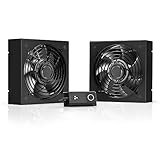
- A quiet fan kit designed for standard 19” racks, to be mounted on the roof or to replace existing fans.
- Features a speed controller utilizing PWM which can control the fan's speed without generating noise.
- Compatible with CLOUDPLATE series rack fans and can be linked to share the same programming.
- Heavy-Duty steel construction with spiral fan guards, mounting hardware, and power adapter.
- Size: Standard 120mm Rack Fans | Fans: 2 | Airflow 200 CFM | Noise: 26 dBA | Bearings: Dual Ball
- Inspect the release’s Helm values and rendered configuration for the expected environment-variable name and value.
- Check whether the failing service is actually running the affected release and whether the observed errors align with the suspected configuration issue.
- Compare the current incident with the recalled one: service, deployment context, symptoms, diagnosis, and outcome. Similar phrasing alone is weak evidence.
- Use the team’s established rollback and change procedures. Treat the suggested rollback or configuration correction as a recommendation requiring review, not an automatically safe action.
- After resolution, preserve the verified cause and outcome in the post-mortem so future recall can distinguish confirmed facts from hypotheses.
These are operational safeguards implied by the example, not results measured in the article. The account presents an agent making a recommendation; it does not show the agent safely applying a cluster change.
Where Hindsight fits in an implementation
For teams building an incident assistant, the design choices affect what the system can recall and how much confidence operators should place in it.
| Choice | What it offers | What to watch |
|---|---|---|
| Transcript or retrieval chunks | A simpler way to retain and search prior incident text | May leave facts, hypotheses, opinions, and outcomes entangled |
| Structured memory | Hindsight’s paper separates world, experience, observation, and opinion, with retain, recall, and reflect operations | Structure does not itself prove that a retrieved memory applies to the live incident |
| Vector-only recall | Retrieves content by semantic similarity | May miss useful exact terms, relationships, or time context |
| Combined retrieval | The paper describes vector, keyword, graph, and temporal retrieval together | The DEV article does not independently evaluate retrieval quality in operational use |
| Recommendation-only behavior | Keeps the engineer responsible for reviewing evidence and choosing an action | Operators still need a clear way to inspect why the agent recommends a step |
| Permission to mutate production | Could allow automated operational changes | The article does not establish safe execution or production controls for this mode |
Ben Bartholomew of Hindsight Team defines agent memory as “the system that decides what to retain from prior work, how to structure it, and how to bring it back when a future task needs it.” That is a vendor definition, while the system-demonstration paper provides the described architecture and benchmark results.
Hindsight Cloud is a managed-memory option mentioned by the vendor. Its availability and offer terms should be checked with the provider; the mention is not evidence of an affiliate relationship.
The point of the demonstration
Swamy summarizes the thesis of the example with the line, “The model didn’t get smarter. It got experience.” Read as the article’s framing rather than an empirical finding, it captures the intended benefit: preserve what happened before so a future agent can make a more context-aware suggestion. Whether that suggestion is right still depends on evidence from the incident in front of the on-call team.
Quick Recap
Product prices and availability are accurate as of the date/time indicated and are subject to change. Any price and availability information displayed on Amazon at the time of purchase will apply.

