
iTechGuides is reader-supported. When you buy through links on our site, we may earn an affiliate commission. As an Amazon Associate I earn from qualifying purchases. Learn more
High CPU temperatures are increasingly normal during demanding work: modern processors use available power and thermal headroom to boost performance, then reduce power or clock speed as they approach their thermal limit. A high reading alone does not prove a fault. Check the limit for your exact processor and look for symptoms such as sustained throttling, unexpectedly poor performance, shutdowns, or excessive fan noise.
Why high CPU temperatures are increasingly normal
Processors can use available power and thermal headroom to sustain or boost performance. A brief temperature spike during a burst of activity is different from a temperature that remains high during a sustained workload, such as gaming, compiling, or rendering. The workload, cooling system, airflow, ambient temperature, and system settings all affect the result.
There is no universal “good CPU temperature” that applies to every desktop and laptop. Intel says it does not provide typical operating-temperature ranges for every processor because readings depend on the system and workload. AMD likewise identifies cooling, airflow, ambient temperature, settings, and workload as factors. Manufacturer limits are not the same thing as a typical or desired temperature.
Do these 3 things before closing this tab:
1Repair Windows errors before they cause bigger problems2Scan for outdated or missing drivers - takes under a minute3Clear out junk files and repair common Windows errorsWhat CPU temperature is too high?
Use the thermal specification for your exact CPU model rather than a generic chart. Intel’s Tjunction max is the junction temperature at which internal thermal controls reduce power to limit temperature. Intel says the value varies by product and is usually 100°C–110°C; that range is general Intel guidance, not a recommendation or a limit for every processor. Find the model-specific value on the Intel product specification page, under package specifications: Intel’s explanation of processor temperatures.
#1 Best Overall
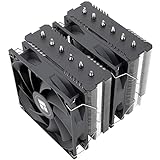
- [Brand Overview] Thermalright is a Taiwan brand with more than 20 years of development. It has a certain popularity in the domestic and foreign markets and has a pivotal influence in the player market. We have been focusing on the research and development of computer accessories. R & D product lines include: CPU air-cooled radiator, case fan, thermal silicone pad, thermal silicone grease, CPU fan controller, anti falling off mounting bracket, support mounting bracket and other commodities
- [Product specification] Thermalright PA120 SE; CPU Cooler dimensions: 125(L)x135(W)x155(H)mm (4.92x5.31x6.1 inch); heat sink material: aluminum, CPU cooler is equipped with metal fasteners of Intel & AMD platform to achieve better installation, double tower cooling is stronger((Note:Please check your case and motherboard for compatibility with this size cooler.)
- 【2 PWM Fans】TL-C12C; Standard size PWM fan:120x120x25mm (4.72x4.72x0.98 inches); fan speed (RPM):1550rpm±10%; power port: 4pin; Voltage:12V; Air flow:66.17CFM(MAX); Noise Level≤25.6dB(A), leave room for memory-chip(RAM), so that installation of ice cooler cpu is unrestricted
- 【AGHP technique】6×6mm heat pipes apply AGHP technique, Solve the Inverse gravity effect caused by vertical / horizontal orientation, 6 pure copper sintered heat pipes & PWM fan & Pure copper base&Full electroplating reflow welding process, When CPU cooler works, match with pwm fans, aim to extreme CPU cooling performance
- 【Compatibility】The CPU cooler Socket supports: Intel:115X/1200/1700/17XX AMD:AM4;AM5; For different CPU socket platforms, corresponding mounting plate or fastener parts are provided(Note: Toinstall the AMD platform, you need to use the original motherboard's built-in backplanefor installation, which is not included with this product)
Intel also distinguishes Tcase, measured at the top of the integrated heat spreader in a characterized system, from junction temperature. Do not compare readings from different measurement points as if they were interchangeable. For an AMD processor, check its own model-specific maximum operating temperature; do not apply Intel’s Tjunction range to it. AMD explains how workload, power, cooling, and temperature relate in its processor temperature guidance.
Is it bad if a CPU approaches its maximum temperature?
Not necessarily. Intel’s support guidance says, “Being at maximum temperature while running a workload isn’t necessarily cause for concern.” Thermal controls are designed to reduce power or clock speed near the specified limit. Reaching that limit during demanding work, on its own, does not establish that the processor or computer is faulty.
Rank #2
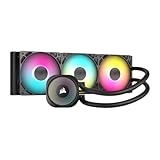
- Simple, High-Performance All-in-One CPU Cooling: Renowned CORSAIR engineering delivers strong, low-noise cooling that helps your CPU reach its full potential
- Efficient, Low-Noise Pump: Keeps your coolant circulating at a high flow rate while generating a whisper-quiet 20 dBA
- Convex Cold Plate with Pre-Applied Thermal Paste: The slightly convex shape ensures maximum contact with your CPU’s integrated heat spreader, with thermal paste applied in an optimised pattern to speed up installation
- RS120 ARGB Fans: RS ARGB fans create strong airflow and high static pressure, with easy ARGB control via a compatible motherboard. CORSAIR AirGuide technology and Magnetic Dome bearings ensure great cooling performance and low noise
- Easy Daisy-Chained Connections: Reduce the wiring in your system by daisy-chaining your RS ARGB fans and connecting them to just one 4-pin PWM fan header and one +5V ARGB header
The reading matters more when it comes with a symptom. Intel lists throttling, low reported frequency, slowness, automatic shutdowns, and excessive fan noise as possible signs of an overheating issue. Persistent throttling can reduce performance because the processor lowers its clock speed to control heat. Intel’s overheating troubleshooting guidance describes symptoms and next steps.
Crashes, No Sound, or Screen Glitches?
Random freezes, missing sound and display glitches usually trace back to one bad driver. Find and replace yours safely.Free scan · under a minuteWindows Errors? Fix Them Before They Spread
Repair common Windows errors and clear accumulated junk for a smoother, more stable PC - no reinstall needed.Free scan · no reinstallHow to check whether your CPU is overheating
- Identify the exact CPU. Find the processor model in your system information or computer documentation, then look up its manufacturer’s thermal specification. For Intel, the product specification page lists temperature information under package specifications.
- Record the conditions. Note whether the computer is idle or handling a specific task, such as gaming, compiling, or rendering. Distinguish a brief spike from a sustained reading, and note whether performance changes at the same time.
- Check for symptoms. Look for persistent throttling, unexpectedly low CPU frequency or performance, automatic shutdowns, general slowness, or unusually loud fans. The temperature number alone cannot diagnose a fault.
- Inspect cooling only where appropriate. On a self-built desktop, check that the CPU’s cooling solution is compatible, correctly mounted, unobstructed, and operating. Confirm that the fan can spin. AMD also recommends checking that the cooler is suitable for the processor’s default TDP and considering cooler operation and thermal paste as part of troubleshooting.
- Use the computer maker’s guidance for an OEM system. If the computer is a prebuilt desktop or laptop, follow its manufacturer’s support instructions. Intel directs OEM-system owners to their computer manufacturer; opening a sealed laptop or replacing its thermal paste is not a default troubleshooting step.
- Escalate unresolved problems. If throttling, shutdowns, or abnormal performance continue after basic checks, contact the computer or component manufacturer. A reading without the CPU model and system details is not enough to set a universal diagnostic threshold.
Intel’s thermal troubleshooting guidance for boxed processors in self-built systems covers checks such as fan obstruction and operation. Its scope is not a substitute for the system manufacturer’s instructions on an OEM computer.
Rank #3

- CONTACT FRAME FOR INTEL LGA1851 | LGA1700: Optimized contact pressure distribution for longer CPU life and better heat dissipation
- ARCTIC's P12 PRO FAN: More power at any speed - more powerful and quieter than the P12, especially at low speeds. Higher maximum speed for optimal cooling performance under high load
- NATIVE OFFSET MOUNTING FOR INTEL AND AMD: Shifting the cold plate center towards the CPU hotspot ensures more efficient heat transfer
- INTEGRATED VRM FAN: PWM-controlled fan that lowers the temperature of the voltage converters and thus ensures reliable performance
- INTEGRATED CABLE MANAGEMENT: The PWM cables of the radiator fans are integrated in the sheathing of the hoses so that only a single visible cable is connected to the motherboard
Should you replace the cooler or thermal paste?
Do not buy parts based on a high reading alone. If checks point to a cooling problem in a self-built system, first determine whether the existing cooler is compatible and operating correctly. If replacement or service is warranted, consider the CPU socket, the processor’s power and workload needs, available case clearance, and fan or pump operation where applicable. For laptops and OEM desktops, use the manufacturer’s service guidance.
Thermal paste is relevant when installing or servicing a cooler, but repasting is not a universal fix. AMD includes paste among the factors to check; neither that guidance nor the temperature reading alone establishes that paste is the cause. The cited manufacturer guidance does not compare particular cooler models or brands, so it cannot identify a specific replacement.
Quick Recap
Best Value
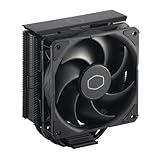
- Cool for R7 | i7: Four heat pipes and a copper base ensure optimal cooling performance for AMD R7 and Intel i7.
- Quiet Cooling Fan: SickleFlow 120 Edge with Dynamic PWM control (690–2,500 RPM), designed for low noise and peak cooling performance.
- Simplify Brackets: Redesigned brackets simplify installation on AM5 and LGA 1851|1700 platforms.
- Versatile Compatibility: 152mm tall design offers performance with wide chassis compatibility.
- Easy Installation: Easy to install with included thermal paste for hassle-free setup and optimal cooling performance.
Rank #4

- [Brand Overview] Thermalright is a Taiwan brand with more than 20 years of development. It has a certain popularity in the domestic and foreign markets and has a pivotal influence in the player market. We have been focusing on the research and development of computer accessories. R & D product lines include: CPU air-cooled radiator, case fan, thermal silicone pad, thermal silicone grease, CPU fan controller, anti falling off mounting bracket, support mounting bracket and other commodities
- [Product specification] Thermalright PA120 SE ARGB; CPU Cooler dimensions: 125(L)x135(W)x155(H)mm (4.92x5.31x6.1 inch); heat sink material: aluminum, CPU cooler is equipped with metal fasteners of Intel & AMD platform to achieve better installation, double tower cooling is stronger
- 【2 PWM Fans】Model:TL-C12C-S; Colorful and gorgeous ARGB light effects; Standard size PWM fan:120x120x25mm (4.72x4.72x0.98 inches); Product weight:0.97kg(2.1lb); fan speed (RPM):1500rpm±10%; power port: 4pin; Voltage:12V; Air flow:66.17CFM(MAX); Noise Level≤25.6dB(A), leave room for memory-chip(RAM), so that installation of ice cooler cpu is unrestricted
- 【AGHP technique】6×6mm heat pipes apply AGHP technique, Solve the Inverse gravity effect caused by vertical / horizontal orientation, cpu cooler TDP is 120 to 245W. 6 pure copper sintered heat pipes & PWM fan & Pure copper base&Full electroplating reflow welding process, When CPU cooler works, match with ultra-silent airflow fans, aim to extreme CPU cooling performance
- 【Compatibility】The CPU cooler Socket supports: Intel:115X/1200/1700/17XX AMD:AM4;AM5; For different CPU socket platforms, corresponding mounting plate or fastener parts are provided
Product prices and availability are accurate as of the date/time indicated and are subject to change. Any price and availability information displayed on Amazon at the time of purchase will apply.
What’s actually slowing this PC down?
Pick the symptom - the matching free tool is one click away.

