
Free tools Windows power users keep installed
One-click scans. No signup required.
iTechGuides is reader-supported. When you buy through links on our site, we may earn an affiliate commission. As an Amazon Associate I earn from qualifying purchases. Learn more
Jenny Ring’s account is personal, not a medical rule: after kidney failure led her to dialysis, a kidney transplant from her brother preceded the births of her two daughters. Pregnancy on dialysis is possible for some people, but it can carry serious risks and requires specialist care.
Jenny Ring’s path from kidney failure to motherhood
In Helen O’Callaghan’s Irish Examiner profile, Ring describes developing renal failure in 2004, at age 28, and starting dialysis that year. Her father had also experienced renal failure and died in 2003, the year Ring married.


Ring received her first kidney transplant in 2005, after ten months on the transplant list. The kidney failed three years later, and she recalls returning to dialysis as devastating. In June 2009, her brother John donated a kidney to her in a living-donor transplant. She describes a rapid improvement in energy and daily life, alongside the continuing demands of medication and regular blood tests.
Recommended Free Tools
Ring’s daughters were born in 2011 and 2013. She said, “Without it, the births of my two daughters couldn’t have happened.” Her headline statement, “Having children was important to me, but you can’t have children on dialysis,” expresses her own experience and feelings; it should not be read as a universal medical prohibition.
#1 Best Overall
Can someone become pregnant while on dialysis?
Pregnancy during kidney failure is not impossible, but it is high risk. The National Kidney Foundation (NKF) says women with kidney failure are usually advised against pregnancy because risks to both the mother and developing baby are high. If pregnancy occurs, close medical supervision, medication changes, and more dialysis may be needed.
Kidney disease can also affect fertility. The NKF notes that hormone changes and anemia may impair fertility. A 2025 KDIGO conference report says fertility decreases as kidney disease progresses and is lowest among women on dialysis. That describes a trend, not an assurance about any one person’s ability to conceive.
Rank #2
How does pregnancy after transplant differ?
Fertility may improve after a successful kidney transplant. The NKF says pregnancy is usually healthier and safer after transplant than during dialysis, but that does not mean a transplant guarantees fertility or makes pregnancy safe in every case. Pregnancy may still pose risks to the mother, baby, or transplanted kidney, so the decision needs to be individualized with the transplant team.
Timing, kidney function, and medication safety all matter. The NKF advises waiting at least one year after transplant or until the kidney is working well, reviewing medicines that could harm a baby, and involving an obstetrician experienced in high-risk pregnancy. A 2009 KDIGO guideline for kidney transplant recipients recommends waiting at least one year and attempting pregnancy only when kidney function is stable with less than 1 g/day proteinuria. It also recommends changing certain immunosuppressive medicines before a planned pregnancy and referral to a high-risk pregnancy specialist. These are guideline recommendations, not a substitute for current, individualized clinical advice.
Independent reader supportYour contribution helps us test, update, and keep practical guides available for everyone.What Ring’s story says about life after transplant
Ring’s account does not portray transplant as an end to treatment. She continued medication and regular blood tests after the transplant. As she put it: “A transplant isn’t a cure; it’s a treatment. I’m still on the journey.” Her experience shows how a transplant changed what was possible for her while remaining part of ongoing care.
Her brother’s living donation was central to her story. Ring encourages people to talk with their families about their wishes regarding organ donation; those conversations are a personal way to make donation preferences known.
Quick Recap
Best Value
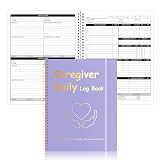
- Letter Size Daily Care Log Book:Designed in a practical 8.5 x 11 Inch format this caregiver daily log book includes 50 sheets 100 pages offering ample space for long term caregiver daily sheets use in home care and assisted living environments
- Durable Waterproof Cover Design:Made with a PP waterproof cover and elegant foil stamped lettering this caregiver daily task sheet book protects important records from spills daily wear and frequent handling in professional care settings
- Organized Caregiver Daily Sheet Layout:Each caregiver daily sheets page features clearly structured sections including patient information daily schedules meals and snacks medication tracking physical activity personal care housekeeping behavior notes and health observations
- Spiral Binding With Added Convenience:Sturdy spiral binding allows the caregiver daily log book to lay flat for easy writing while the built in pen holder and elastic band keep supplies secure and pages neatly closed during transport
- Multi Scenario Care Documentation:Suitable for caregiver daily log book use in home care senior care assisted living rehabilitation centers memory care family caregiving routines and professional nursing documentation needs
Product prices and availability are accurate as of the date/time indicated and are subject to change. Any price and availability information displayed on Amazon at the time of purchase will apply.
The Tool Desk
Outbyte Driver Updater FREEFix the driver behind crashes, sound loss and screen glitchesFind Drivers →Outbyte PC Repair FREERepair Windows errors before they cause bigger problemsFix Now →
