
iTechGuides is reader-supported. When you buy through links on our site, we may earn an affiliate commission. As an Amazon Associate I earn from qualifying purchases. Learn more
A synthetic molecule called Met-hemoCD3 bound cyanide faster than methaemoglobin and hydroxocobalamin in laboratory tests, and intravenous dosing reportedly revived cyanide-poisoned rats. Those 2013 findings suggest a possible route to faster cyanide capture, but they do not establish that the compound works safely in people or is available as a treatment.
What is Met-hemoCD3?
Met-hemoCD3 is a synthetic supramolecule designed by Koji Kano and colleagues at Doshisha University in Kyoto to imitate one function of methaemoglobin: binding cyanide. As described in Emma Stoye’s 3 June 2013 Chemistry World report, it consists of an iron(III)-containing porphyrin held inside a capsule made from cyclodextrin dimers. It is not haemoglobin itself.
The report says the molecule binds cyanide to form a non-toxic cyanide-bound complex under conditions described as similar to those in the human body. That is an account of experimental chemistry, not evidence that the compound is safe or effective as a human antidote.
What did the experiments show?
Laboratory binding tests
In vitro tests reportedly found that Met-hemoCD3 bound cyanide faster than methaemoglobin or hydroxocobalamin. Kano said, “The rate of cyanide binding is fast, which is important for emergency therapy.” The report gives no numerical binding rates, so it does not allow readers to quantify the size of the speed difference.
#1 Best Overall

- Test kit evaluates cyanide concentrations and provides cyanide colorimetric analysis in effluents and surface waters
- Tests from 0.05 to 200 ppm with sensitivity indicators at 0.05, 0.1, 0.2, 0.5, 1, 2, 3, 5, >10, >20, and <200 ppm (mg/L)
- Minimum two-minute test time for immediate results
- ETV verification statement indicates test performance and characteristics
- Kit includes 50 reagent #1 strips, 50 reagent #2 strips, four cuvettes, a pipette, an instructional CD, instructions, an MSDS, and color charts
Rat poisoning experiment
In a reported experiment, rats poisoned with sodium cyanide went into respiratory arrest. Intravenous Met-hemoCD3 reportedly revived the treated animals, while untreated rats died. This is an animal result, not a human treatment outcome; the report supplies no human trial results or numerical effect estimate.
How does the proposed approach relate to existing antidotes?
The report’s background explains that nitrite antidotes work by oxidizing haemoglobin iron to produce methaemoglobin, which can bind cyanide. It characterizes that approach as slow and associated with harmful side effects, and presents Met-hemoCD3 as an attempt to capture cyanide more quickly. These are the 2013 article’s contextual claims, not a basis for choosing or changing a clinical treatment.
Rank #2

- Detects:10 ppm (mg/L) Visually
- Made in United States
- Package Dimensions : 3.63 L x 0.75 H x 6.5 W (inches)
- Package Weight : 0.07 pounds
The comparison has important limits. Faster binding in vitro does not establish better outcomes in a living person, and the report says the compound had not been compared in vivo with currently available antidotes. Gerard Boss of the University of California San Diego acknowledged, “The compound can function as a cyanide scavenger,” but noted that “they have not compared it in vivo to currently available antidotes. All of their comparisons have been in vitro.”
Free tools Windows power users keep installed
One-click scans. No signup required.
Why might the delivery route matter?
The rat result involved intravenous administration. Boss argued that intramuscular delivery would be more useful in a mass-casualty scenario, where administering an intravenous treatment could be impractical. The report does not establish that Met-hemoCD3 can be given intramuscularly or that such a route would work; his comment identifies a practical challenge, not a tested capability.
Rank #3

- Product Type: test strip
- Parameters: pH range: 7 to 9
- Description: cyanide (as CN-) Ion test strips
- Range: 0 to 1000 ppm
- Tests/kit: 100
Is Met-hemoCD3 a cyanide treatment people can use?
No clinical use, human safety, regulatory approval, or commercial availability is established by the 2013 report. Kano said the team still needed collaboration with medical doctors and industrial partners to bring the compound into actual use. Although he also remarked, “And we found no evidence of toxicity,” that reported observation does not prove safety in people.
The report identifies the underlying study as K. Watanabe, H. Kitagishi and K. Kano, “Angew. Chem., Int. Ed.,” 2013, DOI 10.1002/anie.201302470. Its described results make Met-hemoCD3 an interesting preclinical research candidate; they do not show that it became a clinically tested or available antidote.
Quick Recap
Best Value
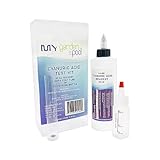
- Accurate Pool Water Testing: Ensure your pool's cyanuric acid levels are balanced with precision using our My Garden Pool Cyanuric Acid Test Kit.
- Easy-to-Use: Our kit includes clear instructions, making it simple for both beginners and experienced pool owners to test their water's cyanuric acid content.
- 8 oz Reagent: Each kit contains an ample 8 oz of high-quality reagent, providing multiple tests and great value for money.
- Maintain Pool Efficiency: Proper cyanuric acid levels help maximize the effectiveness of your pool's chlorine, leading to cleaner and healthier water.
- Long-lasting Results: By regularly monitoring cyanuric acid levels, you can extend the life of your pool water, saving money on chemicals and maintenance.
Rank #4

- 2 minute test
- Safe non-hazardous chemistry
- Made in USA
- Detects Cyanide in water 0.2 to 1700 ppm (mg/L)
Product prices and availability are accurate as of the date/time indicated and are subject to change. Any price and availability information displayed on Amazon at the time of purchase will apply.
Quick wins for a faster PC:
Fix the driver behind crashes, sound loss and screen glitchesFind Drivers →Repair Windows errors before they cause bigger problemsFix Now →
