
iTechGuides is reader-supported. When you buy through links on our site, we may earn an affiliate commission. As an Amazon Associate I earn from qualifying purchases. Learn more
Some Google routers support Wi‑Fi 6-class technology, but not all. Google Wifi and the original Nest Wifi use Wi‑Fi 5 (802.11ac). Nest Wifi Pro (model G6ZUC) is a Wi‑Fi 6E router, adding a 6 GHz band to the usual 2.4 GHz and 5 GHz bands. If you need 6 GHz, you need Nest Wifi Pro and client devices that also support Wi‑Fi 6E.
Google router generations at a glance
The name on the box is not enough to identify the wireless generation. Google has sold three relevant families, and they do not share the same radio standard.
| Model | Wireless generation | Available bands | Important specifications |
|---|---|---|---|
| Google Wifi | Wi‑Fi 5 (802.11ac) | 2.4 GHz and 5 GHz, simultaneous dual-band | IEEE 802.11a/b/g/n/ac; Google rates each point for up to 1,500 square feet and up to 100 connected devices under its stated 1 Mbps-per-device test condition. |
| Original Nest Wifi | Wi‑Fi 5 generation | 2.4 GHz and 5 GHz | Prior-generation Nest Wifi is grouped with Google Wifi in Google’s compatibility documentation and is not Wi‑Fi 6E. |
| Nest Wifi Pro (G6ZUC) | Wi‑Fi 6E | 2.4 GHz, 5 GHz and 6 GHz, tri-band | AXE5400 rating, WPA3, Matter support, Thread border router, and two 1 Gbps Ethernet ports per router. |
The coverage and device figures are manufacturer specifications from Google’s current technical-specifications material, not independent performance tests. Internet-service speed, building materials, placement, interference and the capabilities of your client devices can produce very different results.
Free tools Windows power users keep installed
One-click scans. No signup required.
What Wi‑Fi 6 and Wi‑Fi 6E mean
Wi‑Fi 6 is the wireless generation
Wi‑Fi 6 is the consumer name for the 802.11ax generation. It is newer than Wi‑Fi 5, the 802.11ac standard used by Google Wifi and the first Nest Wifi system. A router’s Wi‑Fi generation affects how it communicates with compatible phones, laptops, streaming devices and other clients; it does not automatically make an older client a Wi‑Fi 6 device.
#1 Best Overall

- Nest Wifi Pro is up to 2x faster than Wi-Fi 6, so you get super fast speeds and a reliable connection for your entire home[1]
- Three Wi-Fi routers provide up to 6600 square feet of fast, reliable Wi-Fi[2]; and you can customize your setup to create a mesh Wi-Fi system for the coverage you need
- Nest Wifi Pro uses the latest, most advanced Wi-Fi 6E technology[3], so it isn’t compatible with previous generations of Google Wifi or Nest Wifi
- Nest Wifi Pro automatically adjusts your Wi-Fi network’s performance and activity; it prioritizes video calls and helps websites load quickly
- It has built-in technology to make sure your connection is strong and consistent, even at the edge of your Wi-Fi network’s coverage[2]
Wi‑Fi 6E adds a third band
Wi‑Fi 6E extends Wi‑Fi 6 into the 6 GHz band. Nest Wifi Pro is therefore described as Wi‑Fi 6E rather than simply Wi‑Fi 6. The extra band can provide a less congested path when the client is close enough and also supports Wi‑Fi 6E, but it is not available to every device.
A Wi‑Fi 6E-capable phone, computer or other client is required to connect directly at 6 GHz. Older Wi‑Fi 5 and Wi‑Fi 6 clients can still connect to Nest Wifi Pro over 2.4 GHz or 5 GHz; they simply cannot use its 6 GHz radio. Check the wireless specification of each important device instead of assuming that a recent purchase supports 6 GHz.
Google Wifi: a Wi‑Fi 5 system, not Wi‑Fi 6
Google’s specification for Google Wifi lists simultaneous dual-band 2.4 GHz and 5 GHz operation with IEEE 802.11a/b/g/n/ac. The 802.11ac portion is Wi‑Fi 5, so Google Wifi is not a Wi‑Fi 6 router.
What’s actually slowing this PC down?
Pick the symptom - the matching free tool is one click away.
This distinction matters when you are diagnosing a device that reports “ac” or “Wi‑Fi 5,” planning a new laptop purchase, or comparing a mesh replacement. Adding another Google Wifi point increases the reach of the existing Wi‑Fi 5 system; it does not upgrade the network to Wi‑Fi 6 or add a 6 GHz band.
Rank #2

- Nest Wifi Pro is up to 2x faster than Wi-Fi 6, so you get super fast speeds and a reliable connection for your entire home[1]
- One Wi-Fi router provides up to 2200 square feet of fast, reliable WiFi[2]; and you can customize your setup to create a mesh Wi-Fi system for the coverage you need
- Nest Wifi Pro uses the latest, most advanced Wi-Fi 6E technology[3], so it isn’t compatible with previous generations of Google Wifi or Nest Wifi
- Nest Wifi Pro automatically adjusts your Wi-Fi network’s performance and activity; it prioritizes video calls and helps websites load quickly
- It has built-in technology to make sure your connection is strong and consistent, even at the edge of your Wi-Fi network’s coverage[2]
Google’s stated planning figures are up to 1,500 square feet per Google Wifi point and up to 100 connected devices per point when each device is assumed to need 1 Mbps. Those are sizing guidelines under Google’s test condition, not guarantees of a particular speed in every room. Thick walls, neighboring networks, point placement and the wireless hardware in each device all affect the result.
Original Nest Wifi: also part of the Wi‑Fi 5 generation
The first Nest Wifi system is the predecessor to Nest Wifi Pro. Google groups Nest Wifi routers and points with Google Wifi in its compatibility notes and does not classify that system as Wi‑Fi 6E. In practical terms, an original Nest Wifi installation remains a 2.4 GHz/5 GHz, Wi‑Fi 5 mesh.
If your Nest Wifi dashboard shows a modern phone connected at a high link rate, that does not by itself prove the router is Wi‑Fi 6. Link rates vary with channel width, signal conditions and the client’s own capabilities. The model name and published standard are the reliable way to identify the generation.
Nest Wifi Pro: Google’s Wi‑Fi 6E option
Nest Wifi Pro, model G6ZUC, is Google’s tri-band Wi‑Fi 6E router. Its AXE5400 rating covers the 2.4 GHz, 5 GHz and 6 GHz radios. The router also supports WPA3 security, Matter smart-home connectivity and acts as a Thread border router.
Rank #3
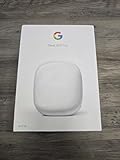
- Nest Wifi Pro is up to 2x faster than Wi-Fi 6, so you get super fast speeds and a reliable connection for your entire home[1]
- One Wi-Fi router provides up to 2200 square feet of fast, reliable WiFi[2]; and you can customize your setup to create a mesh Wi-Fi system for the coverage you need
- Nest Wifi Pro uses the latest, most advanced Wi-Fi 6E technology[3], so it isn’t compatible with previous generations of Google Wifi or Nest Wifi
- Nest Wifi Pro automatically adjusts your Wi-Fi network’s performance and activity; it prioritizes video calls and helps websites load quickly
- It has built-in technology to make sure your connection is strong and consistent, even at the edge of your Wi-Fi network’s coverage[2]
Each Pro router has two 1 Gbps Ethernet ports. Those ports are useful when you need a wired connection for a switch, desktop, game console or another access point, but the port rating does not guarantee that your internet service or wireless clients will reach 1 Gbps. The slowest component in the path—service plan, modem, cable, switch, client radio or congestion—still limits the transfer.
The 6 GHz band is most useful with Wi‑Fi 6E clients in the same home. A Pro router can serve older equipment on 2.4 GHz and 5 GHz, so replacing an older system does not require replacing every device at once.
Can you mix Nest Wifi Pro with Google Wifi or Nest Wifi?
No. Google’s support documentation states: “Nest Wifi Pro (Wi‑Fi 6E) can’t be combined with Nest Wifi routers or points or Google Wifi points (Wi‑Fi 5) in a mesh network.” A Pro unit and older points therefore cannot form one shared Google mesh.
Recommended Free Tools
Plan a Pro deployment as its own mesh. If you are replacing an older system, you can remove the old points and build the new network with Pro routers, or keep the generations as separate networks if you have a specific wired-network design that supports that arrangement. Do not expect the Google Home mesh controls to treat mixed generations as interchangeable points.
Rank #4

- Nest Wifi Pro is up to 2x faster than Wi-Fi 6, so you get super fast speeds and a reliable connection for your entire home[1]
- Three Wi-Fi router provides up to 6600 square feet of fast, reliable WiFi[2]; and you can customize your setup to create a mesh Wi-Fi system for the coverage you need
- Nest Wifi Pro uses the latest, most advanced Wi-Fi 6E technology[3], so it isn’t compatible with previous generations of Google Wifi or Nest Wifi
- Nest Wifi Pro automatically adjusts your Wi-Fi network’s performance and activity; it prioritizes video calls and helps websites load quickly
- It has built-in technology to make sure your connection is strong and consistent, even at the edge of your Wi-Fi network’s coverage[2]
How to decide whether an upgrade is worthwhile
Upgrade when 6 GHz is a real requirement
Nest Wifi Pro is the relevant choice if you have Wi‑Fi 6E phones or laptops and want to use the 6 GHz band. It is also the Google option when you want a current tri-band platform, WPA3, Matter and Thread support in the same router.
Keep Google Wifi or original Nest Wifi when Wi‑Fi 5 meets the need
If your devices are mostly Wi‑Fi 5 or earlier, your internet connection is modest, and coverage is already reliable, moving to Pro may not produce a visible improvement on every device. Those clients will continue to use 2.4 GHz or 5 GHz, regardless of the router’s 6 GHz capability.
Account for mesh replacement
Because generations cannot be combined in one mesh, count the Pro routers needed to cover the home rather than assuming an existing Google Wifi point can fill a dead zone. Google’s 1,500-square-foot figure applies to an individual Google Wifi point under its stated conditions; it is not a universal guarantee for Pro placement or for a particular building.
Check regional availability and current listings
Hardware bundles, stock, pricing and wireless-regulatory details can vary by country and change over time. Before buying, confirm that the listing identifies Nest Wifi Pro (G6ZUC), shows the number of routers in the pack, and is intended for your region. Verify the seller and current specifications instead of relying on an old product page or a used listing that omits the model number.
Best Value
- Nest Wifi Pro is up to 2x faster than Wi-Fi 6, so you get super fast speeds and a reliable connection for your entire home[1]
- One Wi-Fi router provides up to 2200 square feet of fast, reliable WiFi[2]; and you can customize your setup to create a mesh Wi-Fi system for the coverage you need
- Nest Wifi Pro uses the latest, most advanced Wi-Fi 6E technology[3], so it isn’t compatible with previous generations of Google Wifi or Nest Wifi
- Nest Wifi Pro automatically adjusts your Wi-Fi network’s performance and activity; it prioritizes video calls and helps websites load quickly
- It has built-in technology to make sure your connection is strong and consistent, even at the edge of your Wi-Fi network’s coverage[2]
Migration checklist for an older Google mesh
- Inventory the existing equipment. Record whether each unit is Google Wifi or original Nest Wifi, and note which rooms need coverage. None of those units can become a Pro mesh point.
- List your important clients. Identify phones, laptops, televisions, consoles, cameras and smart-home devices. Mark which ones support Wi‑Fi 6E; those are the devices that can use 6 GHz after the change.
- Plan Pro placement. Place routers where they can communicate reliably with one another and where clients need service. Treat Google’s coverage numbers as planning guidance, not a promise for your walls or interference environment.
- Build the new network as a separate Pro mesh. Use Nest Wifi Pro routers for every mesh point. Do not attempt to add Google Wifi points or original Nest Wifi points to the Pro network.
- Reconnect clients deliberately. Older devices should return on 2.4 GHz or 5 GHz. Confirm that compatible phones and computers see and join the 6 GHz network when they are within suitable range.
- Use the Ethernet ports where they help. Each Pro router provides two 1 Gbps ports, so a wired backhaul or local switch can reduce reliance on wireless links for fixed equipment. Actual speed remains dependent on the rest of the network.
- Retire or repurpose the old system separately. Keep the previous mesh only if you have a clearly separated network design; it cannot serve as an integrated Pro point.
Common problems and what they indicate
A device connects but never shows 6 GHz
First check that the device explicitly supports Wi‑Fi 6E. Wi‑Fi 5 and ordinary Wi‑Fi 6 clients can connect to Pro, but only on 2.4 GHz or 5 GHz. Distance, walls and local regulatory behavior can also affect whether a client chooses 6 GHz, so test near the router before treating the result as a hardware fault.
An old point cannot be added to the Pro mesh
This is an architecture limitation, not a setup mistake. Google does not support combining Pro with Google Wifi or original Nest Wifi points in one mesh. Replace the point with another Pro router or design a separate network.
Coverage is worse than the specification suggests
The published square-foot and device counts are measured or stated under specific conditions. Reposition routers, reduce obstructions, consider Ethernet for fixed devices and check the client’s own radio limits. A high device count also does not mean every device can receive high speed simultaneously; Google’s 100-device figure assumes only 1 Mbps per device.
Quick wins for a faster PC:
Scan for outdated or missing drivers - takes under a minuteDriver Scan →Clear out junk files and repair common Windows errorsFree Scan →Fix the driver behind crashes, sound loss and screen glitchesFind Drivers →Wired speed is below 1 Gbps
The Pro’s two ports are rated at 1 Gbps, but a slower service plan, modem, cable, switch or client can cap throughput. Test each segment separately and confirm that the connected equipment negotiates the expected link speed.
Bottom line for buyers
Google Wifi and original Nest Wifi are Wi‑Fi 5 systems. Nest Wifi Pro is Google’s Wi‑Fi 6E model, with 2.4 GHz, 5 GHz and 6 GHz radios, AXE5400 tri-band capability, two 1 Gbps Ethernet ports per router and additional WPA3, Matter and Thread features. Choose Pro when you have Wi‑Fi 6E clients or need its newer platform, and plan a complete Pro mesh because older Google points cannot be mixed into it.
Quick Recap
Product prices and availability are accurate as of the date/time indicated and are subject to change. Any price and availability information displayed on Amazon at the time of purchase will apply.

