
What’s actually slowing this PC down?
Pick the symptom - the matching free tool is one click away.
iTechGuides is reader-supported. When you buy through links on our site, we may earn an affiliate commission. As an Amazon Associate I earn from qualifying purchases. Learn more
Short answer: GigaDevice announced on 29 October 2025 that its GD32F5xx and GD32G5xx Software Test Libraries (STLs) received TÜV Rheinland IEC 61508 SC3 certification, which the company describes as supporting SIL 2/SIL 3 use. The certification applies to the diagnostic software—not automatically to a complete inverter, robot, machine, or control system.
What GigaDevice actually announced
GigaDevice’s English release dated 29 October 2025 says the GD32F5xx and GD32G5xx STLs received “IEC 61508 SC3 (SIL 2/SIL 3) functional safety certification from TÜV Rheinland.” A Chinese-language release dated 24 October 2025 makes the same claim.
That is a manufacturer announcement about two software libraries. It is not a declaration that every product built with a GD32F5xx or GD32G5xx MCU automatically meets SIL 3. The finished safety function still needs its own safety lifecycle, architecture, assumptions, diagnostics, independence analysis and application evidence.
What the STL does inside a safety architecture
GigaDevice describes the libraries as diagnostic software. Its stated behavior is:
#1 Best Overall
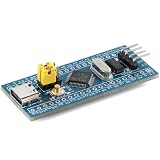
- 【Plug-and-Play Compatibility】 This versatile development board supports multiple chip families including STM32, GD32, APM32, and CKS32, ensuring integration with your existing projects. The STM32F103C8T6 core delivers exceptional performance at up to 108MHz, making it Suitable for high-demand applications. With 100% pin-to-pin compatibility, you can effortlessly swap out chips without any hassle. Plus, the Type-C interface ensures modern connectivity and durability.
- 【Effortless Debugging & Expansion】 Effortlessly debug and develop using dual-mode support for SWD/JTAG and Serial ISP programming. The BOOT0 jumper switch allows quick configuration, while the LQFP48 package offers 37 GPIO pins for extensive expansion options. Integrated peripherals like USB and CAN make this board Suitable for IoT, , and industrial applications.
- 【High-Speed Performance & Reliability】 Experience lightning-fast processing speeds with the GD32’s 108MHz main frequency, Suitable for real-time data handling and complex algorithms. The robust design ensures stable operation across a wide voltage range (2.0-3.6V), while the 12-bit ADC channels provide precise analog-to-digital conversion.
- 【User-Friendly Setup & Troubleshooting】 Simplify your setup process with clear instructions for troubleshooting common issues such as USB enumeration errors or bootloader misconfigurations. For example, setting BOOT0 to 1 and connecting PA9/PA10 via a serial port ensures smooth domestic chip burn-in. Additionally, disabling DTR/RTS signals resolves download issues when using a USB-TTL adapter. Our comprehensive FAQ section addresses all your concerns, so you can focus on innovation.
- 【Future-Proof Design for Innovation】 Designed with scalability in mind, this board empowers developers to push boundaries with its advanced features. From IoT devices to smart home solutions, the STM32F103C8T6 core supports cutting-edge technologies. By optimizing clock settings in Keil IDE, you can fully leverage the GD32’s 108MHz potential. With its compact size and robust build quality, this board is your go-to companion for next-generation projects.
- Monitor GD32F5xx and GD32G5xx MCU modules in real time.
- Detect hardware faults.
- Trigger predefined safety mechanisms when a fault is detected.
- Help keep the MCU in a safe state.
In practice, an STL is one component of a monitoring and fault-response strategy. It can provide startup or run-time tests and report failures to the application’s safety logic, but the integrator must still define what “safe state” means for the actual actuator, power stage, communications path or energy-storage system. External supervision, fault containment, reset behavior, watchdogs, redundancy and proof-test arrangements may also be required by the system design.
How to interpret “SC3 (SIL 2/SIL 3)”
The phrase combines the certification designation published by GigaDevice with the SIL applicability the company advertises. It should be read as evidence about the certified software item and its development process, not as a blanket SIL rating for an end product.
Rank #2

- YSPROG FOR GD32 MCU emulator can replace GD-Link gdlink burner downloader
| Question | What the public announcement establishes | What you still need to verify |
|---|---|---|
| Standard and assessor | IEC 61508 certification is attributed to TÜV Rheinland. | The certificate and its stated scope, conditions and validity. |
| Capability or SIL wording | GigaDevice publishes “SC3 (SIL 2/SIL 3).” | How the certificate frames achievable SIL claims for your safety function and architecture. |
| Software covered | The GD32F5xx and GD32G5xx STLs are named. | Exact library release, build artifacts, MCU part numbers, device revisions and configuration limits. |
| Diagnostic performance | Real-time module monitoring and predefined fault responses are described. | Fault classes, diagnostic coverage, reaction times, latent-fault assumptions and required external diagnostics. |
| Acquisition | No definitive public download or licensing route is given in the cited pages. | Whether source, binaries, safety manual, support and update rights are available for your project. |
SC3 therefore should not be used as a substitute for a safety case. A system assessor will normally expect traceability from hazards and safety requirements through the MCU, STL configuration, fault response and validation evidence.
The Tool Desk
Outbyte PC Repair FREEClear out junk files and repair common Windows errorsFree Scan →Outbyte Driver Updater FREEScan for outdated or missing drivers - takes under a minuteDriver Scan →Which MCU families and applications are in scope?
GD32F5xx
GigaDevice identifies GD32F5xx as an Arm Cortex-M33 family and positions it for energy and power management, photovoltaic energy storage and industrial automation. The product page labels the family with IEC 61508 SIL2 functional-safety support and points readers to the STL announcement.
Rank #3

- 2.4GHz Dual Mode WiFi + Bluetooth Development Board
- Support LWIP protocol, Freertos;ESP32 is a safe, reliable, and scalable to a variety of applications
- SupportThree Modes: AP, STA, and AP+STA
- Ultra-Low power consumption, Compatible with Arduino IDE
- 1PCS 30Pin ESP32 Development Board 2.4GHz WiFi Dual Cores Microcontroller Integrated with Antenna RF Low Noise Amplifiers Filters
GD32G5xx
GigaDevice describes GD32G5xx as combining high processing performance with digital and analog interfaces. The 29 October announcement lists compact WLCSP81 packages measuring 4 × 4 mm and names applications such as humanoid robotics, digital power systems, charging stations, energy-storage inverters, servo motors and optical communications.
Relationship to GigaDevice’s wider safety portfolio
The announcement presents the two libraries as an expansion of an existing safety portfolio that already included GD32H7 and GD32F30x STLs. Across that portfolio, GigaDevice references Cortex-M7, Cortex-M4 and Cortex-M33 coverage. Do not assume that evidence for one family or core transfers to another; the certified device list and software version control the usable scope.
Rank #4

- Maximum performance: the Pro micro microcontroller development board runs at 5 V/16 MHz and supported by IDE V1.0.1 for smooth programming. Suitable for Arduino.
- Versatile connections: Pro micro with 4 x 10-bit ADC pins, 12 x digital I/Os and serial Rx and Tx hardware connections, you have all the ports you need.
- Easy programming: Pro micro simply connect the motherboard to the on-board micro USB port and program it. If it is not detected, just install the driver.
- Multifunctional I/O: Pro micro there are 54 digital input/output pins available, including analogue inputs/outputs, as well as interfaces such as PWM, SPI, I2C etc., which offer a wealth of hardware connection options.
- Good compatibility: the seamless integration with the Arduino IDE and the extensive development tools and libraries ensure a smooth learning curve and make it a good choice for beginners.
Documents to obtain before claiming compliance
Ask GigaDevice for the controlled safety package, and confirm the certificate directly with TÜV Rheinland if your assessor requires independent verification. At minimum, request:
- The TÜV Rheinland certificate. Check the certificate number, issue date, validity, certificate holder, standard edition and precise STL scope.
- A certified-version list. Match the release, compiler/toolchain assumptions, configuration options, MCU order codes and silicon revisions to your design.
- The safety manual. Look for required initialization, call frequency, prohibited configurations, diagnostic handling, reset and safe-state requirements, and integration assumptions.
- Diagnostic evidence. Request the fault model, diagnostic-coverage figures, detection intervals, reaction times, residual and latent-fault treatment, and any FMEDA or equivalent analysis supplied for the library.
- Change-control and regression information. Determine how patches, compiler changes, device revisions and STL updates affect the certified status and what re-analysis is required.
- Delivery and support terms. Confirm whether source code, object files, test suites, safety collateral, issue support and redistribution rights are included, and under what license.
- Integration responsibilities. Record which diagnostics must be implemented outside the STL, including independent monitoring, communications checks, watchdogs, power supervision and application-level plausibility tests.
The public pages cited for this announcement do not state a certificate number, a definitive certified-release list, diagnostic-coverage percentages or a licensing/download route. Treat those as open procurement questions rather than filling them in from a marketing summary.
Best Value
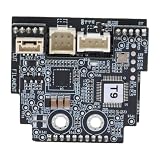
- [OFFICIAL REPLACEMENT PART] This toolhead board is a genuine accessory engineered specifically for the K2 SE 3D printer. It guarantees perfect compatibility with your extruder and hotend system, ensuring seamless operation and optimal performance without any modification worries.
- [CENTRAL CONTROL HUB] The extruder control board acts as a smart communication hub, coordinating heating elements, temperature sensors, fans, motors, and strain gauges. It streamlines data exchange with the mainboard, dramatically improving print coordination and reducing errors during complex prints.
- [POWERFUL PERFORMANCE] Equipped with the advanced GD32F303CBT6 microcontroller, this board delivers -fast processing and stable signal transmission. Experience enhanced printing accuracy, smoother movements, and consistent results even on intricate, time-intensive projects.
- [HEAT DURABILITY] Built with premium heat-proof materials, the board maintains steady performance during long, high-temperature printing sessions. Its robust construction resists thermal stress and extends the lifespan, making it a reliable choice for heavy-duty use.
- [TOOL FREE INSTALLATION] Designed for quick and effortless setup, this control board integrates directly into your K2 SE printer with minimal downtime. Simply connect the cables and secure with the included screws for a hassle-free upgrade that gets you back to printing .
How to compare this STL with another MCU safety package
Use the same evidence categories for every candidate instead of comparing SIL labels alone:
| Comparison axis | Evidence to place side by side |
|---|---|
| Certification | Standard edition, independent assessor, certificate scope, capability designation and validity. |
| Hardware coverage | Exact MCU families, cores, order codes, silicon revisions, peripherals and package or clock restrictions. |
| Diagnostics | Fault classes, coverage, test intervals, detection latency, safe-state reaction and residual-fault assumptions. |
| Software control | Certified version, toolchain, configuration management, change-impact rules and regression evidence. |
| Integration | Safety-manual assumptions, external monitors, independence requirements, startup tests and proof-test guidance. |
| Project access | Availability of source or binaries, safety documentation, technical support, licensing and update policy. |
On the information publicly stated in the announcement, the GigaDevice package can be identified at a high level by its IEC 61508/TÜV Rheinland claim and its two named MCU families. The remaining comparison rows require controlled vendor documentation.
Practical decision for engineers
The announcement is a credible reason to put the GD32F5xx and GD32G5xx STLs on a safety-component shortlist, especially for industrial control, energy conversion, charging, storage and motion applications. It is not enough evidence to sign off a finished product. Proceed only after the certificate, certified software version, safety manual, diagnostic data, integration constraints and commercial delivery terms match your project and your assessor accepts the resulting safety case.
Free tools Windows power users keep installed
One-click scans. No signup required.
Quick Recap
Product prices and availability are accurate as of the date/time indicated and are subject to change. Any price and availability information displayed on Amazon at the time of purchase will apply.

